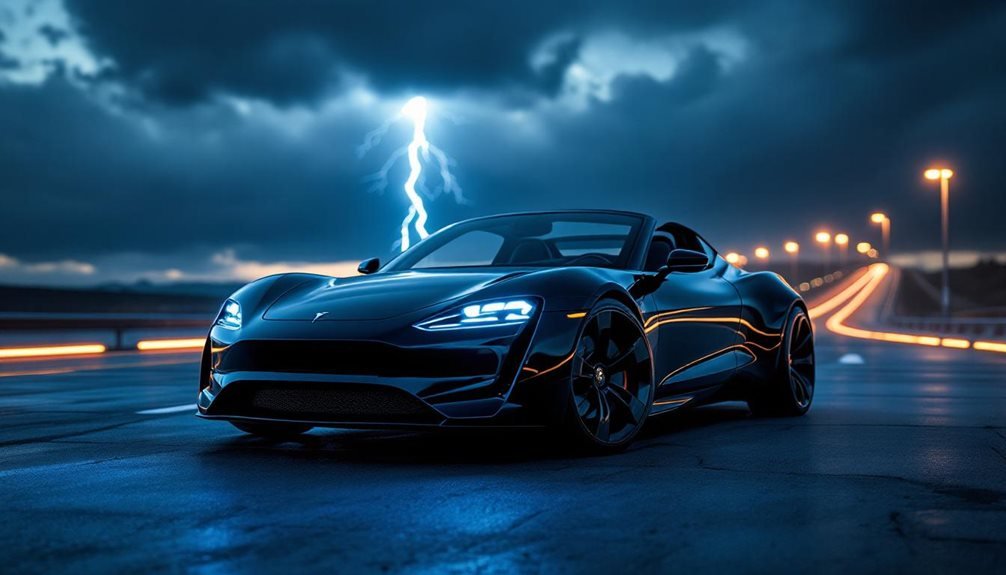
Speed demons and tech enthusiasts have waited nearly a decade for Tesla’s next-generation Roadster. The electric hypercar promises to shatter records when it finally arrives in 2026. Tesla first showed the concept in 2017, but production delays pushed back the release date multiple times. The unveiling event showcased the cutting-edge technology integrated into every aspect of the vehicle’s design.
The Roadster’s performance numbers sound almost unbelievable. Tesla claims it’ll rocket from 0 to 60 mph in under one second, though official specs list 1.9 seconds. The car’s three motors produce 10,000 Nm of wheel torque, pushing the vehicle past 250 mph. It can complete a quarter-mile run in just 8.8 seconds.
Tesla’s Roadster promises sub-one-second acceleration and 250+ mph top speed with 10,000 Nm of torque.
This isn’t just about straight-line speed. The all-wheel-drive system uses torque-vectoring to manage power between one front motor and two rear motors. Each motor adjusts independently for better cornering. The aluminum chassis uses carbon fiber parts to keep weight down while maintaining strength.
The 200 kWh battery pack provides 620 miles of highway range under ideal conditions. Aggressive driving cuts into that number considerably. The car supports 350 kW DC fast charging, and its modular battery design might allow future upgrades. The battery uses Tesla’s new 4680 cell format, which reduces overall pack size and manufacturing costs.
Inside, the Roadster seats four people in a 2+2 configuration. The convertible model features a removable glass roof that stores in the trunk. Tesla designed the car with record-setting aerodynamics to maximize efficiency.
Standard Autopilot includes basic lane-keeping and traffic-aware cruise control. Upgraded Autopilot costs an extra $6,000 and adds highway auto-lane changing and Smart Summon. The Full Self-Driving package recognizes traffic lights and steers automatically on city streets. The car can park itself in parallel or perpendicular spaces. To maintain optimal safety performance, software updates are pushed every 30-60 days for Autopilot improvements.
Tesla positions the Roadster against traditional supercars from Bugatti and Rimac. The company requires a $50,000 reservation deposit. One controversial option involves SpaceX-derived rocket thrusters to accelerate, though Tesla hasn’t confirmed this feature in final specifications.
The Roadster represents Tesla’s effort to combine everyday EV practicality with hypercar performance. After years of testing and improvement, the company seeks to deliver a vehicle that bridges both worlds.