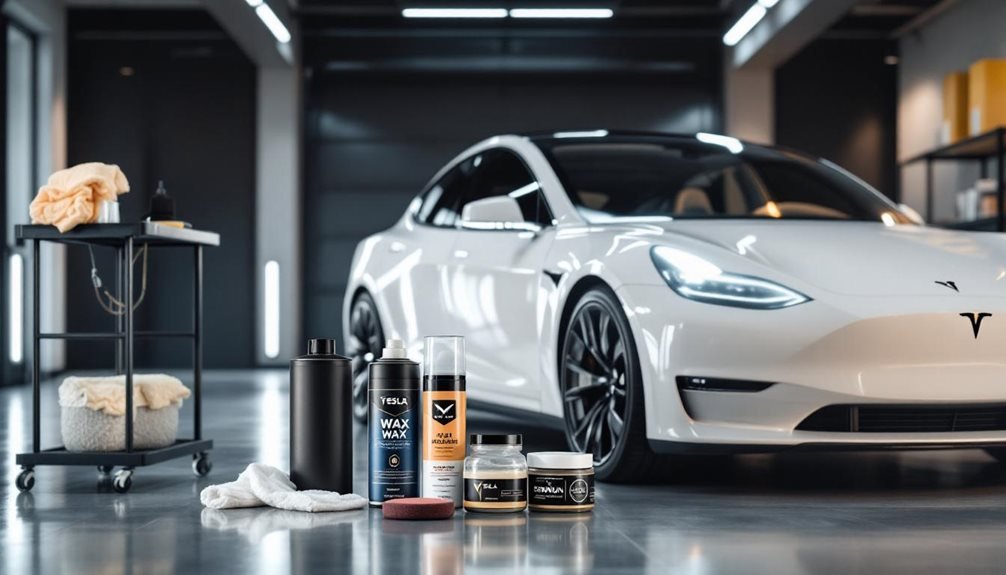
P21S Carnauba Wax leads the pack with 4-6 months of durability and exceptional shine. Meguiar’s Peak Liquid Wax offers the perfect balance for convenience seekers. CSI Q-7 Wax provides quick spray-on application for time-crunched owners. Collinite 845 delivers superior environmental protection that gloss enthusiasts swear by. Chemical Guys Butter Wet Wax won’t break the bank while enhancing that mirror finish. Tesla’s sensitive paint demands proper preparation and regular reapplication. The right technique makes all the difference in achieving showroom results.
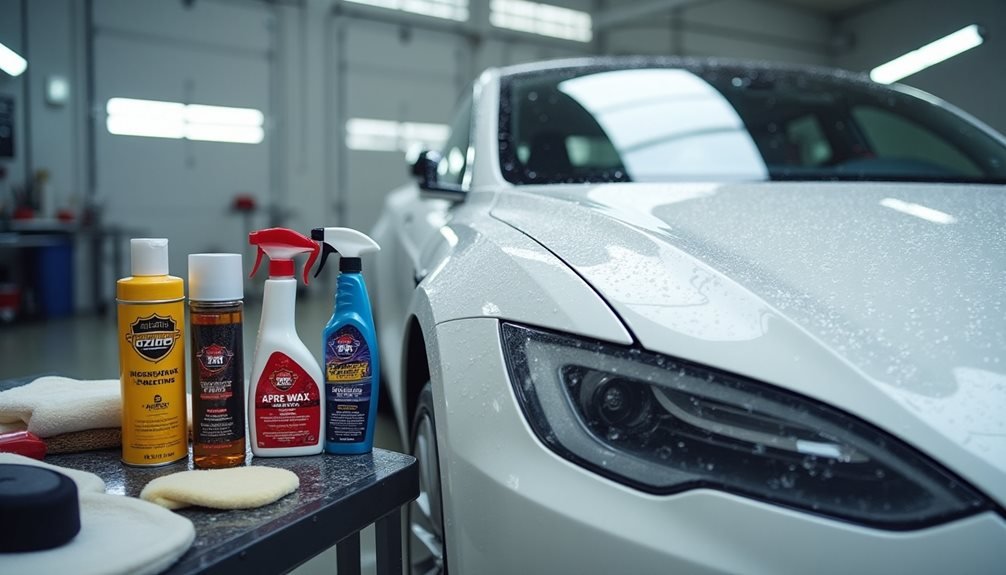
Five top-rated wax options dominate the Tesla detailing scene, and frankly, the choice comes down to what matters most: durability or convenience.
P21S Carnauba Wax leads the pack for serious protection enthusiasts. This paste formula delivers exceptional durability and shine, lasting 4-6 months when applied correctly. Sure, it requires skilled application and removal, but that’s the price of excellence. Those prioritizing lasting protection won’t find better.
Meguiar’s Ultimate Liquid Wax strikes the perfect balance. Easy-to-apply liquid that doesn’t sacrifice performance for convenience. It’s the middle ground between paste complexity and spray simplicity, delivering consistent results without the learning curve.
For the time-crunched Tesla owner, CSI Q-7 Wax offers spray-on convenience. Quick detailing sessions become reality with this water-repellent formula. Fast application, faster removal. Touch-ups don’t get easier.
Collinite 845 represents the high-end option. Superior barrier properties against environmental damage make this protective wax worth the investment. Finish preference matters here – gloss-reliant owners gravitate toward this over matte-friendly alternatives.
Chemical Guys Butter Wet Wax proves budget-friendly doesn’t mean compromise. This paste wax provides gloss enhancement and moderate durability without breaking the bank. Premium performance at accessible cost.
Application method determines your waxing experience. Paste wax offers maximum protection but demands skill. Liquid wax balances ease with moderate longevity. Spray wax prioritizes speed. Natural waxes deliver high shine but shorter durability compared to synthetic alternatives.
Dual-action polishers reduce manual effort, while microfiber towels prevent streaking during removal. Proper preparation involves thoroughly washing your Tesla before waxing to prevent surface scratches during application.
Tesla-specific requirements can’t be ignored. Paint preservation prevents oxidation on sensitive ceramic-coated surfaces. Smooth, even application maintains those essential low-drag aerodynamics. Regular waxing ensures showroom-grade shine for resale value protection.
Timing matters. Every 4-6 months minimum, with reapplication after harsh weather exposure. The water bead test reveals when protection weakens – weak beads signal reapplication needs. Just as environmental factors affect Tesla charging times, they also impact wax longevity and performance. Seasonal transitions demand fresh protection before winter harshness or summer UV intensity.
Essential accessories include dual-action polishers for simplified application, microfiber pads for even distribution, and trim protectant to prevent staining. The three-bucket method prevents contamination during multi-step detailing sessions.
Bottom line: choose based on your priorities and available time.
Frequently Asked Questions
How Often Should I Wax My Tesla to Maintain Optimal Paint Protection?
Tesla owners typically need to wax every 2-3 months for decent protection. That’s with traditional wax, anyway.
Harsh conditions like salted winter roads can cut that down to monthly applications. Road salt reduces wax durability by 20%.
Garage-kept cars stretch intervals to 6 months easily.
Ceramic coatings last 3-6 months instead.
Weekly washing helps whatever protection you choose actually stick around longer than expected.
Can Car Wax Damage Tesla’s Unique Paint Finishes or Wraps?
Yes, car wax absolutely can damage Tesla’s finishes if you’re careless. Abrasive compounds scratch those premium multi-coat surfaces. Acidic waxes strip clear coats. Aggressive buffing creates heat that ruins matte finishes.
Low-quality products with harsh chemicals? They’ll degrade the paint, especially under UV exposure. Tesla’s eco-friendly paints react poorly to improper formulations.
DIY touch-ups often create permanent discoloration on metallic finishes.
Should I Avoid Waxing Around Tesla’s Cameras and Sensors?
Tesla owners face a real dilemma with camera and sensor areas. The company doesn’t explicitly approve wax brands for these sensitive spots. Hydrophobic formulas can leave residues that mess with visibility.
Camera lenses are made of vulnerable plastic that doesn’t play nice with certain solvents. Smart money says minimal application around sensors, or skip those areas entirely.
Professional detailers know the drill.
Is It Safe to Wax Over Paint Protection Film on Teslas?
Waxing over paint protection film on Teslas is generally safe, but it’s not exactly necessary. PPF already does the heavy lifting for protection.
Wax won’t damage the film and can add some hydrophobic benefits, but some manufacturers actually recommend against it.
The key is using pH-neutral, PPF-safe products and waiting 24-48 hours after installation.
Just remember – improper waxing could void your PPF warranty.
Do I Need Special Preparation Before Waxing a New Tesla?
New Tesla owners don’t need extensive prep work before waxing. The paint comes pretty clean from the factory. A thorough wash with quality car soap and microfiber drying handles basics.
Clay bar treatment isn’t mandatory but helps wax stick better. Skip the heavy polishing unless there are obvious scratches or swirls. Tesla’s clear coat is decent, so avoid harsh chemicals that’ll wreck it.