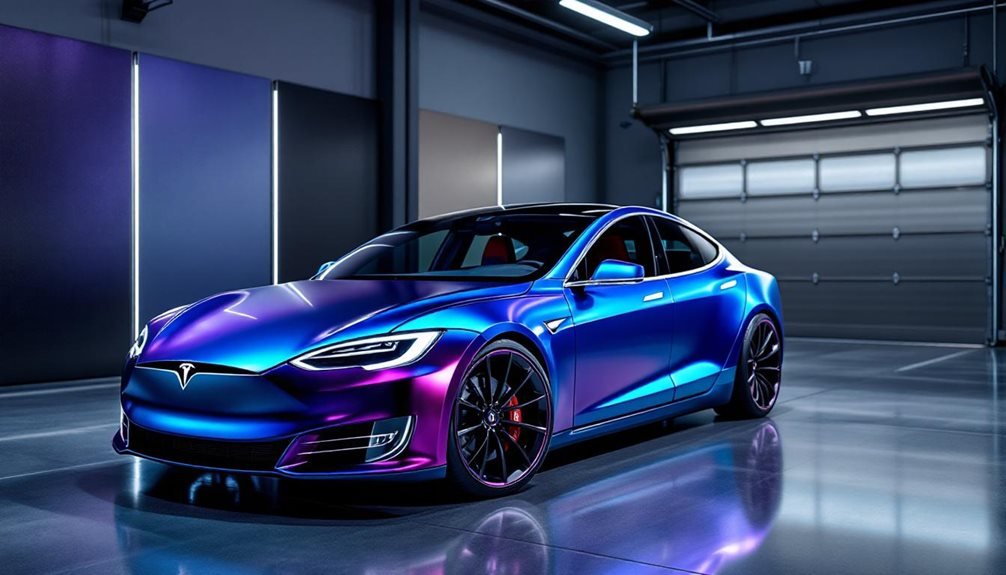
Matte black dominates Tesla wraps in 2025, offering that sleek, low-profile vibe everyone craves. Electric blue and glossy metallic blue showcase Tesla’s tech aesthetic perfectly. Color-changing chameleon wraps are stealing the show with futuristic visuals that actually turn heads. Satin pearl white delivers understated luxury without the maintenance headaches of gloss finishes. Chrome wraps face increasing restrictions due to safety concerns, while eco-friendly materials align with Tesla’s green image. These trends reveal deeper understanding about wrap technology and regulations.
Why settle for Tesla’s factory paint when the wrap game has exploded into something resembling a sci-fi fever dream? The 2025 wrap scene isn’t messing around. Matte black still dominates because, frankly, it works. Sleek, low-profile, doesn’t scream for attention.
The 2025 wrap scene isn’t messing around – matte black still dominates because it simply works without screaming for attention.
Meanwhile, satin pearl white offers that understated luxury vibe while being easier to maintain than gloss finishes.
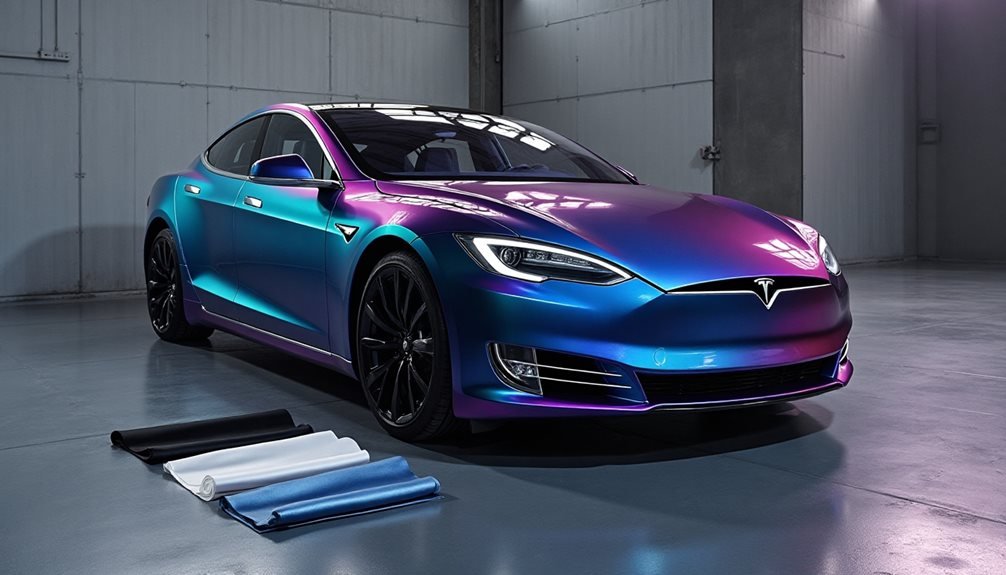
Glossy metallic blue hits different on Model S and X vehicles. The deep, UV-stable shine improves Tesla’s already sharp design language. But if you want to turn heads at Cars and Coffee, color-changing chameleon wraps deliver those futuristic visuals that make phones come out instantly.
These aren’t cheap. Premium pricing reflects the complex manufacturing and expert installation requirements.
Hyper-gloss finishes are making serious waves. Liquid black creates a mirror-like effect without chrome wrap restrictions, which matters because some states actually ban chrome due to glare concerns.
Electric blue highlights Tesla’s tech-driven aesthetic with bold accents that pop under any lighting condition.
Satin options provide practical benefits beyond looks. Satin gray conceals minor blemishes while maintaining elegance. Satin Amazon green introduces vegetation-inspired palettes for owners wanting something completely different.
Matte surfaces hide scratches better than glossy finishes, though they require specific maintenance techniques. For off-grid adventures, owners can maintain their wrapped Tesla’s charge using portable generators capable of delivering the necessary AC power through appropriate mobile charging adapters. Additionally, for those looking to enhance their off-grid experience, a tesla solar roof performance analysis can provide valuable insights into how effectively solar energy can be harnessed for charging needs. This evaluation helps in determining the optimal setup for energy consumption while ensuring that the Tesla remains charged during extended trips. Ultimately, integrating renewable energy sources not only provides convenience but also contributes to sustainability.
The eco-friendly movement has invaded the wrap world. Recyclable vinyl materials and low-VOC adhesives align with Tesla’s environmental ethos. Biodegradable components are becoming standard as demand for green solutions drives innovation. It’s almost poetic, really.
Nature-inspired earth tones are gaining traction. Gloss porcelain blue mimics water-inspired hues for that futuristic appeal Tesla owners crave. These experimental colors cater to individuals prioritizing uniqueness over traditional metallic options.
Chrome wraps face increasing restrictions due to safety concerns. Mirror-like reflectivity maximizes visibility but requires constant maintenance.
Frequent cleaning, scratch protection, constant vigilance. Satin chrome alternatives provide similar impact with reduced glare risk.
Chameleon wraps change hues based on lighting conditions but demand expert installation and careful maintenance to preserve color-shifting properties. They’re ideal for show cars or promotional vehicles seeking maximum visibility.
Just verify local regulations before committing because some areas have specific restrictions. Premium brands like 3M and Avery Dennison provide superior fade resistance that ensures your investment maintains its vibrancy through years of exposure. For those seeking luxury with an environmental edge, Gloss Metallic Rosewood Red offers sophisticated appeal while supporting eco-friendly manufacturing processes.
Frequently Asked Questions
How Much Does a Tesla Wrap Cost Compared to a Paint Job?
Tesla wraps cost $1,000-$5,000 for basic to complex designs, while paint jobs run $4,000-$20,000+. Yeah, that’s a pretty big gap. In addition to these aesthetic upgrades, potential Tesla owners might also want to consider the long-term investment of renewable energy options. With advancements in technology, tesla solar roof pricing in 2025 is expected to be more competitive, making it an appealing addition for those looking to enhance their home’s value and efficiency. Overall, the costs associated with enhancing a Tesla extend beyond the vehicle itself, reflecting a commitment to sustainability and innovation. As technology advances and customization options increase, the prices for both wraps and paint jobs may continue to fluctuate. A detailed tesla wrap cost breakdown in 2025 will likely reflect these changes, taking into account new materials and techniques that enhance durability and aesthetics. Car owners will also have more design options than ever, potentially making wraps an attractive alternative to traditional paint.
High-end wraps with chrome or carbon fiber can hit $5,000+, but specialty paint jobs easily exceed $10,000.
Wraps are clearly the budget-friendly option. Paint costs more because it’s permanent and involves way more labor-intensive processes than slapping vinyl on a car.
Will Wrapping My Tesla Void the Vehicle Warranty?
Wrapping a Tesla won’t automatically void the warranty. The Magnuson-Moss Act protects owners from blanket warranty denials over aftermarket modifications. Tesla dealers must prove the wrap directly caused any component failure.
However, improper installation that damages paint, sensors, or electrical systems could result in partial claim denials. Professional installation using non-invasive materials minimizes risks.
The warranty remains intact unless proven causation exists.
How Long Does a Tesla Wrap Installation Typically Take?
Tesla wrap installation times vary wildly depending on what someone’s attempting. A simple dashboard wrap? Fifteen minutes, tops. Chrome delete kits demand four hours of patience.
Full-body wraps eat up six to eight hours for most Tesla models. The Cybertruck’s bizarre angles push that to eight hours minimum.
Inexperienced installers can easily double these times. Temperature matters too—cold weather slows everything down considerably.
Can I Remove a Tesla Wrap Without Damaging the Original Paint?
Tesla wraps can absolutely be removed without damaging the original paint, assuming someone doesn’t butcher the job. The key? Heat application and proper technique.
Use a heat gun on low-medium settings, peel at 45-degree angles, and work slowly.
Wraps under five years old come off easiest.
Sure, there might be some adhesive residue left behind, but citrus-based cleaners handle that mess just fine.
Do Tesla Wraps Protect the Car’s Resale Value?
Tesla wraps can actually enhance resale value by protecting the original paint from road debris, UV damage, and scratches. A 2018 Ford Mustang GT saw an 8% price increase thanks to its protective wrap.
The catch? Professional installation matters, and wild designs might scare off buyers. Private sales work better than dealers, who often view wraps negatively.
Smart owners market the protection benefits.