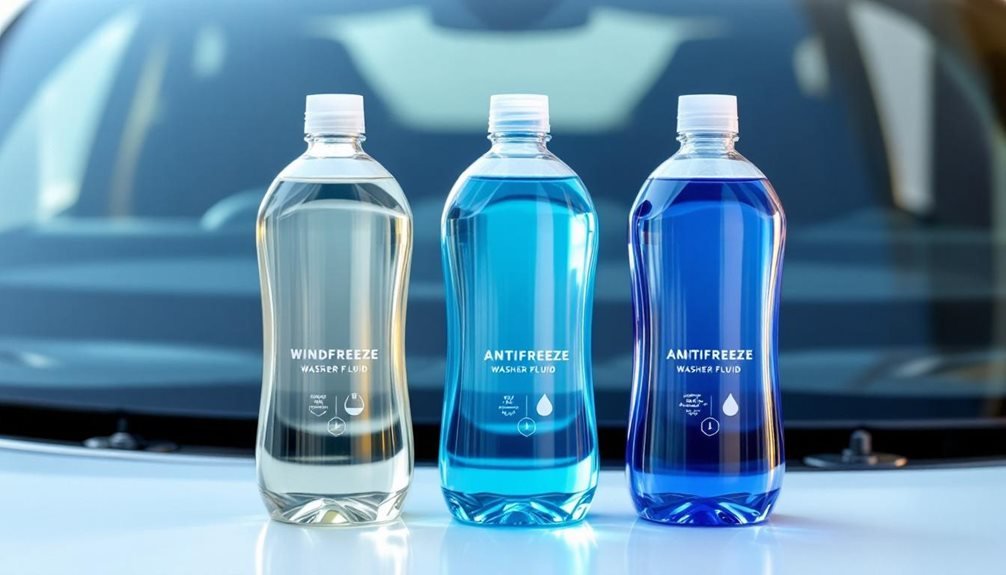

Tesla owners can use standard automotive windshield washer fluids, but there’s a catch. Skip RainX and water repellent additives—they’ll make your wipers sound like fingernails on a chalkboard and streak up Tesla’s specialized glass. Plain water is a no-go too, unless you enjoy bacterial soup in your reservoir. Choose antifreeze-rated fluids for temperatures below 40°F to prevent ice damage. Pre-mixed formulas beat DIY concoctions every time. The devil’s in the details when protecting your investment. Additionally, regularly inspect your wiper blades for wear and replace them as needed to ensure optimal performance. For the best results, consider these tesla windshield cleaning tips: always keep your windshield clean and free of debris, and don’t forget to use a microfiber cloth for any hand cleaning to avoid scratches. Proper maintenance will help maintain your Tesla’s pristine look and function for years to come.
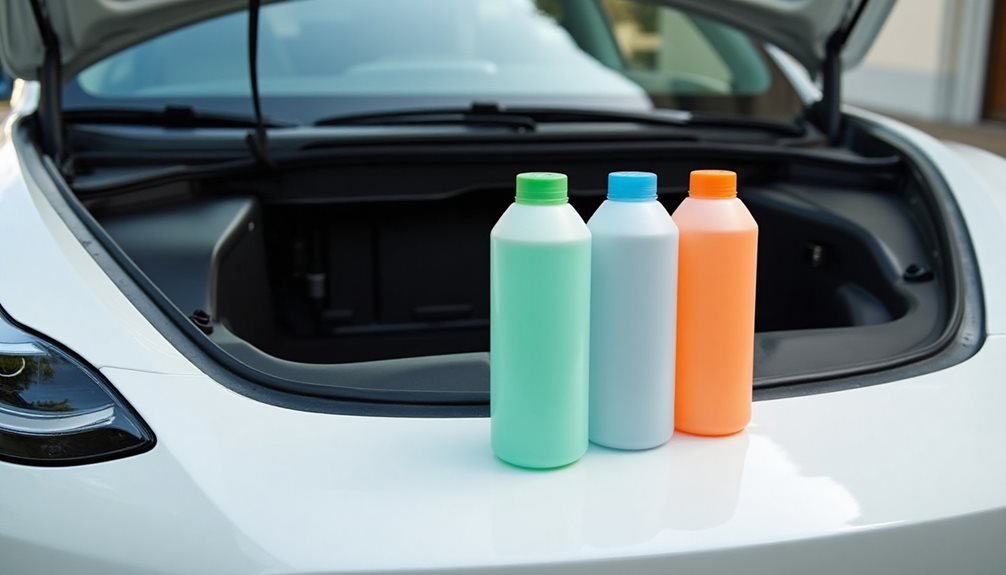
Why do Tesla owners overthink something as simple as windshield washer fluid? Because Teslas aren’t like regular cars, and apparently even the basics come with rules.
Tesla accepts standard automotive windshield washer fluids. No special Tesla-branded unicorn tears required. But here’s where it gets picky. Avoid anything with RainX, bug wash, or water repellent additives. These cause streaking and squeaky wipers, which sounds about as pleasant as nails on a chalkboard. RainX and similar products actually damage Tesla’s specialized glass. So much for that marketing promise.
Tesla’s glass doesn’t play nice with RainX additives—stick to basic windshield washer fluid or face streaky, squeaky consequences.
Never use plain water. Ever. Untreated water leads to bacterial growth and odor in the reservoir. Nobody wants their car developing a science experiment. Ethanol-based fluids work fine if they meet freeze resistance standards. Low-VOC formulas are allowed, but only if they provide adequate freeze protection.
Speaking of freezing, temperatures below 40°F demand antifreeze-rated formulas. Ice formation in jets can damage the washer system and void warranties. Rain sensor wipers malfunction when ice blocks the windshield. Pre-mixed formulas beat DIY alcohol-water concoctions every time.
Model 3 reservoirs hold 3.2 liters, Model Y holds 4.5 liters. Fill just below the filler neck to avoid spills. The reservoir location sits behind the front trunk, requiring hood access for refills. Overfilling risks chemical residue on paint or sensors. The touchscreen alerts when fluid runs low, because apparently we need computers to tell us everything now.
Maintenance matters too. Clean the reservoir cap before refilling. Use isopropyl alcohol for wiper blade cleaning. Clear blocked jets with thin wire, but be gentle with those fragile plastic nozzles. Avoid car wax or off-road sprays that contaminate the system. Environmental factors like temperature can affect overall vehicle performance, just as they impact Tesla’s charging systems. Contaminants like ice, bug spray, and tree sap can diminish wiper function and reduce visibility.
Climate creates complications. Low-VOC formulas must still prevent freezing at local minimum temperatures. Summer VOC restrictions apply in urban areas. Environmental regulations clash with functional freeze protection, creating a balancing act.
Troubleshooting blocked jets requires patience. Use soft copper wire to clear debris. Freezing temperatures make blockages worse. Streaks indicate dirty jets or misaligned wiper arms. Regular cleaning extends jet lifespan and maintains performance. Simple fluid choice suddenly becomes rocket science when you drive electric.
Frequently Asked Questions
Can I Use Regular Windshield Washer Fluid in My Tesla?
Regular windshield washer fluid can work in a Tesla, but there’s a catch. It must be ethanol-based without additives like RainX or bug removers.
Tesla specifically prohibits methanol-based fluids in Europe, Middle East, and Africa.
Basic automotive ethanol fluids are fine if they’re additive-free.
Using the wrong stuff could clog nozzles, corrode parts, or void warranty coverage.
How Often Should I Refill Tesla Windshield Washer Fluid?
Tesla windshield washer fluid refills aren’t scheduled like oil changes. Usage frequency and environmental conditions determine when you’ll need more. Heavy storms, debris-rich driving, and winter conditions drain the reservoir faster.
The touchscreen alerts drivers when fluid hits minimum levels – that’s your cue. Cold climates require more frequent refills due to de-icing needs.
Check the reservoir behind the front trunk periodically instead of guessing.
Will Aftermarket Washer Fluid Void My Tesla Warranty?
Aftermarket washer fluid won’t void a Tesla warranty outright. Tesla’s manuals explicitly allow “any approved” fluid, focusing on avoiding harmful additives rather than restricting brands.
The company doesn’t mandate OEM fluids. However, using improper fluids with bug repellent or water repellent could cause windshield damage, potentially leading to denied repair claims.
Regional compliance matters too—methanol-based fluids in Europe could spell trouble.
What Happens if I Use the Wrong Washer Fluid Type?
Using the wrong washer fluid can mess up Tesla’s cameras and sensors. Additive residues interfere with Autopilot functionality. Generic fluids freeze in cold weather, potentially cracking pumps and lines.
Non-approved formulas corrode rubber components and clog nozzles. They leave streaks on specialized glass, fail to clean effectively, and may damage hydrophobic coatings.
Wrong fluids trigger false sensor warnings and compromise safety features.
Can I Make Homemade Windshield Washer Fluid for Tesla?
Tesla doesn’t officially endorse homemade washer fluid recipes. Sure, people mix water and ethanol at home, but they’re missing essential stuff like antifreeze additives and corrosion inhibitors. The DIY route risks damaging Tesla‘s aluminum components or voiding warranties.
Commercial fluids cost around two bucks per gallon anyway. Why gamble with a $50,000+ car over pocket change? Tesla forums consistently recommend sticking with approved formulations instead.