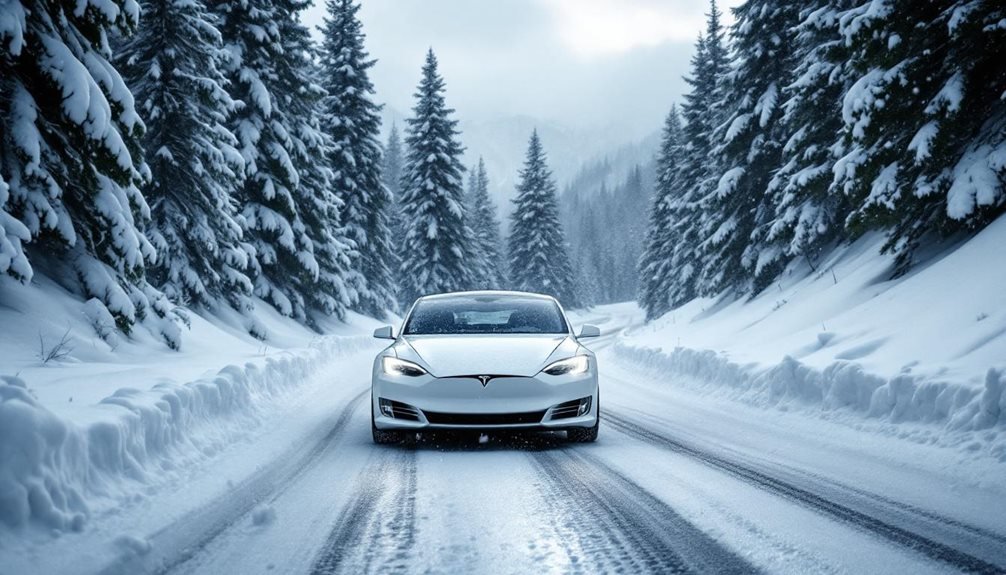

Teslas actually excel in snow, often outperforming gas cars in winter conditions. The dual-motor AWD system delivers instant torque and superior traction control, while the low center of gravity from battery placement improves stability on slippery roads. No cold-start issues occur, even at -45°C. Yes, range drops about 40 Wh/mile due to heating demands, but regenerative braking and advanced safety features shine on icy surfaces. There’s more to this winter performance story.
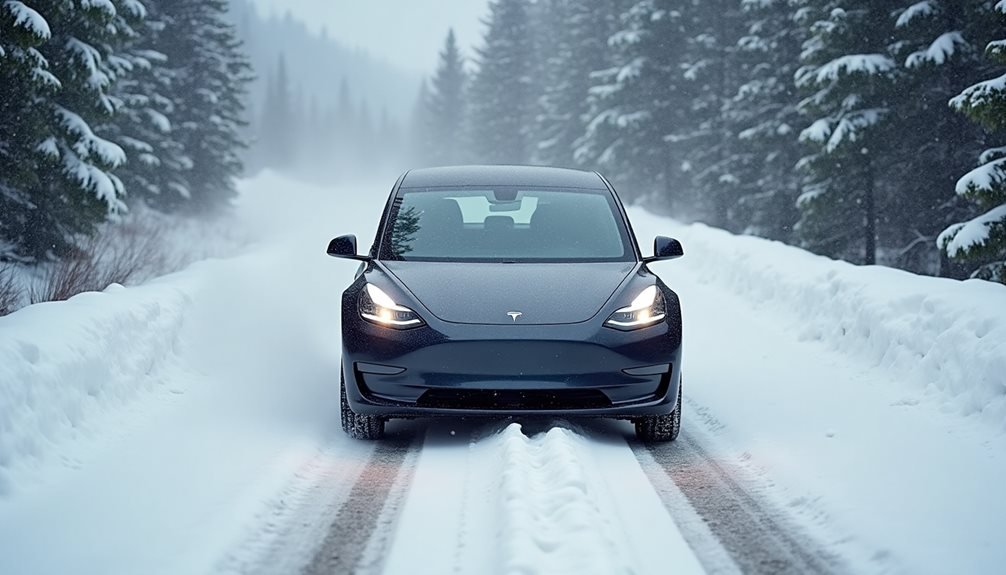
How does a 4,000-pound electric sedan handle when Mother Nature dumps a foot of snow on the road? Tesla owners report their vehicles outperform traditional gas cars in sub-zero conditions. No cold-start problems, even at minus 45 degrees Celsius. That’s colder than a Minnesota ice fisherman’s thoughts about global warming.
Cold enough to freeze skepticism itself, Tesla sedans laugh at minus 45 degrees while gas engines whimper in defeat.
The dual-motor all-wheel drive system distributes power between front and rear wheels for ideal traction. Advanced traction control prevents wheel spin while maintaining stability. Instant torque enables responsive acceleration on icy surfaces where gas engines stumble and sputter.
The low center of gravity, thanks to battery placement, improves balance in snow better than top-heavy SUVs.
Dynamic traction control adjusts to slippery surfaces through real-time modifications. Tesla’s AWD performance matches traditional 4×4 systems in snow, according to owner experiences. Regenerative braking offers smoother deceleration control compared to traditional friction braking on slippery winter roads. The dual braking system ensures optimal safety by seamlessly transitioning between regenerative and mechanical braking when conditions demand rapid deceleration.
Winter tires are recommended for icy conditions, and tire chains work where legally allowed. Local regulations apply, obviously.
But here’s the catch. Cold weather increases energy consumption by roughly 40 watt-hours per mile compared to lifetime averages. Range takes a hit. Cabin heating draws significant battery power during long trips, because physics doesn’t care about your comfort preferences.
Smart Tesla owners use “Scheduled Departure” to reduce energy waste by preconditioning while still plugged into the charger. The feature automates warm-up sessions and synchronizes with charging cycles. Preconditioning via the mobile app warms both battery and cabin remotely. Battery heating preserves thermal range during charging sessions.
Tire pressure management becomes critical since cold naturally drops PSI levels. One PSI lost per ten-degree temperature drop. The service menu displays ideal inflation levels while TPMS alerts notify drivers of under-inflated tires. Maintaining proper tire pressure around 44 psi helps mitigate winter energy loss and extends driving range.
Energy-intensive heating reduces range when maintaining cabin temperatures. Frequent tire pressure adjustments become necessary in cold climates. Some remote or ice-heavy regions might still require chains. Preconditioning remains essential to mitigate cold-start energy impacts.
The bottom line? Teslas handle snow surprisingly well. Better traction than many expected. Range suffers, but that’s true for all vehicles in winter. Just differently.
Frequently Asked Questions
How Much Does Tesla Winter Tire Installation Cost?
Tesla winter tire installation comes bundled into their package pricing, not sold separately. The $2,000 18-inch winter package includes installation, wheels, and tires.
Same deal with the $2,750 19-inch Performance package. Tesla doesn’t itemize installation costs because they want you buying the whole shebang.
Third-party shops charge $50-$150 per tire for installation if someone goes the DIY route instead.
Can I Use Tire Chains on Tesla Wheels?
Tesla owners can technically use chains, but Tesla officially discourages it. The company worries about AWD system conflicts and potential damage.
Some manuals mention Konig chains for specific wheel sizes, though Tesla support often denies endorsing them.
Chains need ultra-low clearance—under 0.25 inches—to fit properly.
Most drivers find Tesla’s Winter Wheel Package easier than wrestling with chains anyway.
Does Cold Weather Affect Tesla Charging Speed?
Cold weather absolutely hammers Tesla charging speeds. Below freezing, batteries can take up to three times longer to charge because chemical reactions slow down dramatically.
The car has to work overtime heating the battery before it can even accept a decent charge rate. Tesla’s software tries to help by preconditioning the battery during route guidance, but cold weather still means longer charging stops and higher energy consumption.
How Do I Activate Tesla’s Snow Driving Mode?
Tesla doesn’t have a dedicated “snow mode” button that magically metamorphoses the car. Instead, drivers create their own snow profile through driving settings.
Set acceleration to Chill mode, reduce steering sensitivity to Comfort, and lower regenerative braking.
Enable Slip Start for gradual power delivery in deep snow.
The car’s traction control runs automatically—no manual override available.
What’s the Best Tesla Model for Snowy Climates?
For snowy climates, the Model 3 Performance stands out with its AWD and instant torque control. The Model S also handles heavy snow well with dual-motor AWD.
Model X and Model Y get bonus points for higher ground clearance, which actually matters when snow piles up. RWD models? They’ll struggle.
All AWD Teslas feature torque vectoring for better cornering, but winter tires remain absolutely mandatory.