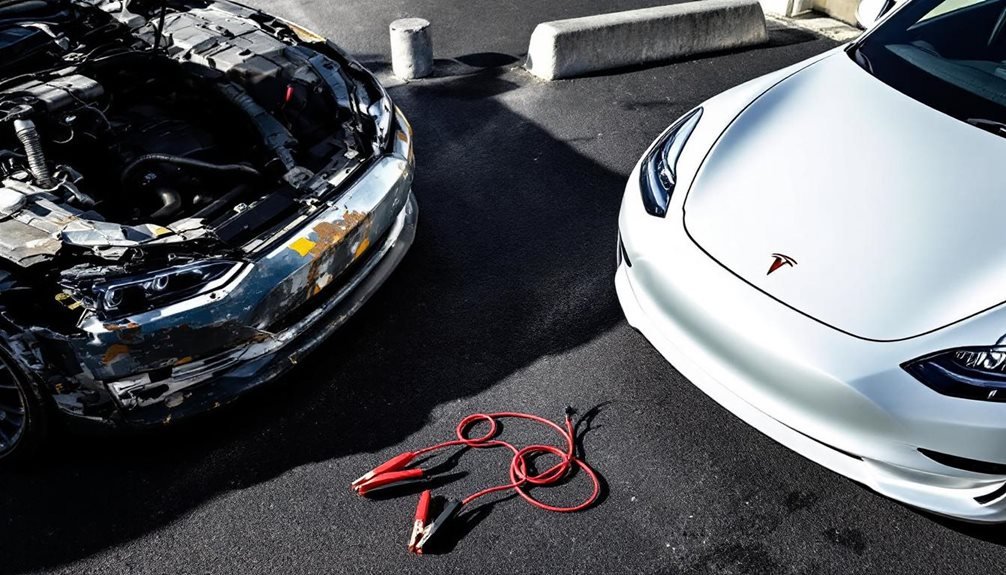
Tesla explicitly prohibits using their vehicles to jump-start other cars, and frankly, their engineering backs up this stance. The 12V auxiliary battery lacks sufficient current for jump-starting, while the high-voltage system wasn’t designed for external loads. Tesla’s DC/DC converter simply can’t handle jump-starting demands without risking serious component damage. Attempting this risky maneuver could fry expensive electronics and void warranties. Portable jump starters exist for good reason, and comprehension of the technical limitations reveals why Tesla maintains such strict policies.
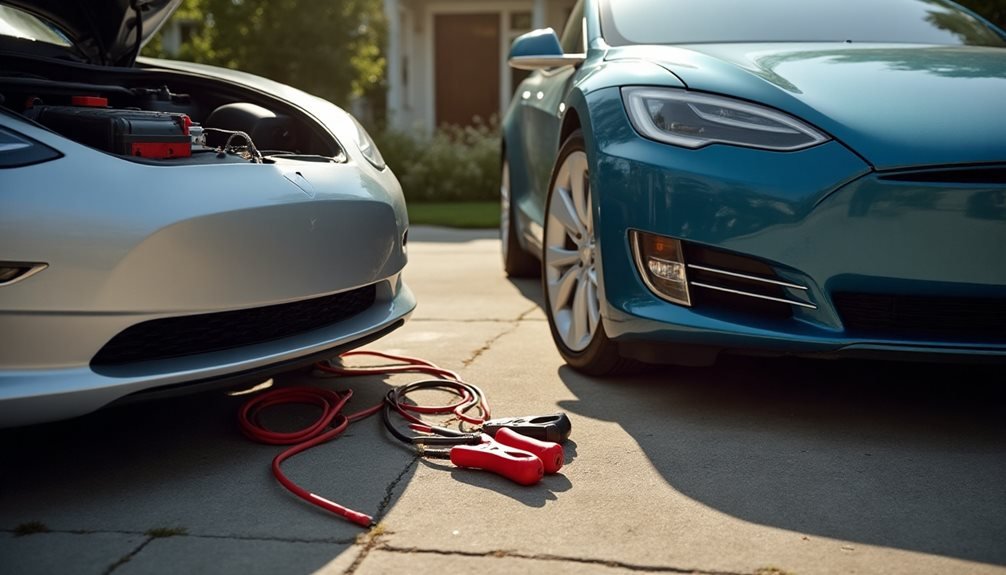
Why would anyone think using a $50,000+ electric vehicle to jump-start their neighbor’s rusty Honda is a good idea? Apparently, enough people do because Tesla felt compelled to explicitly prohibit it in their owner’s manuals. That’s right – the manufacturer straight-up says no.
Tesla’s official policy couldn’t be clearer. Don’t use your fancy electric car as a portable battery pack for other vehicles. The restriction applies to every Tesla model, and there’s good reason for it. The low-voltage systems simply can’t handle the high-current demands that gas engines need to crank over.
Here’s the technical reality: Tesla’s 12V auxiliary battery lacks the oomph required to fire up an internal combustion engine. EVs don’t have the high-voltage, high-current outputs that traditional cars demand for starting. The DC/DC converter wasn’t designed to support external loads, and pushing it beyond its limits could fry expensive components.
Tesla’s electrical infrastructure prioritizes efficiency, not surge capacity. Unlike gas cars with their beefy alternators and voltage regulators, Teslas focus on energy conservation. They lack traditional starters and the resilient electrical systems designed to handle external power draws.
Electrical isolation barriers protect against reverse currents during charging, but they’re not built for jump-starting duties. Online videos showing successful Tesla jump-starts create misleading perceptions about the actual safety of this practice.
Ironically, a Tesla can receive a jump-start. Ice vehicles can jump-start Tesla’s own 12V battery through proper connections in the frunk. The negative cable must attach to a metal ground point, not the chassis, to prevent short circuits. Just like Tesla’s dashcam viewer allows you to monitor your car’s security remotely, Tesla recommends using a portable low-voltage power supply for external jump-starting situations. Portable jump starters work too and remain the safest option for helping stranded motorists.
The risks aren’t trivial. Improper connections can cause arcing, short circuits, or component damage to both vehicles. Tesla’s warranty may exclude coverage for unauthorized procedures, and insurance policies might not cover related claims. Legal liability becomes a concern if someone damages another vehicle while attempting an unauthorized jump-start.
Tesla emphasizes using external portable jump starters for good reason. They work, they’re safe, and they won’t void expensive warranties. Sometimes the simple solution is the clever one.
Frequently Asked Questions
Will Jump Starting Another Car Void My Tesla Warranty?
Yes, jump starting another car will likely void a Tesla warranty. Tesla explicitly prohibits using their vehicles to jump-start others in their manual. They classify this as misuse under warranty terms, which absolves them of liability for any resulting damage.
The company considers it an unauthorized modification that violates their New Vehicle Limited Warranty guidelines. Pretty clear-cut policy.
Can a Tesla Battery Get Damaged From Jump Starting Other Vehicles?
Yes, Tesla batteries can absolutely get damaged from jump starting other vehicles. The 12V system wasn’t designed for the massive 300-600 amp surges that gas cars need. This can fry the DC/DC converter, overheat lithium-ion cells, and trigger protective shutdowns.
Tesla’s battery management system basically throws a fit when you exceed its design limits. The company explicitly warns against it for good reason.
How Many Times Can I Safely Jump Start Cars With My Tesla?
Tesla’s answer is zero times. Their manuals explicitly prohibit jump-starting other vehicles, period. No safe threshold exists because the DC/DC converters weren’t designed for this abuse.
The lithium-ion 12V system can’t handle repeated high-current loads like traditional car batteries. One jump-start voids the warranty.
Tesla provides no technical specs for “safe” frequency because they don’t want owners doing it at all.
Does Jump Starting Drain My Tesla’s Battery Significantly?
Jump starting absolutely drains a Tesla’s battery, and it’s not subtle about it. The DC/DC converter pulls power from the main traction battery to sustain the 12V system during the process.
Tesla’s smaller 12V battery offers limited reserve capacity compared to traditional cars. High-current draws accelerate depletion, especially during repeated attempts.
The car may require immediate charging afterward to compensate for the drained capacity.
Can I Jump Start a Diesel Truck Using My Tesla?
Jump-starting a diesel truck with a Tesla? Not happening. Diesel engines need massive amperage that Tesla’s 12V system simply can’t deliver. The truck’s high-compression engine will laugh at Tesla’s auxiliary battery.
Plus, Tesla explicitly forbids this in their manual. Want to risk frying your DC/DC converter? Go ahead.
Smart money says grab a heavy-duty portable jump starter designed for diesels instead.