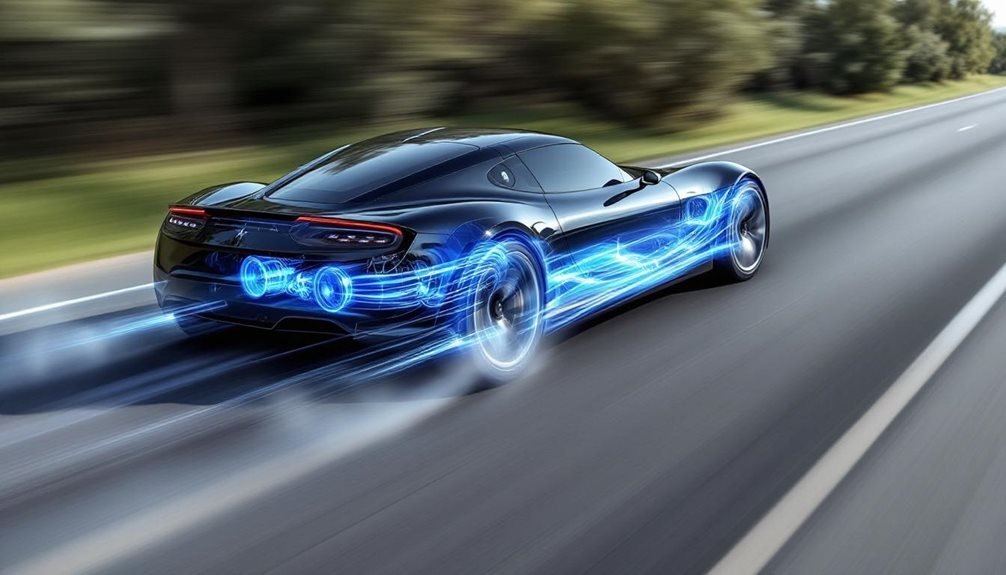

Tesla’s filed a patent for an active aerodynamic system that could help its new Roadster accelerate from 0 to 60 mph in less than one second. The system uses deployable skirts and fans to create low-pressure regions under the car. This generates a partial vacuum that increases grip on the road.
Active aerodynamics using fans and deployable skirts could push Tesla’s Roadster to sub-one-second acceleration times.
The technology works by creating airflow pathways that pull the vehicle down toward the pavement. Drivers can adjust the downforce for different driving conditions. Multiple aero modes let the car enhance its performance whether it’s launching from a standstill or taking corners at high speed.
Tesla’s aiming to beat its original 2017 Roadster promise of 1.9 seconds to 60 mph. The company wants to match the acceleration of Top Fuel dragsters, which aren’t street legal. This would make the new Roadster faster than Tesla‘s Model S Plaid but at a lower price point.
The system faces several technical obstacles. It needs precise contact with the ground to work properly. Road debris and potholes could damage the mechanism. The complex implementation system might make daily driving more complicated. Some regions might restrict or ban the technology on public roads.
Tesla’s design takes inspiration from the McMurtry Spéirling, which uses fan-based downforce. The company’s modifying aerospace principles for automotive use. While conventional EVs hit acceleration limits, this system could break through those barriers. The active system can selectively seal different portions of the car’s underbody to maximize downforce exactly where needed.
The new Roadster’s accepting $5,000 deposits now, with buyers paying $45,000 when they place their full order. Tesla expects the final price to land between $200,000 and $250,000. That’s expensive, but it targets Tesla enthusiasts who want exclusive, state-of-the-art technology. Unlike traditional gas cars with over 1,000 moving parts under the hood, Tesla’s electric drivetrain simplicity should contribute to the Roadster’s reliability even with its advanced aerodynamic system.
This project goes far beyond the original Roadster Sport, which did 0-60 in 3.7 seconds. The first generation Tesla Roadster demonstrated the viability of electric sports cars, achieving 244 miles on a single charge when most doubted EVs could deliver performance and range. Elon Musk initially talked about using SpaceX rocket thrusters for the car. Now he’s focused on aerospace-inspired engineering that could set world records.
Production delays have made some people skeptical about whether Tesla can deliver. But if the patent works as described, it could redefine what’s possible for street-legal performance cars.