Tesla’s pulling the plug on its Dojo supercomputer project and moving toward a new system called AI6. Bloomberg News reported in August 2025 that the company formally disbanded Dojo as a standalone project. But the technology isn’t completely dead. Instead, Tesla’s incorporating its core ideas into a bigger, more flexible system.
The Dojo supercomputer first appeared at Tesla’s Autonomy Day in April 2019. Elon Musk promised it would train the neural networks that power Tesla’s Full Self-Driving software. The system was built to handle millions of terabytes of driving video from Tesla’s cars on the road. Unlike regular supercomputers, Dojo’s design focused specifically on processing video data.
By September 2022, Tesla showed off working prototypes at its AI Day event. The company officially started production in July 2023. During testing, Dojo pulled so much power that it tripped a San Jose power substation in 2022, drawing 2.3 megawatts. Tesla also ran 10,000 Nvidia H100 GPUs alongside Dojo in August 2023.
Dojo’s power demands were so extreme that testing tripped a San Jose substation while drawing 2.3 megawatts.
The supercomputer gave Tesla several advantages. It trained FSD neural networks faster than standard computers. The system processed video from over four million Tesla vehicles, learning from real-world driving situations. It also meant Tesla didn’t have to rely on other companies for AI training.
But Tesla’s needs grew beyond what Dojo could handle. In June 2024, the company revealed plans for a massive computing cluster at its Texas Gigafactory. This facility would start with 130 megawatts of power and eventually exceed 500 megawatts. The new approach mixed Tesla’s own hardware with Nvidia chips and other technologies. Tesla completed deployment of its Cortex cluster with approximately 50,000 H100 Nvidia GPUs, which contributed to major improvements in FSD V13’s safety and comfort features.
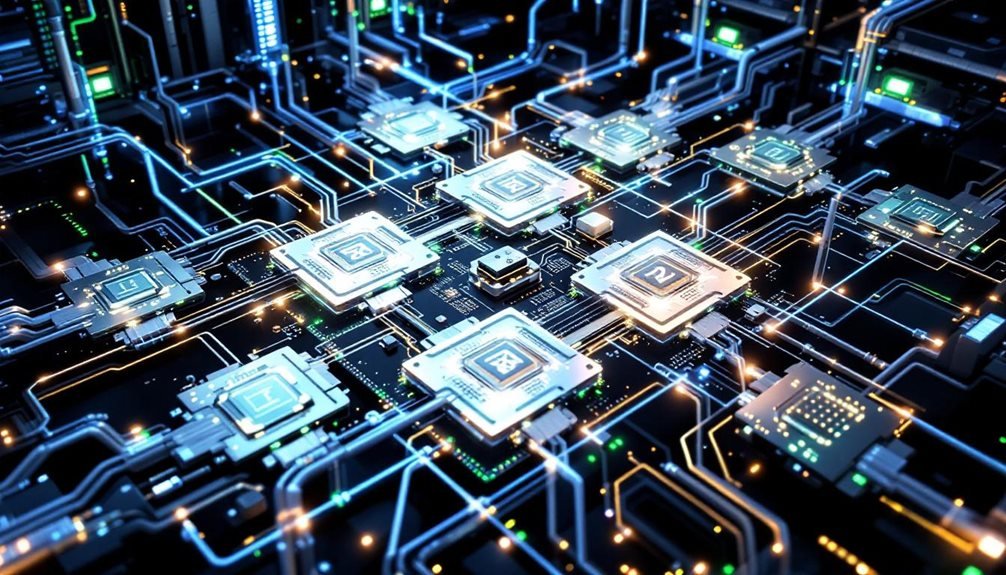
Musk called Dojo “a long shot worth taking” in January 2024, acknowledging its uncertain future. The shift to AI6 represents evolution, not failure. The new system keeps Dojo’s focus on processing driving videos efficiently. It combines Tesla’s homegrown technology with external solutions to handle more complex AI training tasks. The original Dojo architecture featured the custom D1 chip manufactured by TSMC with 50 billion transistors, demonstrating Tesla’s capability in silicon design.
This change shows Tesla’s commitment to becoming an AI company, not just a carmaker. The AI6 design builds on Dojo’s foundation while expanding Tesla’s computing capabilities for autonomous driving development.