Tesla’s announcement about getting approval for its Full Self-Driving system in Europe has hit a snag. The company claimed in a social media post that the Dutch regulator RDW would grant approval in February 2026. Tesla even encouraged people to contact RDW to express their excitement. However, the regulatory agency has a different take on the timeline.
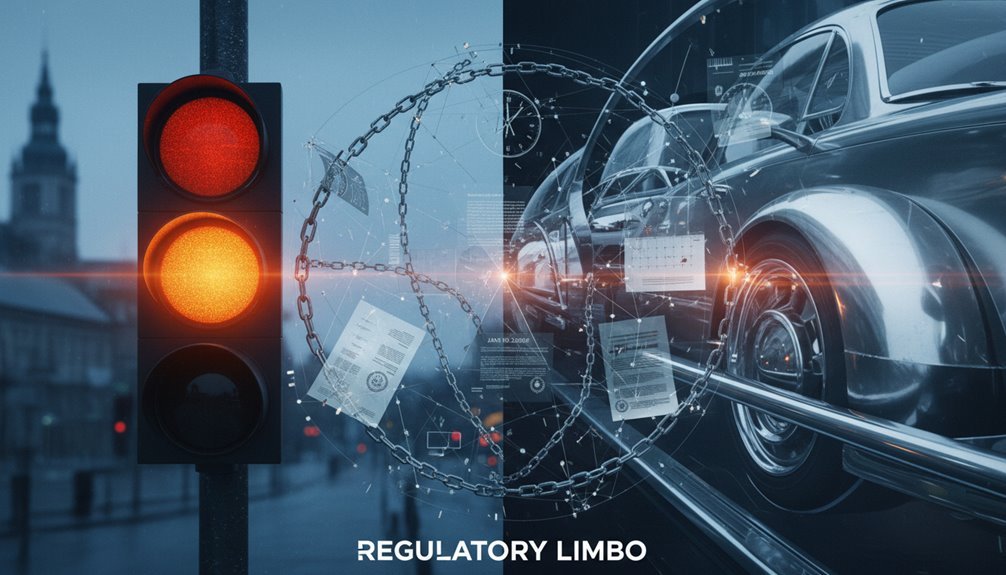
RDW clarified that February 2026 is actually a target date for demonstrating and testing FSD Supervised, not a guaranteed approval date. The agency stated that “whether schedule will be met remains to be seen in the coming period.” This marks a significant gap between what Tesla promised and what regulators actually said. Tesla framed the approval as a confirmed outcome, while RDW used careful language that left room for delays or rejection. RDW also requested that Tesla cease encouraging fan communications, as customer service time was being wasted on unproductive outreach efforts.
Tesla’s approval timeline faces regulatory scrutiny as RDW clarifies that February 2026 is merely a target for testing, not guaranteed approval.
Safety is the main priority for RDW in this process. The Dutch regulator emphasized that traffic safety is paramount when deciding whether to approve new driving systems. This means the agency won’t rush approval just to meet Tesla’s timeline. The system must meet all technical and safety standards first. RDW’s cautious approach reflects a broader European commitment to balancing innovation with rigorous safety testing before allowing new autonomous features on public roads.
Currently, FSD Supervised is available in several countries including the United States, Canada, Australia, and Mexico. The system costs $8,000 extra and requires drivers to keep their hands on the wheel at all times. It’s marketed as an advanced driver assistance system, not a fully autonomous vehicle.
The approval process works in stages. Netherlands national approval would be the first step. After that, the system could potentially get broader European Union recognition through a provisional approval mechanism. The entire EU-wide process could take several months after the Netherlands gives the okay, possibly extending into summer 2026 or beyond.
Tesla’s bold announcement may have gotten ahead of reality. While the company is clearly pushing toward European approval, regulators are taking a more cautious approach. They’re focused on safety rather than speed. Until RDW and other officials complete their safety reviews and testing, February 2026 remains just a target, not a promise.