Electric vehicles face mounting challenges that could derail their rapid growth in the United States. Market data shows EV sales are hitting roadblocks just as federal support is about to disappear.
The US EV market share dropped to 7.4% in the second quarter of 2025, down from 8.0% a year earlier. Only 310,839 electric vehicles sold during that period. Tesla kept its lead with 46% of the market, but its sales fell 10% compared to last year. General Motors doubled its EV sales while Ford’s dropped. Hyundai Group, including Kia, has emerged as a significant growth player in the EV market, capturing increasing market share through strong sales performance.
A major problem is coming fast. Federal tax credits for EVs will expire on September 30, 2025. These credits help make electric cars more affordable for buyers. Early data suggests people are rushing to buy EVs before the deadline. This creates an artificial spike in sales that won’t last. After September, sales could drop sharply. Germany already saw this pattern when it phased out its EUR 4,500 subsidy in late 2023, causing a significant decline in EV adoption rates.
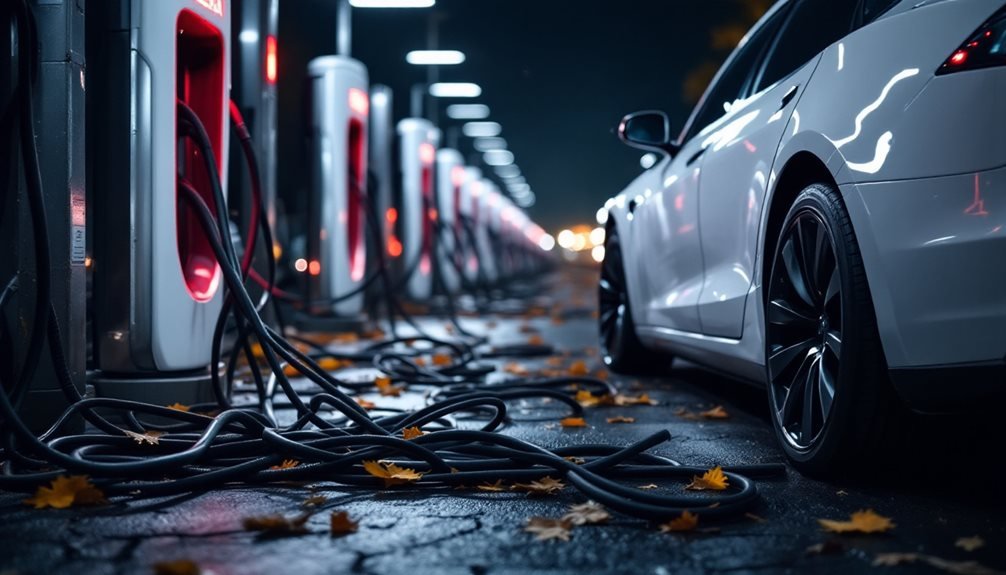
The charging network isn’t keeping up either. For every 42 new electric vehicles registered, only one new public charging port gets installed. This gap makes many drivers nervous about running out of power on long trips. Without enough charging stations, EVs remain impractical for millions of Americans. To maximize range efficiency, drivers need proper battery management practices to reduce heat and improve performance during longer journeys.
Competition from China adds more pressure. Chinese companies produced 70% of the world’s electric vehicles in 2024. They sold 11 million EVs compared to America’s 1.6 million. The US market now has 149 different electric models available, but domestic manufacturers struggle to compete on price.
The numbers tell a concerning story. EVs make up only 2.1% of all vehicles on American roads today. While global EV sales rose 25% to 17.8 million units in 2024, experts say the world needs 380 million electric vehicles by 2030 to meet climate goals. Current projections fall far short at 245 million.
Since 2013, worldwide EV sales jumped 7,000%, averaging 110% growth per year. But this explosive growth can’t continue without major improvements. Battery costs must drop considerably. The charging network needs massive expansion. Without these changes, the electric vehicle revolution could stall, leaving America behind in the global shift to cleaner transportation.