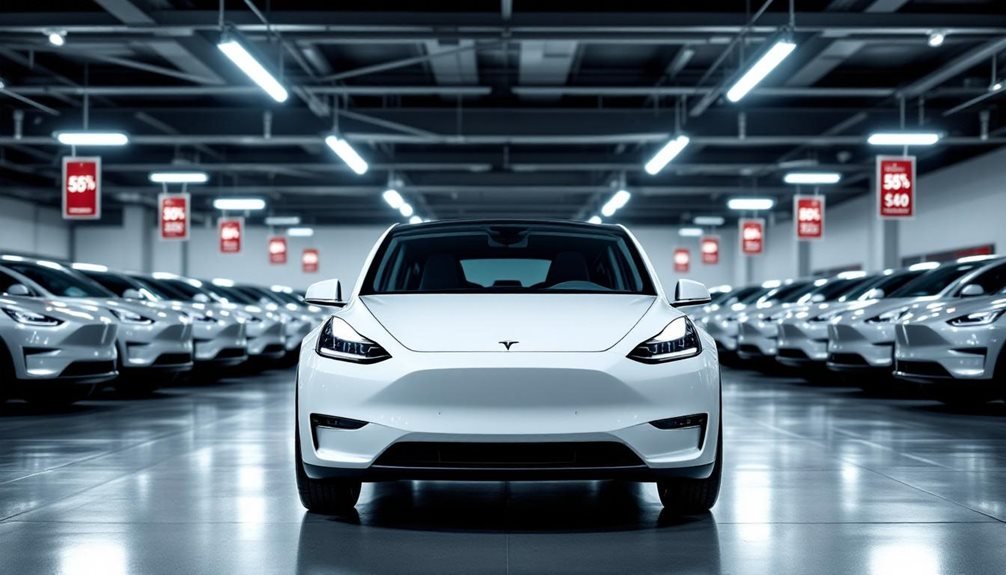

Most Tesla SUVs lose nearly 40% of their value within two years, making them more affordable for used car buyers. The Model Y, originally priced at $46,000, drops to about $28,916 after two years. That’s a loss of $17,084 for the original owner.
The depreciation doesn’t stop there. After five years, the Model Y retains only 40% of its original value, worth roughly $20,424. By year ten, owners can expect their SUV to be worth just $10,791, or 21% of what they paid.
After five years, the Model Y retains only 40% of its original value, dropping to roughly $20,424.
Tesla’s other SUVs follow similar patterns. The Model S loses 42.9% after three years, while the Model X drops 38.8% in the same period. The base Model 3 depreciates between 25% and 35% in its first three years, matching the Model Y’s rates.
Several factors drive these steep price drops. Battery technology advances quickly, making older models seem outdated. Tesla’s over-the-air updates help maintain vehicle functionality but can’t fully offset the perception that newer models offer superior capabilities. More used Teslas entering the market pushes prices down. The risk of self-driving features becoming obsolete also affects values. Battery degradation concerns impact long-term resale prices, even though Tesla batteries typically last longer than expected. Battery replacement costs ranging from $5,000 to $15,000 create significant buyer uncertainty in the used market. Owners can protect their investment by following regular maintenance schedules and limiting excessive mileage.
Buyers who purchase two-year-old Model Ys save about $18,846 compared to buying new. These vehicles have already absorbed the steepest depreciation but still offer modern features. Dealerships typically offer $25,581 for a two-year-old Model Y, while private sales fetch slightly more.
The sweet spot for value appears between years two and four. During this period, depreciation slows while the vehicles still maintain most of their functionality. Three-year ownership costs buyers approximately $11,943 in depreciation.
Higher-end Tesla models like the S and X retain between 20% and 27% of their value after ten years. This positions them similarly to luxury gas vehicles regarding long-term value retention.
Market trends continue changing as EV adoption grows globally. Increased competition from other manufacturers and rapid technological improvements mean Tesla’s pricing structure faces ongoing pressure. The question remains whether these depreciation rates will stabilize or continue declining as the EV market matures.