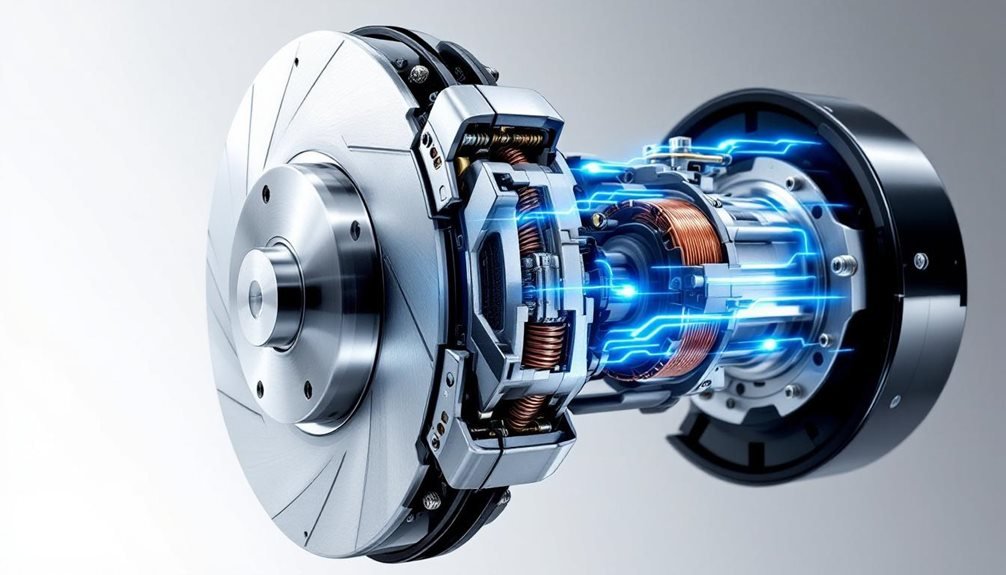
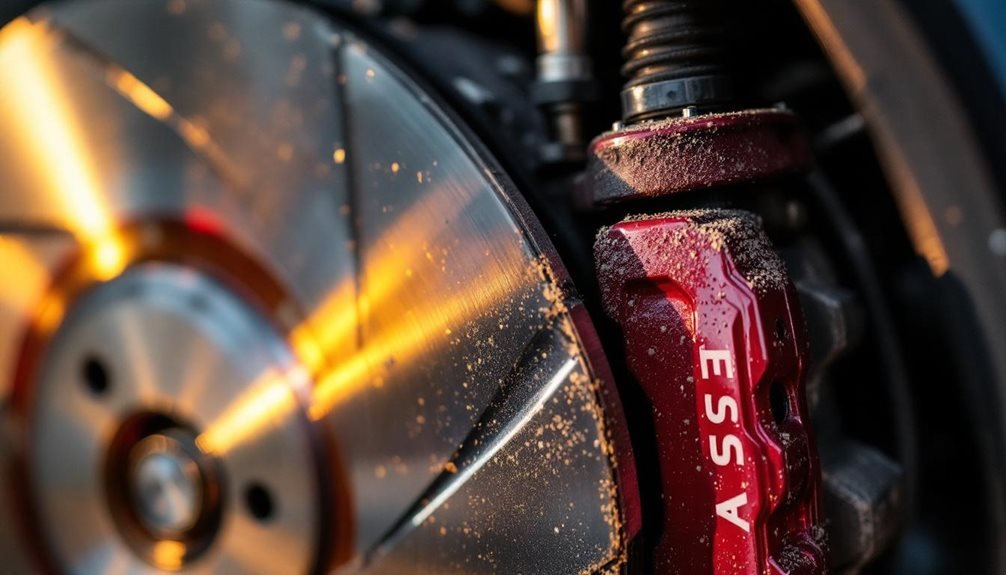
Tesla’s brake system basically turns the old-school approach upside down. The electric motor switches roles during deceleration, becoming a generator that recaptures around 70% of energy normally wasted as heat. This regenerative braking handles most stopping duties, while traditional friction brakes serve as backup. One-pedal driving becomes possible since releasing the accelerator engages strong regenerative braking. The setup extends range, reduces brake wear, and requires some driver adjustment to perfect its unique feel.

Tesla’s brake system isn’t just about stopping a car. It’s a sophisticated dance between old-school friction and advanced energy recovery that makes most traditional braking systems look primitive.
Tesla’s braking isn’t just stopping—it’s an elegant fusion of friction physics and energy harvesting that reimagines deceleration.
The star of the show is regenerative braking. When drivers ease off the accelerator, the motor flips roles and becomes a generator. Kinetic energy that would normally vanish as heat gets captured and stuffed back into the battery. It’s like having a tiny power plant that only works when slowing down.
This system recaptures roughly 70% of energy that conventional brakes would waste. That’s not just impressive—it’s the difference between decent range and actually getting somewhere. The intensity is adjustable too, letting drivers customize how aggressively the car slows down when they lift their foot.
One-pedal driving takes this concept further. Release the accelerator, and regenerative braking kicks in hard enough to bring the vehicle to a complete stop. No brake pedal needed. It’s efficient in stop-and-go traffic, though drivers need time to adjust. Abrupt stops happen when people forget they’re not driving their grandmother’s sedan anymore.
Tesla’s mechanical brakes are where things get weird. Instead of traditional vacuum boosters, there’s an electromechanical system with motors and springs providing pedal resistance. It mimics the feel of conventional brakes while enabling precise automated braking through Autopilot integration. Only the Porsche 918 shares this unusual design among production vehicles.
Brake pads and rotors still exist, but they’re basically backup dancers. Regenerative braking handles most deceleration, so friction components last considerably longer than in traditional cars. The dual system approach reduces heat, wear, and maintenance costs compared to conventional braking systems. Brake fluid still needs attention, though many owners forget this detail.
Energy management is where regenerative braking shows its worth. That 70% energy recovery directly translates to extended range. Higher regenerative settings mean more juice back in the battery. Cold weather or low charge states reduce effectiveness, but even compromised regenerative braking beats traditional systems. Tesla also integrates the vehicle’s onboard cameras and sensors into the overall safety ecosystem, just like the Sentry Mode system that monitors the car when parked.
The result is a braking system that’s part energy recovery, part traditional stopping power, and entirely different from what most drivers expect. It works, saves energy, and occasionally confuses people used to burning brake pads for a living. The system components including calipers, pistons, pads, and rotors work together with regenerative braking to optimize overall performance.
Frequently Asked Questions
How Much Money Can I Save on Brake Pad Replacements With Regenerative Braking?
Regenerative braking can save drivers over $2,000 in brake maintenance costs across a decade compared to gas vehicles.
Tesla brake pad replacements typically cost $150-$300 per axle, while gas cars hit $400-$600 with rotors included.
Some EV owners report brake pads lasting beyond 200,000 miles. That’s genuinely impressive longevity that makes accountants smile and mechanics wonder where all their brake work went.
Can I Disable Regenerative Braking if I Prefer Traditional Braking Feel?
Post-2020 Tesla owners are stuck with regenerative braking whether they like it or not. Tesla removed the option to disable it completely. This feature was taken away to meet EPA range testing requirements.
Drivers can choose “Reduced” mode for less aggressive regen, but it’s still there. Pre-2020 models had more flexibility with override settings.
Want traditional braking feel? Manual brake pedal application is the only workaround now.
Do Tesla Brakes Work Differently in Cold Weather or Winter Conditions?
Tesla brakes definitely act up in cold weather. Regenerative braking gets wimpy when batteries are freezing—charge acceptance drops hard. The car basically turns into a regular vehicle until things warm up.
Range estimates become laughably inaccurate, hitting just 44.2% precision in freezing temps. Mechanical brakes take over more often, wearing pads faster.
One-pedal driving? Forget it until the battery stops being a popsicle.
How Long Do Tesla Brake Pads Typically Last Compared to Gas Cars?
Tesla brake pads last substantially longer than gas cars – typically 50,000 to 100,000+ miles versus the usual 30,000 to 70,000 miles for traditional vehicles.
The secret? Regenerative braking handles about 80% of stopping duties, leaving friction pads to collect dust. Most Tesla owners forget their car even has brake pads until they need inspection.
What Happens to Braking Performance When the Tesla Battery Is Fully Charged?
When Tesla’s battery hits 100%, regenerative braking basically gives up. There’s nowhere for that captured energy to go, so the system switches to old-school friction brakes.
Drivers notice the difference immediately – mechanical braking feels harsher, less smooth. It’s like going from gliding to grinding. The car still stops fine, but that seamless regen experience disappears until battery levels drop enough to make room for energy recovery again.