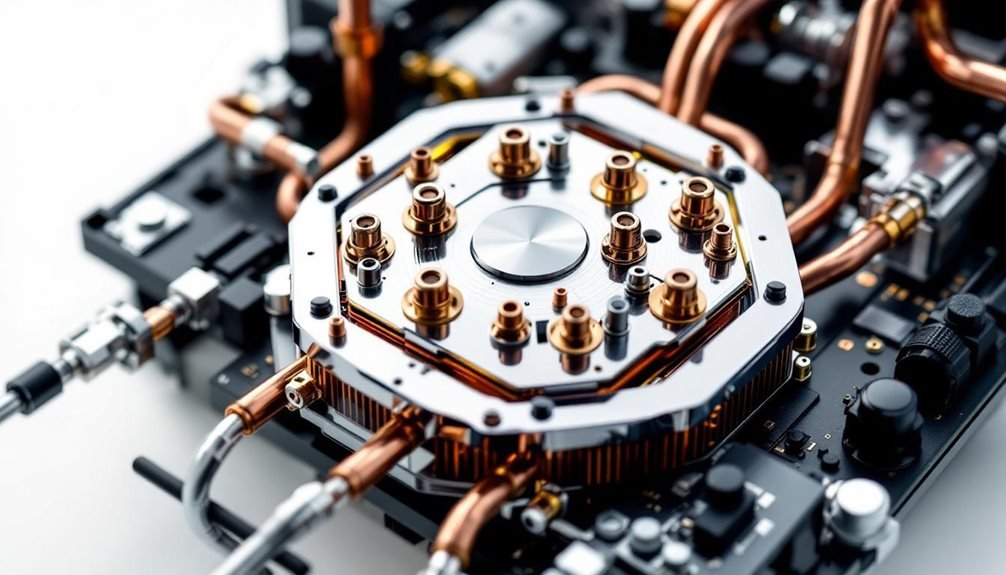
Tesla’s heat pump system replaces energy-draining electric heaters with a clever Super Manifold design that consolidates 15-20 heating components into one compact PCB assembly. The eight-way Octo-Valve controls refrigerant flow for heating or cooling while capturing waste heat from motors and batteries. This setup uses 75% less energy than traditional resistive systems, maintaining cabin warmth and battery performance even in brutal cold. The innovation keeps driving range stable when other EVs struggle.
Why would Tesla reinvent something as basic as a car heater? Because traditional heating systems are energy vampires that brutally drain EV batteries, especially when it’s freezing outside. Tesla’s innovative approach not only enhances comfort but also improves energy efficiency. By integrating advanced heat pump technology, they minimize energy loss while effectively warming the cabin, reducing the strain on the battery. This ingenuity complements how Tesla superchargers function, optimizing charging times and overall performance in cold weather conditions.
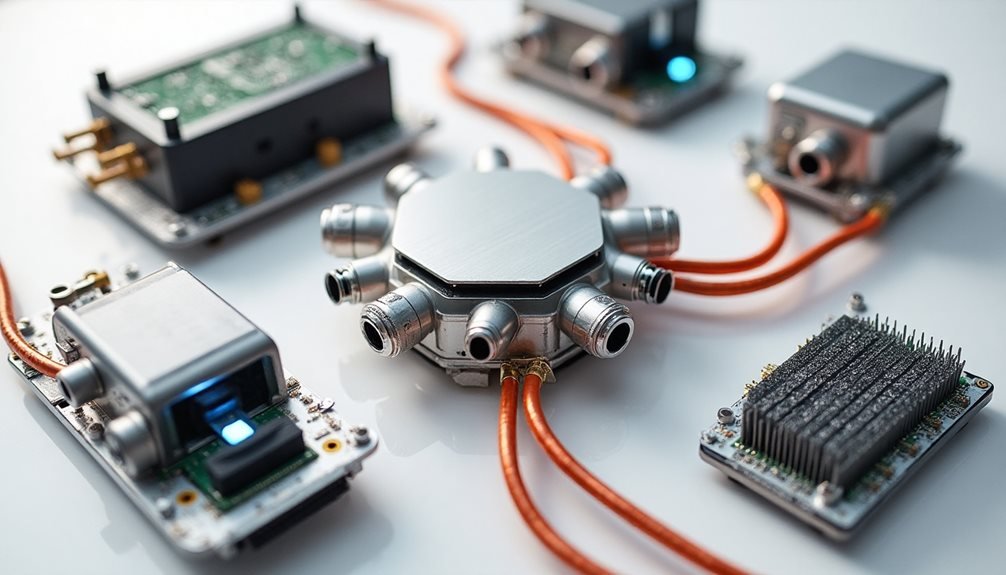
Tesla’s solution is the Super Manifold Design, a clever engineering trick that integrates refrigerant and coolant channels into a single two-layer PCB assembly. Instead of dealing with 15-20 separate parts scattered throughout the vehicle, everything gets unified into one compact system. It’s like combining a Swiss Army knife with thermal management. This innovative approach not only reduces weight and complexity but also enhances reliability by minimizing the potential points of failure. Meanwhile, the Tesla mobile connector explained offers users a simple yet efficient way to charge their vehicles, further simplifying the electric driving experience. By integrating multiple functions into a single system, Tesla continues to push the boundaries of automotive design and engineering.
Tesla’s Super Manifold Design transforms 15-20 scattered heating components into one unified system—like a Swiss Army knife for thermal management.
At the heart of this system sits the octo-valve, which sounds like something from a sci-fi movie but actually regulates refrigerant direction based on whether you want heating or cooling. This valve enhances heat exchange efficiency during mode transitions and maintains consistent thermal performance regardless of outside conditions.
The real magic happens with energy efficiency. Tesla’s heat pump system reduces energy consumption by 15-20% in cold weather compared to resistive systems. Even better, it operates at just 25% of the energy demand required by non-heat pump systems. That’s not incremental improvement—that’s revolutionary. Tesla’s heat pump system delivers exceptional performance in snowy regions like Norway and Canada where extreme cold conditions typically challenge EV battery efficiency.
The system gets smarter by capturing waste heat from electric motors, inverters, and battery packs. Instead of letting that thermal energy disappear into the atmosphere, Tesla redirects it to both cabin and battery systems. This creates a closed-loop thermal management network that actually makes sense. This innovative approach not only enhances energy efficiency, but also improves the overall performance of the vehicle under various conditions. Understanding how Tesla’s AC system functions is key to realizing how thermal energy can be maximized for comfort and efficiency. By utilizing waste heat, Tesla not only keeps the cabin warm in colder climates but also optimizes battery temperature for better range and longevity. Additionally, this system plays a crucial role in supporting the Tesla Bioweapon Defense Mode features, which ensures that the cabin remains protected from external contaminants while maintaining a comfortable environment. By effectively managing thermal energy, Tesla can provide a more enjoyable experience for passengers, regardless of external conditions. As a result, this innovative method not only elevates driving comfort but also reinforces Tesla’s commitment to safety and performance.
Cold weather performance is where traditional heat pumps typically fall apart, but Tesla’s system outperforms them in sub-zero environments. It preserves driving range in extreme cold through efficient heating while ensuring consistent cabin comfort with reduced energy draw. Perfect for those polar region markets where other EVs struggle.
Perhaps most impressively, the system functions autonomously to generate cabin heat independent of driving activity. On sunny days, it can redirect excess cabin heat to pre-warm batteries. The operational versatility adjusts to variable ambient temperatures and driver demand through reversible operation.
Tesla eliminated redundant components, lowered production complexity, and streamlined maintenance by minimizing interdependent subsystems. This design philosophy started with the Model Y before expanding across Tesla’s entire vehicle lineup. Like maintaining the vehicle’s exterior through proper washing techniques, Tesla’s heat pump system requires minimal interior detailing and care to ensure optimal performance. Sometimes the best innovation comes from completely rethinking the basics. This commitment to efficiency also extends to performance enhancements, including the tesla acceleration boost features that allow drivers to unlock additional power and responsiveness with a simple software update. By focusing on innovation at every level, Tesla ensures that each vehicle not only meets high standards for sustainability but also delivers an exhilarating driving experience. Emphasizing a seamless integration of technology and design, Tesla continues to redefine what consumers can expect from electric vehicles.
Frequently Asked Questions
How Much Does It Cost to Replace a Tesla Heat Pump?
Tesla heat pump replacements hit owners hard after the 50,000-mile warranty expires. One Model Y owner got slammed with a $3,694 bill at 58,600 miles.
That wasn’t just the heat pump—it included the super manifold and busted coolant lines too. Tesla service centers handle the work, but costs vary by location.
It’s cheaper than residential heat pumps, sure, but still painful for car maintenance.
Can Tesla’s Heat Pump Work in Extremely Cold Temperatures Below -10°F?
Tesla’s heat pump struggles in brutal cold below -10°F. Sure, it still works, but efficiency tanks hard. The system gets real cranky when temperatures drop that low. Tesla knows this, so they built in backup resistive heaters that kick in automatically.
The heat pump keeps scavenging waste heat from the battery and motor, but don’t expect miracles. It’s survival mode, not efficiency mode.
Does Using the Heat Pump Significantly Reduce Tesla’s Driving Range?
Tesla’s heat pump actually *increases* driving range compared to resistive heating. The system delivers 5-15% energy savings in ideal conditions, using only 1,000-3,000 watts versus 7,500 watts for traditional electric heaters.
A Chevy Bolt study showed 230 miles with heat pump versus 176 miles without. However, efficiency drops during high-speed driving and extreme cold below -10°C.
How Long Does Tesla’s Heat Pump Take to Warm the Cabin?
Tesla’s heat pump doesn’t work on a fixed timeline. Cabin warming speed depends entirely on outside temperature and how cold things got inside.
The system pulls heat from wherever it can find it – ambient air, battery waste heat, or drive units.
Colder weather means longer warm-up times. No magic number here, just physics doing its thing against whatever winter throws at it.
Can Tesla Owners Disable the Heat Pump and Use Resistive Heating Instead?
Tesla owners can’t disable the heat pump to force resistive heating. The system is locked down tight – no manual override, no user settings, nothing.
Software shows whether you’ve got “Heat Pump” or “Resistive” but won’t let you change it. The car decides automatically when to kick in the backup PTC heaters during extreme cold.
Tesla keeps full control over heating strategy.