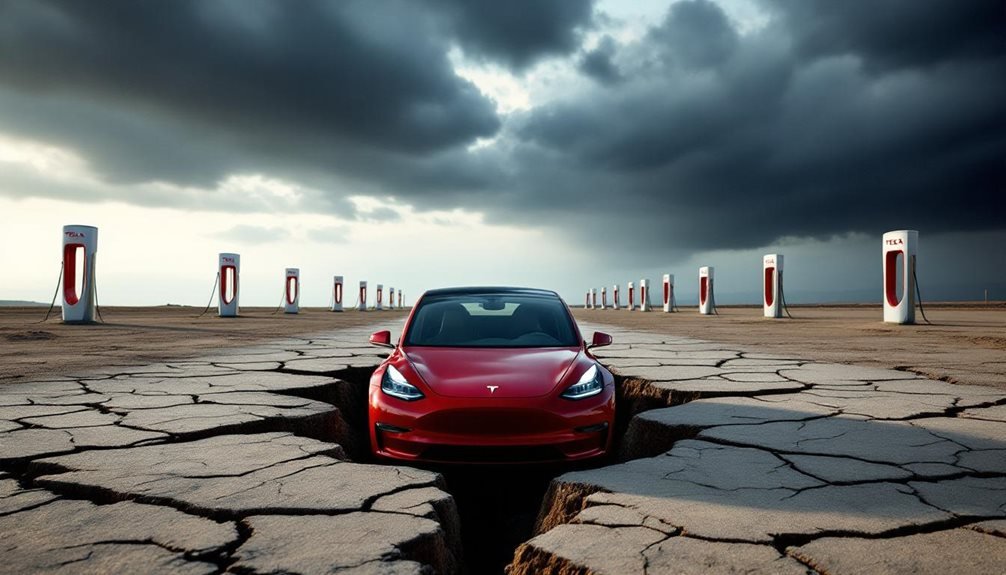
Tesla’s facing a tough road ahead. The company’s sales dropped 1% in 2024, and experts predict a 10% decline in 2025. Traditional car makers and Chinese EV companies are stealing market share. Plus, the U.S. is cutting EV incentives, and Tesla’s reputation in Europe isn’t what it used to be. As these challenges mount, investors are closely monitoring Tesla stock price analysis to gauge the company’s future prospects. The decline in sales combined with increasing competition could lead to significant changes in investor sentiment. If Tesla cannot adapt quickly to the evolving market landscape, further declines may be on the horizon. Despite these challenges, the Tesla Model 3 global sales success remains a bright spot for the brand, illustrating that consumer demand for electric vehicles is still strong. However, as competition rises, Tesla must innovate rapidly to maintain its edge in the market. The company’s ability to adapt to changing regulations and consumer preferences will be crucial in the coming years.
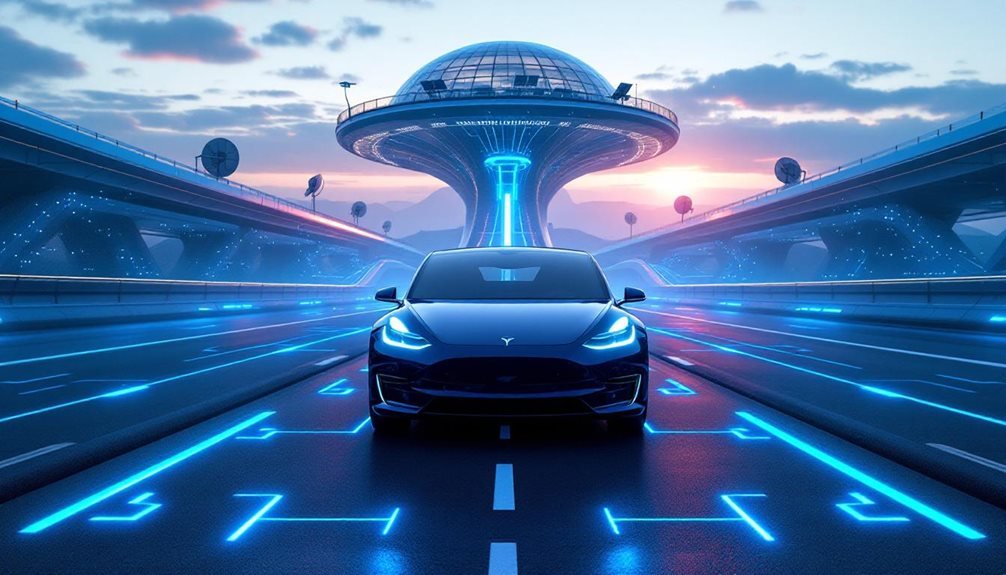
But Elon Musk isn’t worried about selling more cars right now. He’s betting everything on self-driving technology. Tesla’s Full Self-Driving system uses only cameras to see the road. The company removed radar and ultrasonic sensors from all its models by 2023. Instead, Tesla Vision‘s camera system creates a 3D map of everything around the car. Safety ratings stayed the same or got better after the switch. This shift towards a camera-centric approach underscores Tesla’s investment in artificial intelligence, which enhances the vehicle’s ability to make real-time decisions on the road. As the technology matures, the company anticipates that fully autonomous driving will not only improve efficiency but also revolutionize urban mobility. With ongoing software updates and continuous data collection, Tesla aims to refine its algorithms, bringing the reality of self-driving cars closer to fruition.
Musk’s plan goes way beyond cars. In 2025, Tesla will launch the Model 2, a cheaper electric car that connects owners to something called the Abundance Protocol. This system lets people share energy, offer rides, and use AI tools. Early buyers get first access to these features. It’s Musk’s way of changing how people think about owning things. The Model 2 is projected to capture 20% market share of the global compact EV segment within just six months of launch.
Tesla’s also jumping into home entertainment. The company announced a Smart TV for 2025 with 8K resolution and special eye-protecting technology. It’ll use SpaceX’s Starlink satellites for streaming anywhere in the world. The TV connects to Tesla cars and uses AI to pick shows viewers might like. The Smart TV features OptiAdapt Neural Vision, which automatically adjusts brightness, contrast, and color based on viewers’ eyesight. Tesla owners can also charge their vehicles using solar panels that require 56-75 panels for optimal charging efficiency.
While other car companies focus on making and selling vehicles, Tesla’s building an entire ecosystem. The Model 2 won’t just be a car. It’ll be part of a network where AI manages energy use and helps people share resources. Tesla’s software gets smarter as more people use it.
The big question is whether Musk’s vision will work fast enough. Competitors aren’t standing still. Chinese EV makers offer cheaper options. Legacy automakers have caught up in electric technology. Tesla needs its self-driving dreams to become reality soon. If they don’t, falling sales could hurt the company before its futuristic plans pay off.