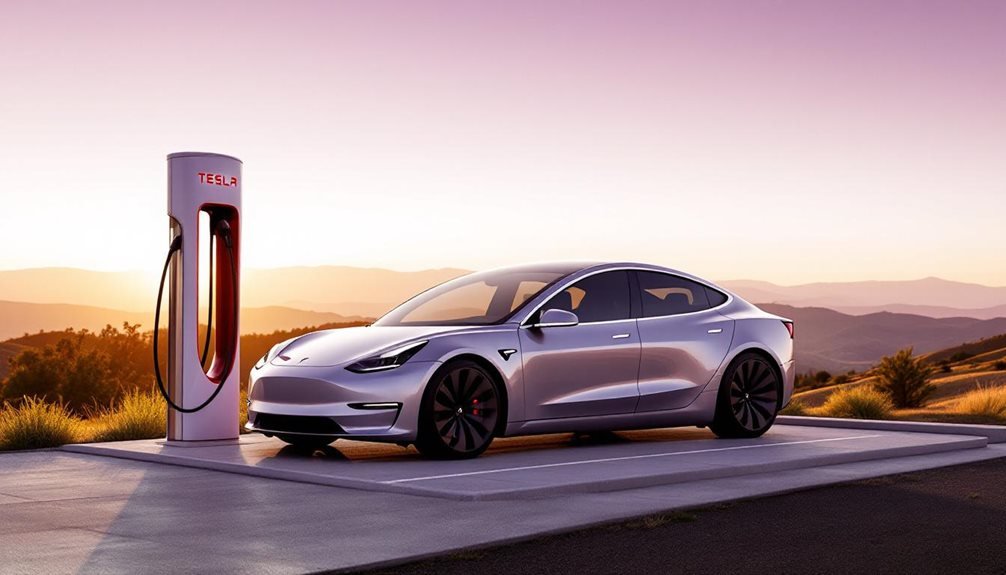
Tesla’s EPA estimates promise 277-311 miles per charge, but real-world driving tells a different story. Aggressive driving, cold weather, and blasting the AC can slash that range considerably. Speed between 55-65 mph on flat terrain delivers ideal efficiency, while mountainous terrain and lead-foot drivers see much less. Battery age matters too—expect 8-12% capacity loss after 100,000 miles. The official numbers look great on paper, but actual conditions reveal the complete image.
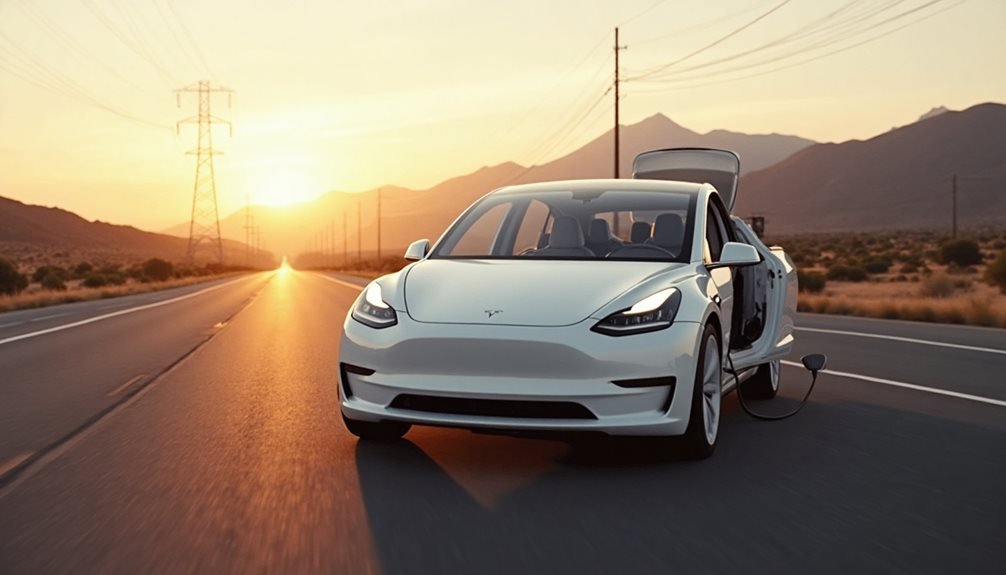
The EPA says a Tesla Model Y Long Range AWD will go 311 miles on a single charge. The Performance version? That drops to 277 miles. Not exactly shocking news—more power means less range. Basic physics, really.
But here’s the thing about EPA estimates. They’re based on standardized tests, not your actual driving habits. Tesla ranges typically span 303 to 405 miles depending on the model. However, real-world conditions laugh at those neat little numbers.
A Model 3 Long Range RWD might actually exceed EPA estimates if you’re lucky enough to drive in ideal conditions.
Speed matters more than most people realize. Cruise at 55-65 mph on flat terrain and you might hit 5 miles per kWh or better. Start driving aggressively or climb mountains? Kiss that efficiency goodbye. Weather doesn’t help either—rain, wind, and extreme temperatures all conspire against your range.
Climate control is another silent killer. Running the heat or AC to maintain a comfortable 70°F cabin when it’s 50°F outside will drain the battery faster than you’d expect. Heated seats, radio, even the ventilation system—all take their cut.
Every accessory is essentially a tiny vampire.
RWD models generally outperform AWD variants in the efficiency department. Simple math—fewer motors mean less energy consumption. Battery age also plays a role, though Tesla’s batteries hold up surprisingly well.
Most retain 80-90% capacity after 100,000 miles, with lifespans reaching 300,000 to 500,000 miles with proper care. Monitor your personal efficiency through Tesla’s Energy App on the touchscreen, which tracks your actual consumption patterns and offers real-time suggestions.
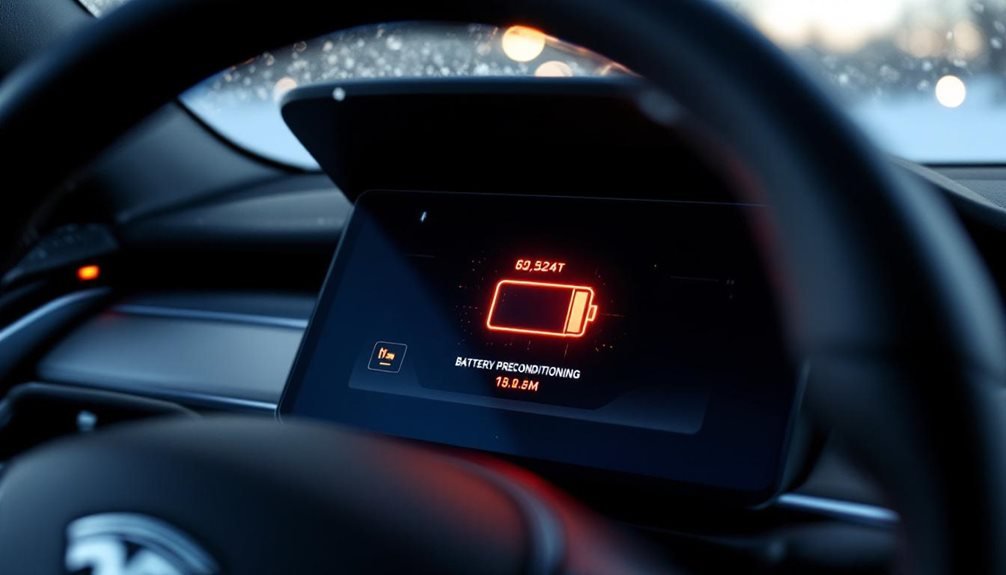
Temperature fluctuations cause range estimates to jump around like a caffeinated squirrel. Pre-warming the battery before charging helps, but it’s just one more thing to remember.
Charging strategies matter too—keeping the battery between 80-90% for daily use preserves longevity, though 100% is fine for road trips.
The third-row seats in Model Y are cramped but don’t affect range. Larger rims or off-road tires will hurt efficiency though.
After 100,000 miles, expect 8-12% capacity loss. The 8-year warranty covers degradation issues, and software updates continuously refine battery management.
Tesla’s battery management system does most of the heavy lifting automatically. The Model Y’s towing capacity of 3,500 pounds will noticeably reduce range when hauling heavy loads. When the 12V battery completely dies, essential functions like opening the frunk require emergency procedures or external power sources.
Frequently Asked Questions
How Much Does It Cost to Charge a Tesla at Home Versus Public Stations?
Home charging costs $9-12 per full charge, running about $40-60 monthly for typical drivers. Public stations? That’s where things get expensive fast.
Level 2 public chargers cost $12-19 per charge, while Superchargers slam drivers with $20-42 per session.
Home charging averages $10-20 monthly versus public’s brutal $20-50+.
Superchargers cost 2-4 times more than home rates. The math isn’t subtle.
Can I Charge My Tesla Using a Regular Household Outlet?
Yes, Tesla owners can charge using regular household outlets. Standard 120V three-prong outlets work with Tesla’s Mobile Connector, providing a whopping 2-3 miles of range per hour.
That’s overnight charging for daily commuters who drive under 30 miles.
Need faster? 240V outlets like dryer plugs provide approximately 30 miles per hour, but require professional installation.
It’s doable, just painfully slow compared to dedicated charging solutions.
What Happens if My Tesla Runs Out of Battery While Driving?
When a Tesla’s battery dies mid-drive, the car gradually loses power and eventually stops. No dramatic engine sputtering here—just a quiet, anticlimactic halt.
The vehicle enters a “limp mode” warning drivers beforehand, reducing speed and shutting off non-essential features. Once fully drained, it’s basically a very expensive paperweight until recharged.
Roadside assistance becomes necessary since there’s no gas can equivalent for electric cars.
Does Cold Weather Significantly Reduce My Tesla’s Charging Speed?
Cold weather absolutely hammers Tesla charging speed.
When temperatures drop below 20°F, charging times can literally double – that 45-minute session becomes a painful 2+ hour ordeal.
The lithium-ion chemistry slows down, voltage gets restricted for safety, and the battery prioritizes warming itself over actually charging.
Newer heat pump models handle it better, but winter charging still sucks compared to summer speeds.
How Often Should I Charge My Tesla to Maximize Battery Lifespan?
Tesla owners should charge when the battery hits 20-30%, not daily top-offs. Keep it between 20-80% for maximum lifespan.
Daily charging to 80-90% works fine for non-LFP batteries.
LFP batteries? Charge to 100% without worry. Save full charges for road trips or freezing weather.
Frequent 100% charging accelerates degradation unnecessarily. Partial cycles actually help modern Tesla batteries stay balanced longer.