
Tesla battery preconditioning typically takes 15 to 30 minutes in normal weather conditions. Cold temperatures? That’s a different story entirely. Below freezing extends the process to 30-45 minutes, while extreme cold can demand a full hour. Hot climates usually stick to the standard 15-30 minute window. Battery type matters too—LFP batteries take longer than standard lithium-ion. Tesla’s automatic system kicks in 15-25 minutes before Supercharging destinations. The specifics depend on several key factors worth investigating further. Additionally, drivers should consider that factors such as the vehicle’s state of charge and current temperature can further influence the waiting time at Tesla service. Planning ahead and allowing for these variations can ensure a smoother experience while charging. Being prepared for winter conditions or extreme heat can save valuable time and enhance overall convenience.
While Tesla owners obsess over range anxiety, many completely ignore the battery warming up beforehand—which is honestly backwards. Additionally, understanding how to maximize Tesla battery lifespan is crucial for ensuring the vehicle performs optimally over time. Regularly preconditioning the battery before a drive, especially in colder climates, can significantly enhance both range and longevity. By prioritizing battery warming, owners can alleviate range anxiety and contribute to a healthier battery life.
Preconditioning a Tesla battery typically takes 15 to 30 minutes in standard weather conditions. That’s for both driving performance and Supercharging preparation. Nothing groundbreaking there.
Tesla battery preconditioning takes 15-30 minutes under normal conditions—basic prep time most owners should expect.
But here’s where it gets interesting—extreme cold changes everything. Below freezing temperatures can stretch that timeframe to a full hour. Yes, an hour just to get your battery ready to work properly.
Cold climates are brutal on Tesla batteries. Owners in freezing conditions should expect 30 to 45 minutes minimum, with some situations requiring 45 minutes or more. The battery chemistry doesn’t care about your schedule. Additionally, cold temperatures can significantly impact charging speed and efficiency, leading to prolonged wait times at charging stations. When considering factors that affect performance, it’s essential to recognize that tesla battery lifespan factors include not only temperature but also charging habits and frequency. Therefore, Tesla owners in colder regions should plan their journeys with these considerations in mind to ensure optimal battery health and usability.
Hot climates are more forgiving, usually needing only 15 to 30 minutes for cooling and thermal maintenance. Mild temperatures? Even better—often under 20 minutes for basic preparation.
Tesla’s route system automatically triggers preconditioning 15 to 25 minutes before reaching a Supercharger. Smart engineering, actually. Manual preconditioning through the Tesla app works too, but requires some planning ahead. For those who prefer more control over their charging experience, learning how to schedule tesla charging can be incredibly beneficial. By doing so, you can ensure that your vehicle is warmed up and ready to go at your desired time. This feature is particularly useful for long trips, where timing and efficiency are key to a smooth journey.
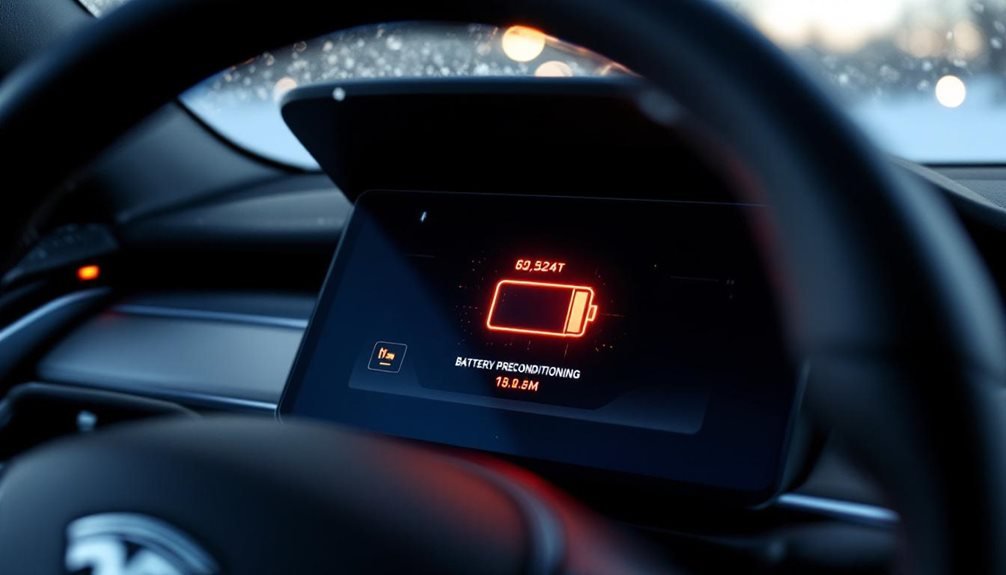
The red-screen notification confirms when automatic preconditioning kicks in.
Battery type matters more than most realize. LFP batteries in base Model 3 and Y variants take longer to heat up—30 to 45 minutes in cold weather.
Lithium-ion batteries in Long Range models heat faster, often under 15 minutes in mild conditions. Chemistry is chemistry.
The best practice involves preconditioning while connected to a home charger. This prevents draining the battery just to warm it up. Common sense, really. Preconditioning is actually energy-efficient compared to conditioning the battery after you start driving.
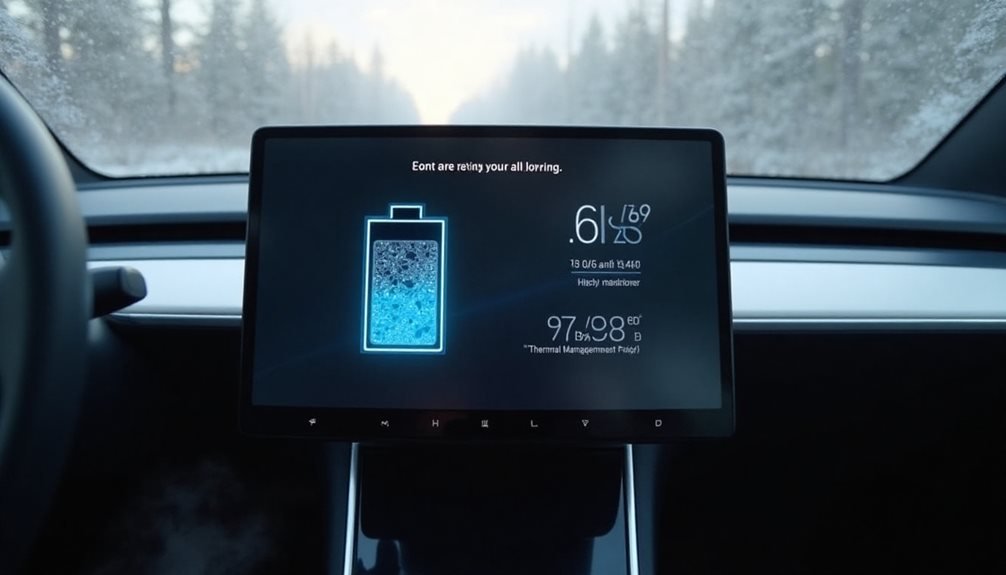
Newer models have improved thermal management systems that reduce overall conditioning times compared to older Teslas. These newer Tesla models feature more efficient preconditioning systems that consume less energy during the warming process.
Tesla recommends deducting at least 30 minutes for cold climate preconditioning before Supercharging. Skip this step and expect slower charging speeds, reduced acceleration, and battery strain.
Age matters too—older batteries take longer due to degradation, especially in temperature extremes.
Weather variations like humidity and wind can marginally affect efficiency but don’t drastically alter baseline times. The timeframes remain fairly predictable across different conditions. If preconditioning causes any component wear, owners can now order replacement parts directly through Tesla’s online catalog system.
Frequently Asked Questions
Does Preconditioning a Tesla Battery Drain the Main Battery While Parked?
Yes, preconditioning absolutely drains the main battery while parked. The system pulls energy to heat or cool the battery pack to ideal temperatures.
Typically, this consumes 1-3% of total capacity during short sessions. In freezing weather, that drain increases since preconditioning can run 30+ minutes.
It’s unavoidable physics—you can’t warm batteries without using stored energy, even when sitting still.
Can You Precondition the Battery Without Being Connected to a Charger?
Yes, Tesla owners can precondition their battery without plugging in. The Tesla app’s climate option works fine off-grid, as does the in-car touchscreen. No charger required.
However, there’s a catch – preconditioning drains the main battery faster when not plugged in. It prioritizes immediate utility over battery preservation.
Tesla doesn’t care if you’re connected or not; the system runs either way.
What Happens if You Forget to Precondition Before a Long Trip?
Forgetting to precondition basically ruins the first part of any road trip. The car charges painfully slow at Superchargers, meaning longer stops while everyone else submerges in and out.
Range drops since energy gets diverted to heat the battery instead of moving forward. Cold batteries also limit acceleration and power output.
LFP batteries get hit especially hard, facing potential long-term degradation from repeated cold charging cycles.
Does Battery Preconditioning Work the Same Way in All Tesla Models?
Battery preconditioning doesn’t work identically across Tesla models. Newer vehicles like the Model Y and Cybertruck precondition faster thanks to improved thermal management systems.
Older pre-2020 models? They’re slower, especially in extreme weather.
Battery chemistry varies too – some use air cooling, others liquid cooling.
Software updates hit newer models first.
The basic concept stays the same, but efficiency and speed definitely differ between generations.
Will Preconditioning Damage the Battery if Used Too Frequently?
Frequent preconditioning won’t damage Tesla batteries. The company designed their thermal management systems to handle regular use without degradation issues.
Sure, heating and cooling cycles create minor wear on temperature sensors and pumps, but Tesla’s software prevents overheating or overcooling damage.
Each session burns 2-3% battery capacity, which is more about energy waste than harm.
No evidence suggests frequent preconditioning hurts long-term battery health.