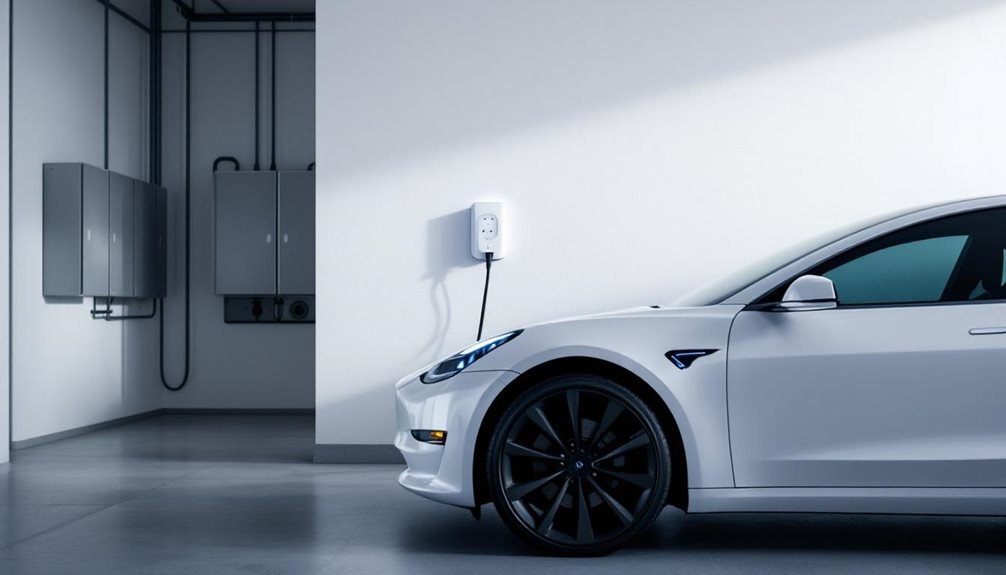

Tesla charging times depend entirely on your setup and patience levels. Level 1 charging crawls along at 2-3 miles per hour, taking up to 12 hours for a full charge. Level 2 charging picks up the pace at 30 miles per hour, while Tesla’s Wall Connector pushes 44 miles per hour. Superchargers blow past home options, filling the battery in around 1.5 hours. Your daily driving habits ultimately determine what works best for your situation.
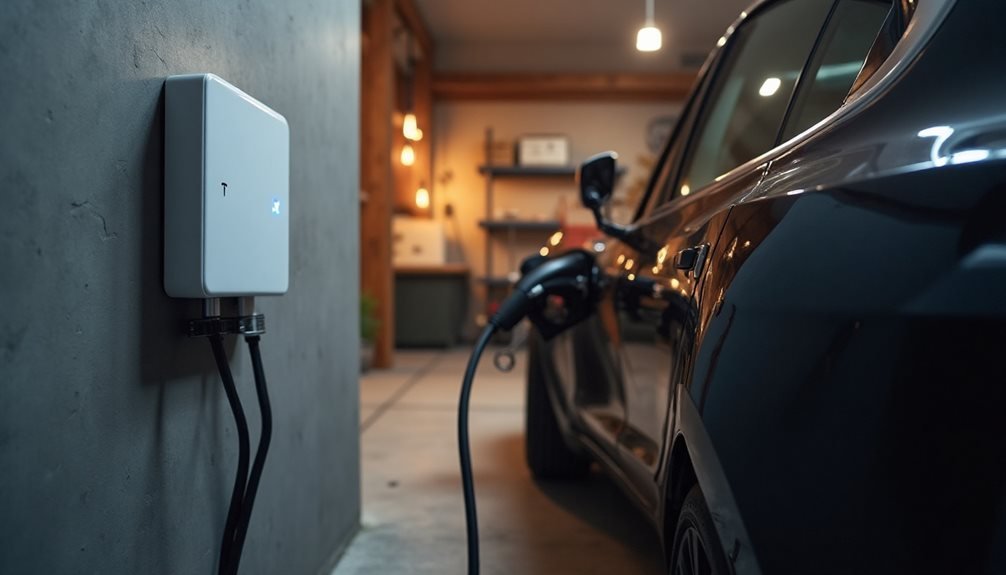
How long does it take to charge a Tesla? The answer depends on what you’re plugging into. If you’re stuck with a regular 120V household outlet, prepare to watch paint dry. Level 1 charging crawls along at a whopping 2-3 miles of range per hour. That’s right, hours. A full charge could take up to 12 hours, which works fine if you drive less than 40 miles daily and have the patience of a saint.
Level 2 charging changes everything. With a 240V outlet, you’re looking at up to 30 miles per hour. But the real revolution is Tesla’s Wall Connector, which delivers 44 miles per hour at its peak 48-amp setting.
Level 2 charging transforms the Tesla experience from watching paint dry to actually practical daily driving.
Suddenly, that full charge drops to a reasonable 1-8 hours instead of half a day. The Wall Connector pumps out up to 11.5 kW of power and adapts to your home’s electrical system through something called Power Management. You can configure it anywhere from 30 to 48 amps, depending on your setup. It requires a 60-amp electrical capacity for maximum performance, which means professional installation and possibly an electrical upgrade.
Model 3 owners can expect anywhere from 40 minutes to 5 hours for a 30-mile charge, depending on their charger choice. Most people don’t need a full charge anyway. Overnight charging handles typical daily driving needs without breaking a sweat. For extended stays in your Tesla, Camp Mode maintains battery power to USB ports and outlets for charging devices throughout the night.
Battery health won’t suffer from 48-amp charging, despite what worried owners might think. Tesla’s integrated battery management system handles the heavy lifting. Lower amperage reduces charging speed and strain, but it’s not necessary for battery longevity. Avoiding those 100% charges does help reduce degradation over time.
The economics work in Tesla’s favor. Charging costs less than gasoline in every U.S. state, and solar panels can slash expenses even further. Time-of-use electricity rates make overnight charging even cheaper. For road trips, Tesla Superchargers significantly reduce charging time by completing a full charge in approximately 1.5 hours.
Bottom line: Level 1 charging works for light usage but tests patience. Level 2, especially with Tesla’s Wall Connector, makes daily charging practical. Your charging time depends entirely on your setup and driving habits. The Wall Connector also receives automatic firmware updates that enhance features and improve the overall user experience.
Frequently Asked Questions
Can I Charge My Tesla in the Rain?
Yes, Tesla owners can charge their vehicles in the rain. The engineering is durable enough to handle water exposure without increased risk. Tesla’s connectors use a self-sealing system that repels water – no covers needed.
However, owners should avoid charging in flooding conditions where standing water covers ports or cables. It’s wise to delay charging during heavy downpours and inspect connections for debris afterward.
How Much Does It Cost to Charge a Tesla at Home?
Charging a Tesla at home typically costs $10-18 for a full battery, depending on the model. A Model Y runs about $11, while the hefty Cybertruck hits $18.
That’s using average electricity rates around $0.15-0.20 per kWh. Monthly bills usually land between $40-60 for normal driving.
Home charging beats gas prices easily, but efficiency loss means you’re paying for about 10% more juice than the battery actually stores.
Does Cold Weather Affect Tesla Charging Speed?
Cold weather absolutely hammers Tesla charging speeds. Below freezing, ion mobility slows to a crawl, making batteries sluggish.
Sub-zero temps? Forget about it – charging becomes painfully slow. The baseline rate of 0.33 SoC per minute gets crushed.
Tesla’s solution is preconditioning for 30+ minutes before charging. Smart drivers start charging sessions earlier in winter, building in extra time buffers.
Can I Use My Tesla While It’s Charging?
Tesla owners can absolutely use their vehicle while charging. Basic systems like lights, air conditioning, and the touchscreen infotainment system remain fully operational during charging sessions.
However, don’t expect to drive away mid-charge – unplugging stops the process entirely. Some features like preconditioning or software updates might slightly impact charging efficiency, but normal use poses no problems whatsoever.
What Happens if I Unplug My Tesla During Charging?
Nothing dramatic happens when someone unplugs their Tesla mid-charge. The car automatically stops power transmission instantly – no sparks, no electrical drama.
The connector locks in place during charging, requiring manual release after power cuts off.
Battery management systems handle interruptions just fine, no error codes or data corruption.
Charging simply stops, displays current battery level, and waits for the next session.