

Tesla service wait times have exploded beyond 30 days in major metro areas like Houston and New Orleans. What was supposed to be under-one-day routine maintenance now stretches into month-long appointment delays. Service centers are completely overwhelmed despite Tesla’s 95% increase in daily capacity. Remote owners face multi-hour drives to find available slots. Miss your midnight pickup? That’ll be $100 per day in storage fees. The full scene reveals even more frustrating details.
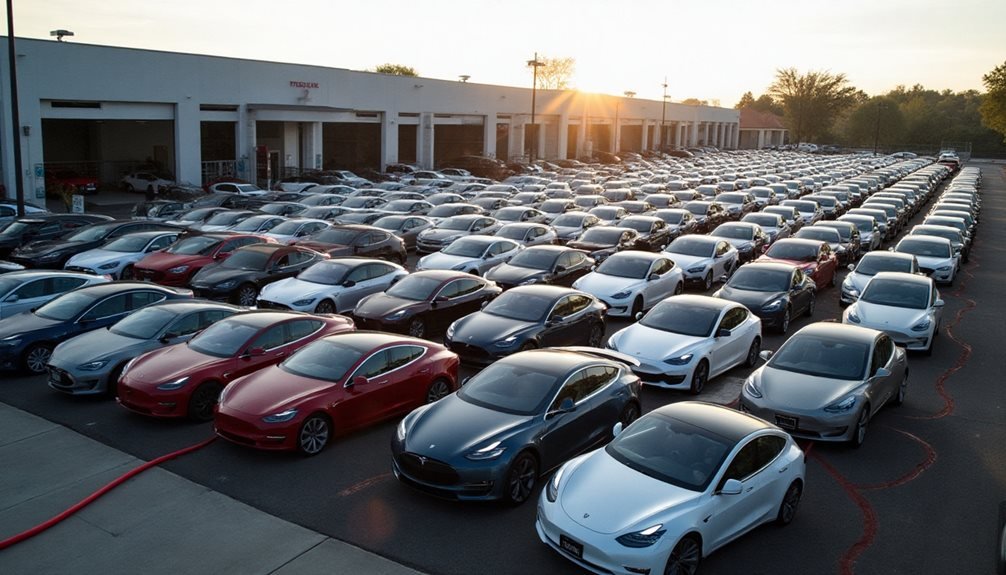
While Tesla owners once enjoyed the novelty of innovative electric vehicles, they’re now finding the harsh reality of actually getting them fixed. Service centers are drowning. Vehicle sales keep climbing, but service capacity? Not so much.
Tesla’s explosive sales growth has created a service nightmare that’s turning electric dreams into repair shop purgatory.
The numbers tell a brutal story. Wait times stretch beyond 30 days in major metro areas like Houston and New Orleans. Month-long waits just to book an initial appointment have become the new normal. Service bays stay packed with no relief coming.
Geography makes everything worse. Remote owners face multi-hour drives to reach the nearest service center. Sure, Tyler, Texas might have sooner appointments, but good luck with that six-hour drive. Urban centers aren’t much better despite having more infrastructure. They’re just congested differently.
Tesla’s policies don’t help matters. Miss that midnight pickup deadline? Enjoy your $100-per-day storage fee. Can’t verify repairs before taking delivery either. It’s a take-it-or-leave-it situation that leaves customers feeling abandoned.
The real kicker? Problems often go unresolved. Owners report returning multiple times for the same issues. That clunking noise during regenerative braking keeps coming back despite repeated visits. Service reps dismiss app-reported symptoms, demanding in-person demonstrations instead. Because apparently technology only works one way.
Trade-in rates for 2017+ Teslas hit 1.4% in March 2025, flooding used vehicle markets and creating even more service demand.
The company’s 2017 mobile service expansion promised to handle 80% of minor repairs remotely. They achieved a 95% increase in daily service capacity through operational reforms. The goal was reducing average wait times to under one day for routine maintenance. Despite these challenges, Tesla continues to maintain its 42% market share in the U.S. electric vehicle market. In addition to enhancing service capabilities, Tesla has also updated its software offerings, which include various subscription models for users. For customers interested in advanced features, it’s crucial to review the tesla premium connectivity pricing details, as these can impact the overall ownership experience. As the company evolves, it continues to explore innovative ways to provide value to its customers while addressing service demands. As Tesla continues to innovate and adapt its service approach, many prospective buyers are seeking guidance on navigating the transition to electric vehicles. For those interested in joining the Tesla community, looking up ‘buying a tesla tips‘ can provide valuable insights into making informed decisions and enhancing the ownership experience. With advancements in remote service capabilities, new owners can feel more confident about their purchase and the support available to them.
Reality had other plans.
Owners are adjusting through necessity. DIY repairs for components like skid plates are becoming common. Amazon fills service gaps with affordable replacement parts. Community forums share repair tips because official support falls short. When major components fail, owners face sticker shock with battery replacements potentially costing $13,500 to $22,000 depending on the model.
Mobile service units help with routine maintenance, but complex issues still require those dreaded service center visits.
The app-based scheduling system offers limited time slots with zero flexibility for rescheduling. Tesla prioritizes operational efficiency over quality, leaving customers stuck in an endless cycle of frustration. Customers often find themselves overwhelmed by the lack of options, leading to confusion about logistics such as how to charge tesla at night. With so many individuals struggling to navigate these limitations, the company risks alienating its customer base, who are eager for more personalized service. The current system feels like a stopgap rather than a sustainable solution for owners relying on their vehicles for daily needs. This rigidity makes it difficult for customers to adapt their appointments to unforeseen circumstances, ultimately diminishing the overall service experience. Many users express a desire for a more user-friendly interface that would allow them to schedule Tesla mobile service easily, without the hassle of navigating through restrictive time constraints. As a result, the lack of adaptability not only frustrates customers but also undermines their loyalty to the brand.
Frequently Asked Questions
Can I Get a Loaner Car While My Tesla Is Being Serviced?
Tesla loaner cars exist, but they’re not guaranteed. Warranty repairs usually qualify, and scheduled maintenance over four hours might get one. Mobile service? Forget it.
Customers often need to ask explicitly since Tesla prefers pushing Uber credits. Availability depends on inventory and location—some service centers have plenty, others don’t.
If no loaner exists, Tesla offers ride credits or rental assistance instead.
How Much Do Typical Tesla Repairs Cost Compared to Other Vehicles?
Tesla repairs cost more than you’d expect. Average Tesla repair hits $5,552 compared to $4,474 for other EVs and $4,205 for gas cars. Ouch.
But here’s the twist – Teslas need fewer repairs overall. They’ve got a 17.40% chance of major repairs over 10 years, beating most luxury brands.
What Parts Commonly Need Replacement During Tesla Service Appointments?
Tesla service appointments commonly involve replacing front-end bumpers and grilles after collisions. Door handles break frequently—shocking, right?
High-voltage batteries need monitoring and occasional replacement as they age. ADAS sensors require recalibration constantly, especially after any front-end damage.
Paint touch-ups happen regularly due to scratches and environmental wear. Electronic control modules get updated routinely. Motor diagnostics address regenerative braking issues that pop up unexpectedly.
Does Tesla Warranty Cover All Repairs During the Coverage Period?
Tesla’s warranty doesn’t cover everything, obviously. It handles defects in materials and workmanship, but wear and tear? Nope. Cosmetic damage like scratches? Forget it.
Third-party parts or unauthorized repairs instantly void coverage. Pre-existing issues are out too.
The warranty basically covers what Tesla screwed up during manufacturing, not what breaks from normal use or owner negligence. It’s important for owners to familiarize themselves with the tesla vehicle warranty details to understand the limitations and protections it offers. While the warranty provides peace of mind for manufacturing defects, it is crucial to maintain the vehicle properly to avoid voiding any coverage. Regular maintenance and prompt attention to issues can prevent small problems from becoming larger, more expensive repairs that fall outside the warranty’s scope.
Can Third-Party Mechanics Work on Tesla Vehicles Legally?
Third-party mechanics can legally work on Tesla vehicles, but Tesla makes it incredibly difficult.
The company restricts access to diagnostic tools, parts, and software updates. They threaten warranty voids for unauthorized repairs and ban Supercharger access on some third-party serviced vehicles.
While a few independent shops exist, they face major limitations without Tesla’s blessing.
It’s legal but practically challenging.