
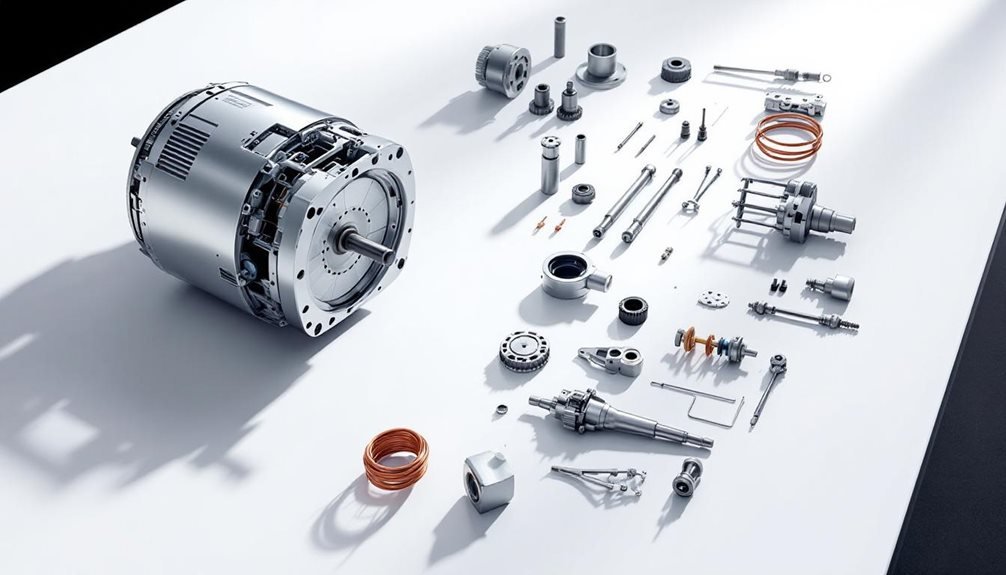
Tesla vehicles can realistically last 300,000 to 500,000 miles with proper care, though one road-tested Model S hit an impressive 1.2 million miles over ten years. The battery typically handles around 1,500 charge cycles before needing replacement, which translates to roughly 15 years of normal driving. Tesla’s 8-year warranty covers battery degradation below 70% capacity. With fewer moving parts than gas engines, maintenance costs stay low at about $0.04 per mile. The real story involves several essential factors that determine longevity.
How long can a Tesla actually last? Tesla claims their batteries endure 300,000 to 500,000 miles with proper care. That’s impressive, sure, but real-world data tells a more interesting story.
Real-world Tesla data reveals battery longevity that goes beyond manufacturer claims, showing impressive endurance in actual driving conditions.
The company specs out 1,500 battery cycles before replacement becomes necessary. Under ideal conditions, modern lithium-ion batteries degrade roughly 2% annually. Not terrible. The drive units? Tesla insists they’re built for commercial-grade endurance, potentially exceeding one million miles. Bold claim.
One Model S owner proved Tesla wasn’t just blowing smoke. Their car hit 1.2 million miles over ten years of cross-continent travel. That’s serious mileage. The owner relied heavily on rapid charging infrastructure and frequent recharges, demonstrating that daily long-distance EV use isn’t fantasy.
Battery degradation depends heavily on charging habits. Avoiding 100% state of charge prolongs life substantially. Frequent fast charging may accelerate wear, though extensive data remains sparse. Cold climates and rapid discharges stress batteries further.
Basically, treat your battery nicely and it’ll return the favor.
Electric powertrains have fewer moving parts than internal combustion engines, reducing wear considerably. Tesla’s drive units theoretically reach millions of miles. The 1.2-million-mile Model S proved this isn’t marketing fluff.
Low maintenance costs compared to oil-based engines sweeten the deal. Tesla models like the Model 3 and Model Y feature integrated systems that ensure seamless operation without requiring third-party modifications.
Fleet vehicles often reach 300,000 to 500,000 miles with scheduled maintenance. Long-distance commuters experience heavier battery wear due to frequent fast charging. Extreme conditions slash lifespan expectations.
Tesla’s battery warranty covers degradation below 70% capacity for eight years, which provides some peace of mind. Tesla batteries could theoretically last 22-37 years based on average annual driving patterns, making replacement a distant concern for most drivers. With proper maintenance, Tesla vehicles can operate reliably for approximately 15 years.
When batteries finally give up, replacement costs run $5,000 to $7,000 for full packs. Battery modules can be individually replaced for similar pricing post-degradation.
New EVs typically retain 93-95% capacity after 120,000 miles, showing decent longevity.
Monthly operating costs favor EVs at roughly $0.04 per mile versus ICE vehicles’ $0.15 per mile. No oil changes eliminate recurring maintenance expenses.
High-speed charging infrastructure availability impacts economical long-distance use profoundly. Battery health strongly influences resale values, so maintenance matters financially too.
Frequently Asked Questions
Does Tesla Warranty Cover Battery Replacement After Certain Mileage?
Tesla’s warranty covers battery replacement, but only under specific conditions. The company guarantees free replacement if battery capacity drops below 70% during the 8-year warranty period or before hitting mileage limits (100k-150k miles, depending on model).
Here’s the catch: normal degradation doesn’t count. Only manufacturing defects qualify.
Plus, repairs must happen at Tesla service centers to maintain warranty validity.
How Much Does Tesla Battery Replacement Cost?
Tesla battery replacement costs vary wildly depending on the model. A Model 3 runs $5,000-$15,000, while Model S and X owners face $13,000-$20,000 bills. Ouch.
The bigger the battery pack, the bigger the hit to your wallet. Remanufactured batteries cost less but kiss Tesla’s warranty goodbye.
Third-party shops might be cheaper, but good luck with resale value later.
Can Tesla Batteries Be Refurbished or Recycled?
Tesla batteries can absolutely be refurbished and recycled. Tesla’s got a 92% recovery rate for battery materials, pulling out nickel, copper, and cobalt like some kind of metal-harvesting machine. They’re recycling over 50 tons weekly at Gigafactory Nevada.
The catch? Most batteries come from fleet vehicles since consumer Teslas aren’t old enough yet. Production scrap gets recycled too.
Do Different Tesla Models Have Different Battery Lifespans?
Different Tesla models absolutely have varying battery lifespans, and it’s not just marketing fluff. Model S and X batteries degrade slower—about 12% after 200,000 miles compared to Model 3/Y’s 15%.
The luxury models get beefier 8-year, 150,000-mile warranties while base Model 3/Y owners get stuck with 100,000-mile coverage.
Performance variants? They burn through battery life faster because, well, nobody buys a Performance model to drive like grandma.
What Maintenance Extends Tesla Battery Life?
Tesla battery maintenance isn’t rocket science, but owners still mess it up. Charging to 80% daily instead of 100% helps considerably. Avoiding frequent Supercharging sessions prevents excessive heat stress.
Keeping the car in moderate temperatures matters more than most realize. Software updates actually enhance battery algorithms, so install them.
Skip the Ludicrous Mode marathons. Monitor battery health metrics regularly and adjust habits accordingly.