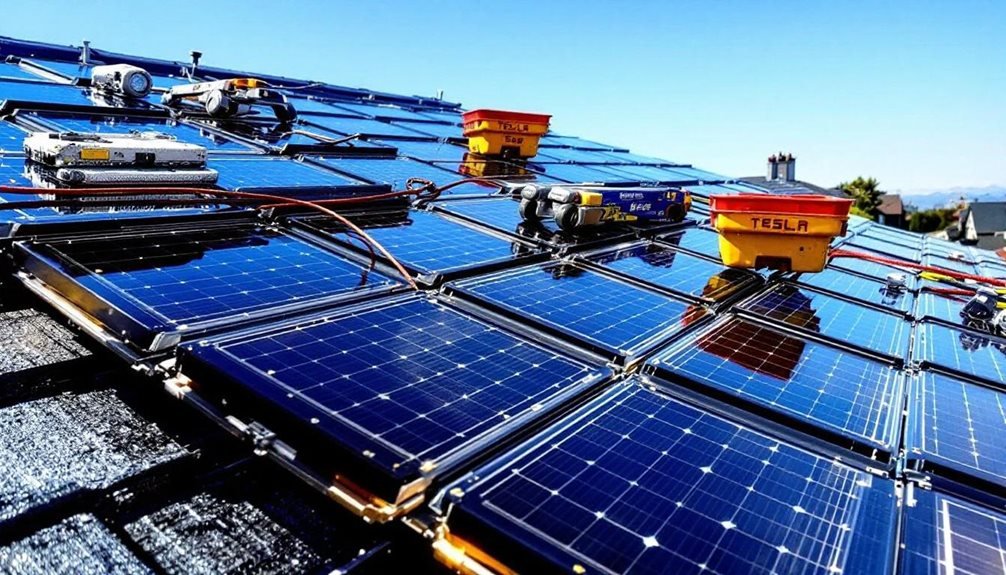

Becoming a Tesla Solar Roof installer in 2025 means jumping through some serious hoops. Contractors must register through Tesla’s Partner Portal, complete rigorous training programs, and obtain specialized roofing and electrical certifications. The process involves virtual courses, hands-on training, and excelling in Tesla’s premium tile installation techniques. Most projects cost around $106,000 before incentives and take 5-7 business days to complete. Tesla’s standards are notoriously demanding, but the partnership opens doors to lucrative opportunities for qualified professionals.
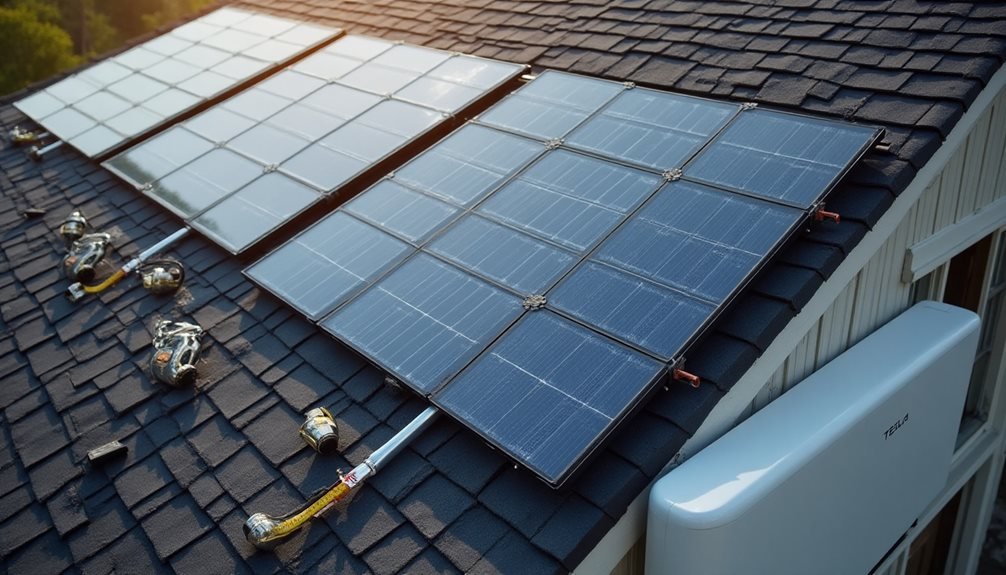
The solar revolution has a new player, and it’s not your typical rooftop setup. Tesla’s Solar Roof tiles are transforming homes into power plants, one sleek installation at a time. But here’s the thing – you can’t just wake up tomorrow and start slapping these high-tech tiles onto rooftops.
Getting certified as a Tesla Solar Roof installer means jumping through Tesla’s hoops first. The journey begins with Tesla’s Partner Portal or their Tesla One app. Simple enough, right? Wrong. You’ll need to meet their eligibility criteria and complete mountains of paperwork. Because apparently, Tesla doesn’t trust just anyone with their precious tiles.
Tesla’s certification process isn’t for the faint-hearted – expect rigorous standards and endless paperwork before touching their premium tiles.
Once you’re in, the real education begins. Training programs come in multiple flavors – virtual sessions, instructor-led classes, or mobile training vans that roll up to your doorstep. These programs teach the nitty-gritty of Solar Roof installation techniques.
Tesla even provides specialized tools like dollies and ramps, because regular equipment won’t suffice for their premium product.
But here’s where things get serious. Installers need legitimate roofing credentials – think NRCA or GAF certifications. Tesla isn’t messing around with amateurs who can’t handle complex roof replacements or structural evaluations.
Electrical licenses are also mandatory in many areas, plus you’ll need to grasp photovoltaic systems and building-integrated photovoltaic technology.
The technical demands are steep. Installers must comprehend load-bearing calculations, detect compatibility issues like inadequate ventilation, and steer through Tesla’s ecosystem including Powerwall integration and backup switch installations.
Site assessment skills become indispensable – every electrical layout review and structural inspection matters. Just like buyers need to understand hardware versions when purchasing used Tesla vehicles, installers must master the technical specifications of each Solar Roof component.
Tesla sweetens the deal with marketing support through approved logos, brochures, and digital kits accessed via the Partner Portal.
Installers can utilize Tesla’s reputation to attract homeowners seeking roof replacements combined with solar installations. Building customer trust requires demonstrating expertise through past project successes and maintaining transparency about qualifications throughout the process.
The financial incentives include preferential pricing on Tesla products. Installers can expect installations to average around $106,000 per project before any federal or state incentives are applied.
Installation timelines typically run 5-7 business days per roof, starting with tear-offs of existing materials and ending with fully integrated electrical systems.
Ongoing support comes through dedicated Tesla Account Managers and technical assistance via the Partner Portal.
It’s a meticulous partnership, assuming you can meet their exacting standards.
Frequently Asked Questions
What Is the Average Salary for Tesla Solar Roof Installers?
Tesla solar roof installers earn around $23.39-$24.00 per hour on average. That translates to roughly $48,800 annually for full-time work. Entry-level folks start closer to $32,000, while experienced installers can hit $62,000 in hot markets like Texas or Florida.
Location matters big time—solar-heavy states pay more.
NABCEP certification bumps pay by 10-15%. Not exactly getting rich, but it’s decent work.
Does Tesla Provide Tools and Equipment for Certified Installers?
Tesla hooks up certified installers with specialized tools and equipment. They get dollies, reinforced ramps for handling heavy solar tiles, and backup switch systems in some areas.
There’s also transportation gear for moving components safely. Plus, installers receive access to integrated software platforms, mobile tools for on-site work, and job-tracking dashboards.
It’s part of Tesla’s support package for partners.
How Long Does Tesla Solar Roof Installer Certification Typically Take?
Tesla keeps the exact certification timeline under wraps. Based on the background information, comparable programs typically run 1-3 months.
The process includes virtual training sessions, in-person training via mobile vans, software walkthroughs, and custom tools training.
Most installers must complete practice installations and pass quality assessments.
Duration likely depends on company experience and how quickly teams excel at Tesla’s specific protocols and safety standards.
Are There Physical Fitness Requirements for Tesla Solar Roof Installation Work?
Tesla doesn’t explicitly list physical fitness requirements, but roof work demands serious physical capability. Installers need upper body strength for handling 7-pound tiles repeatedly, core stability for balance on sloped surfaces, and endurance for 5-7 day installations.
The job requires climbing ladders constantly, standing on hard surfaces for hours, and working in harsh weather. It’s construction work, not desk duty.
Can Existing Solar Panel Installers Easily Transition to Tesla Solar Roofs?
Existing solar installers have a decent head start, but it’s not exactly plug-and-play. They’ve got the electrical basics down, sure.
But Tesla Solar Roofs aren’t just panels slapped on existing shingles—they’re complete roof replacements. That means installers need serious roofing chops, not just solar experience.
Tesla’s certification program fills the gaps, covering their specific tech and design software. It’s doable, just not automatic.