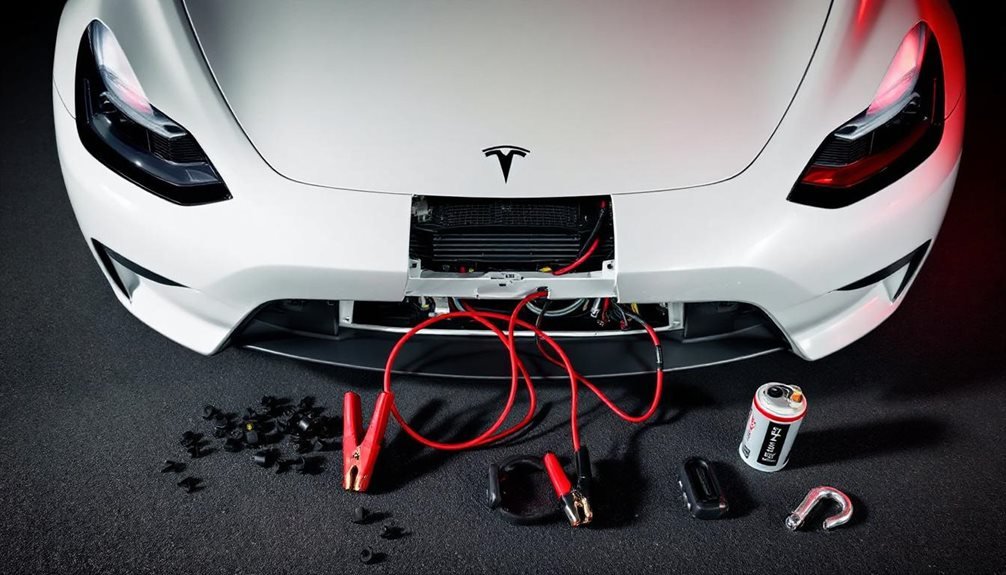

Tesla owners unearth a cruel irony when their 12V battery dies. The frunk won’t open because it’s electric, but jump-starting requires hood access that’s now impossible. Some connect a 9V battery to the tow hook’s internal wires to simulate power. Others crawl under the car near the left wheel well, hunting for emergency release cables hidden behind panels. Both methods work, though neither feels particularly sophisticated for a luxury vehicle. More inventive solutions exist.
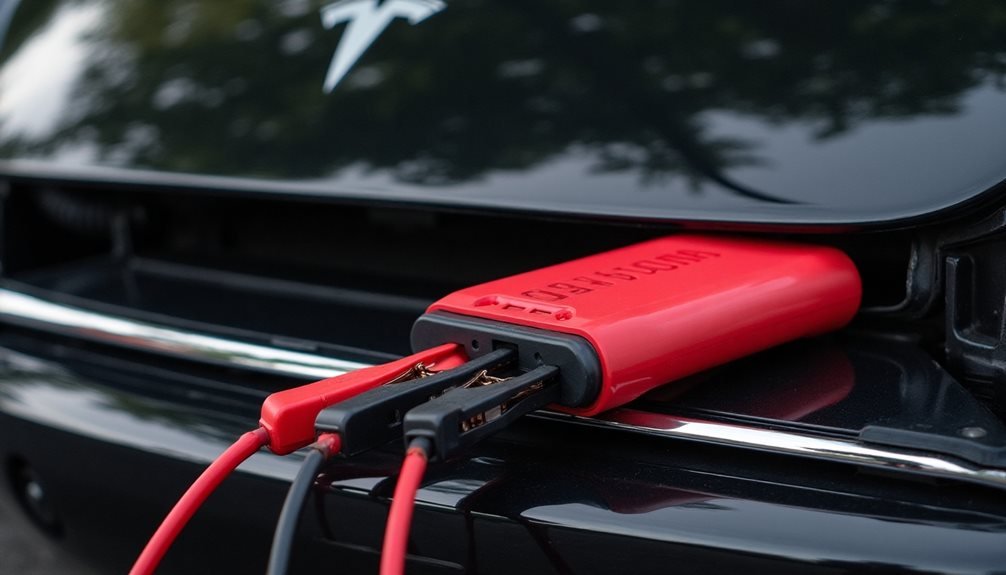
When Tesla owners find themselves staring at a stubbornly closed frunk with a dead 12V battery, the sleek electric vehicle suddenly feels more like an expensive paperweight. The frunk that once opened with a gentle touch now refuses to budge, leaving owners scrambling for solutions that Tesla doesn’t exactly advertise in their glossy marketing materials.
The towing hook method offers the most straightforward approach. Owners can connect a 9V battery to the tow hook’s internal wires, essentially tricking the system into thinking it has power. Some prefer 12V jumper cables for extra voltage, though this fails spectacularly when the system is completely drained.
Smart owners run dedicated jumper cables from the frunk to an external 12V battery, creating a permanent solution for future mishaps.
Sometimes the frunk mechanism engages but refuses to open anyway. Because nothing says “premium electric vehicle” like hearing your car try and fail to perform basic functions.
Manual release procedures exist for the truly desperate. Emergency cables hide under the car near the left wheel well, though finding them requires steering through debris and hoping previous owners haven’t already snapped the cables. Locating the emergency latch requires positioning yourself at approximately the 2 o’clock position conceptually when looking at the access panel.
The system uses dual latches, meaning owners must pull both primary and secondary cables to achieve full release. Each latch operates independently, which occasionally results in partial victories.
For those who can partially access the frunk, internal latch manipulation becomes possible. The rounded secondary latch responds to lateral pushing, overriding the solenoid mechanism entirely. This requires precise finger placement and works only when the first latch cooperates.
Portable jump starters serve as backup power sources when internal batteries fail completely. Some owners resort to towing their vehicles to charging stations just to restore 12V functionality.
Tesla-authorized roadside assistance exists, though calling for help to open a storage compartment feels particularly humbling. Accessing the wheel well covers requires removing clips that secure the protective panels in place. Essential tools like Torx bits help with disassembly when owners need to remove protective panels or access hidden components.
Desperate situations call for invasive measures. Removing plastic bumper trim exposes hidden cable connections, while some owners actually drill access holes through their bumpers.
These modifications often include permanent cable splices for convenience, though warranty implications make this approach risky.
The irony remains: accessing emergency features sometimes requires creating actual emergencies.
Frequently Asked Questions
Can I Prevent My Tesla’s 12V Battery From Dying Unexpectedly?
Tesla owners can mostly prevent unexpected 12V battery death by paying attention to mobile app notifications. The car warns users about a week before the battery croaks.
Most people get roughly three years from lead-acid batteries before replacement time hits.
Responding quickly to alerts keeps drivers from getting stranded.
Sure, some batteries die faster than others, but the warning system usually works. Regular Tesla service visits help catch issues early too.
How Long Does It Take to Replace a Dead 12V Battery?
Tesla’s certified techs knock out a 12V battery replacement in just 15 minutes. But here’s the catch – getting that appointment takes 2-3 weeks during busy periods.
Once the service warning pops up, owners get a 7-day window before things get dicey. DIY folks can tackle it themselves with basic tools, though it requires some frunk gymnastics and a system reboot afterward.
Will Opening the Frunk With Dead Battery Void My Tesla Warranty?
Opening the frunk with a dead battery won’t void the Tesla warranty, assuming you follow Tesla’s official procedure.
The manufacturer actually provides specific instructions for this exact scenario – using a 9V battery through the front tow hook cover.
However, using incorrect polarity, leaving cables connected over 30 seconds, or employing unapproved power sources can void coverage.
Stick to the manual’s steps and you’re fine.
What Tools Do I Need to Manually Open the Frunk?
Most people need a 9V battery or 12V power source to juice the hidden wires behind the front tow hook. Pliers help attach terminals securely.
Some folks grab a Torx wrench set to remove wheel well covers, plus a flashlight because it’s dark down there.
Gloves protect hands from sharp edges. A screwdriver works for prying stubborn fasteners.
Pretty basic stuff, really.
How Much Does It Cost to Replace Tesla’s 12V Auxiliary Battery?
Tesla’s 12V auxiliary battery replacement runs $100-$200, including the battery and labor. The AtlasBX/Hankook 85B24LS model costs around $100, with the rest going to installation.
Tesla Service Centers handle the job properly, though you’ll pay for convenience. Skip the DIY route—improper installation voids warranties.
The battery should last about three years before needing replacement, assuming normal use.