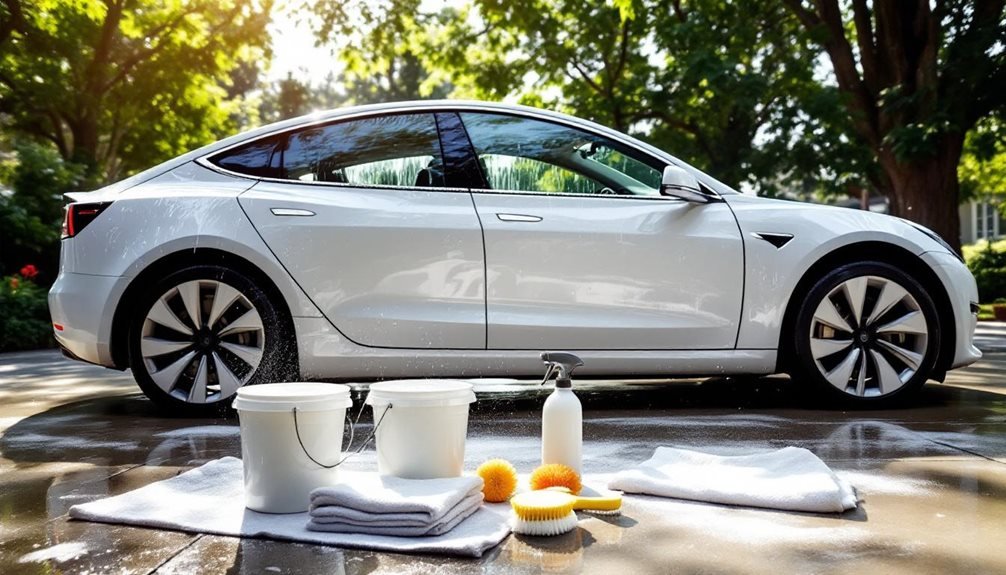

Washing a Tesla isn’t rocket science, but it’s not exactly like hosing down your old Honda either. First, activate Car Wash Mode through the Service menu—this locks doors and disables those overly sensitive wipers. Turn off Sentry Mode unless you want footage of soap suds. Use the two-bucket method with microfiber mitts, wash top to bottom, and enable Screen Clean Mode for the touchscreen. Avoid brush car washes like the plague—they’ll scratch everything. The real tricks lie in the details.
Why do Tesla owners obsess over washing their electric vehicles like they’re handling priceless artifacts? Because proper washing technique separates careful owners from those who turn their sleek rides into scratched-up disappointments.
Preparation matters more than most people think. Tesla owners must activate Car Wash Mode through the Service menu, which locks doors, disables wipers, and mutes alerts. Sentry Mode needs manual shutdown to prevent false recordings during washing. Climate control systems should be disabled to avoid interference.
The smart approach involves a two-bucket method with microfiber wash mitts and car-safe soap. Start with wheels and tires using dedicated brushes.
Car Wash Mode does the heavy lifting automatically. It closes windows, locks doors and trunks, deactivates windshield wipers, and mutes parking assist chimes. The system also disables Sentry Mode and climate control without additional input.
Manual washing follows a top-to-bottom approach. Roof first, then hood, sides, and wheels. Clean panel-by-panel to avoid carrying contaminants across sections. Use horizontal or vertical passes with light pressure. Rinse frequently to prevent soap buildup. Screen Clean Mode temporarily darkens the touchscreen during cleaning.
Drying requires microfiber towels to absorb moisture and prevent water spots. Work in sections from roof to trunk to hood. Apply detailing spray to improve shine and ease drying. Avoid circular motions completely. Straight, blotting motions work better. Check crevices around mirrors and emblems for residual water.
Screen cleaning demands its own technique. Enable Screen Clean Mode through Settings to darken the display. Clean horizontally with damp microfiber cloth to avoid vertical streaks. Never apply direct pressure. Use dedicated screen cleaning products for stubborn marks.
Automated car washes present challenges. Touchless facilities work best to avoid brush damage. Conventional washes with abrasive brushes cause problems. Enable Free Roll mode to keep the vehicle neutral during the process. High-quality car wash facilities specifically reduce the risk of damage to Tesla’s paint and components. Check facility reputation for Tesla compatibility. Inspect immediately for scratches or damage.
Post-wash maintenance extends protection. Ceramic coating shields paint from UV rays and contaminants. Tesla-approved products prevent material degradation from harsh chemicals. Many Tesla owners also invest in energy independence through home charging solutions that complement their vehicle maintenance routines. Regular cleaning reduces contamination buildup. Shaded parking prevents sunlight from intensifying dirt particle damage. Cleaning in the shade prevents direct sunlight from interfering with the washing process and improves overall results.
Frequently Asked Questions
Can I Take My Tesla Through an Automatic Car Wash?
Yes, Tesla owners can take their cars through automatic car washes. The key? Car Wash Mode. This setting disables wipers, sensors, and Sentry Mode while keeping the charge port locked. Without it, expect chaos.
Skip brush-style washes—they’ll scratch the paint. Touchless is safer. Check tire clearance first; some Tesla models are chunky.
It’s really that simple, despite what Tesla forums might suggest.
How Often Should I Wash My Tesla?
Tesla washing frequency depends on where someone drives and lives. City dwellers deal with pollution and grime weekly. Rural drivers can stretch it longer unless they hit muddy roads. Daily commuters need more frequent washes than weekend warriors.
Seasonal factors matter too – winter salt demands immediate attention, summer bugs splatter everywhere.
Tesla recommends regular cleaning for paint health. Protective coatings might extend intervals, but they’re not magic shields.
Will Washing My Tesla Affect Its Warranty?
Washing a Tesla won’t void the warranty if done properly. Tesla’s warranty covers battery degradation below 70% capacity, but physical damage from improper washing isn’t covered.
Using car wash mode protects components during cleaning.
Avoid conveyor belt washes – Tesla explicitly warns against them.
Abrasive tools, wrong cleaning agents, and high-pressure jets can cause damage that warranty won’t cover.
Hand washing remains safest.
Can I Use Regular Car Soap on My Tesla’s Paint?
Regular car soap can wreck Tesla’s paint job. High pH levels strip protective coatings, leaving the car vulnerable to UV damage.
Harsh detergents contain abrasives that create swirl marks. Household soaps leave residue that attracts dirt like a magnet.
The chemicals can even mess with sensitive trim and sensors. Tesla owners need pH-balanced, automotive-specific soaps instead. Regular stuff just isn’t worth the risk.
Is It Safe to Wash My Tesla While It’s Charging?
Actually, yes. Tesla explicitly says charging in rain is safe, and the manual backs this up.
The car’s smart enough to detect water ingress and shut down charging if needed. Just avoid hot water – stick to cold or lukewarm.
Skip the Gen 2 Mobile Charger though, since it’s not waterproof.
Check the charge port afterward for any water sitting around.