
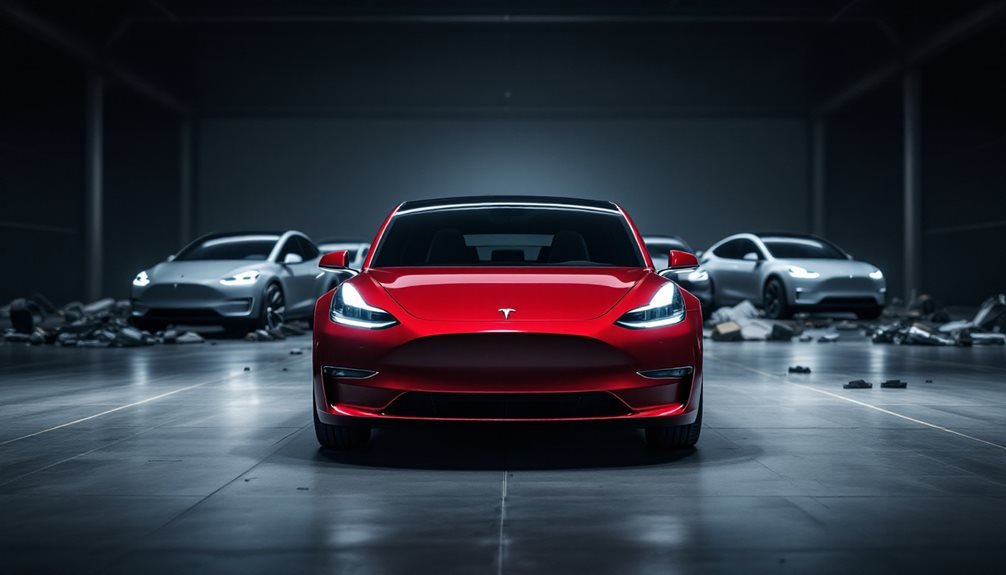
When drivers compare Tesla electric vehicles to hybrid cars, they’ll find notable differences in operating costs that can impact their wallets. The monthly fuel expenses show a clear advantage for electric vehicles, though the complete financial landscape includes several other factors.
Tesla owners spend considerably less on monthly charging than hybrid drivers pay for gas. A Tesla Model 3 base model costs $43.67 monthly to charge for 1,000 miles of driving. The Model Y Long Range AWD requires $47.17 for the same distance. Meanwhile, a Honda Civic Hybrid consumes $65.14 in gas monthly despite achieving 49 miles per gallon. This creates monthly savings of $30 to $75 for Tesla drivers.
The per-mile breakdown reveals an even starker contrast. Tesla charging costs average 4.56 cents per mile, while gas-powered vehicles average 13.73 cents per mile. That’s more than three times less for electric vehicles. However, using DC fast-charging stations changes the equation dramatically. These stations charge 45 cents per kilowatt-hour, raising a Model 3’s monthly costs to $112.50 for 1,000 miles.
Annual savings add up quickly for electric vehicle owners. Tesla drivers save between $360 and $900 yearly compared to gas vehicles. Electric cars cost about $1,300 less annually than gas-only cars for fuel. They also save $500 to $1,000 yearly versus hybrid vehicles.
Maintenance expenses favor electric vehicles too. EVs cost 40% less per mile to maintain than comparable gas vehicles. They don’t need oil changes and require fewer brake pad replacements thanks to regenerative braking systems. Hybrids still maintain internal combustion components that need regular servicing. The Civic Hybrid utilizes regenerative braking technology alongside its gas engine to maximize efficiency.
Tax incentives sweeten the deal for electric vehicle buyers. New EV purchasers can receive up to $7,500 in federal tax credits, while used electric vehicles may qualify for $4,000. Standard hybrids don’t qualify for these credits. The current tax credit program expires September 30, 2025. Some states provide additional EV incentives beyond federal programs, further reducing Tesla ownership costs.
Several factors affect the true cost comparison. Tesla vehicles experience rapid depreciation that can offset savings. Cold climates reduce battery efficiency. Having home charging access with low electricity rates makes Tesla ownership more economical. Without home charging, the financial advantage shrinks notably. Most modern homes with 200A panels can handle Tesla charging without requiring electrical system upgrades.