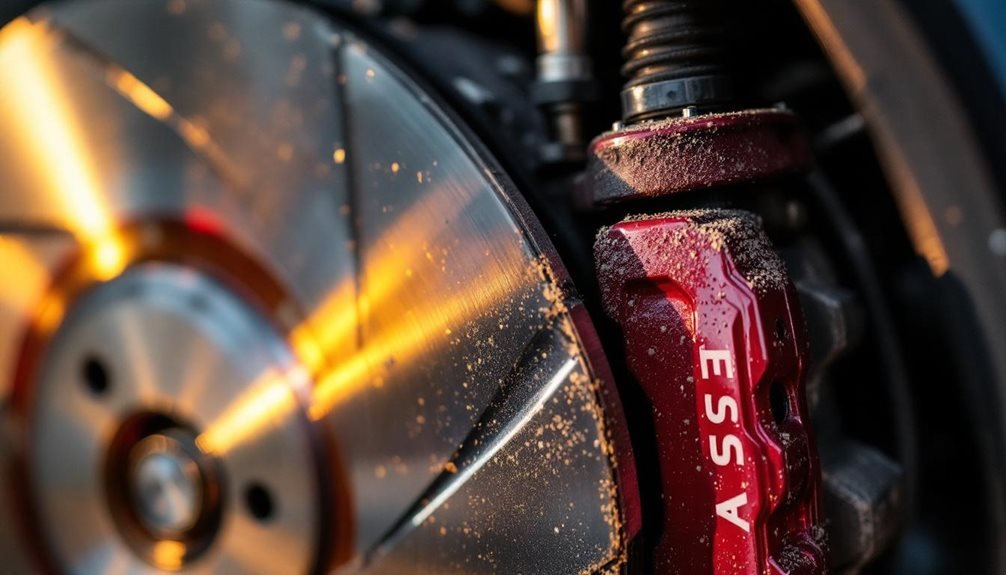
Tesla brakes announce their retirement with all the subtlety of a dying cat. High-pitched squealing means metal grinding against rotors, while scraping sounds signal pad backing plates making unwelcome contact. Spongy pedals scream contaminated brake fluid, and vibrations during braking point to worn rotors. Dashboard warning lights cut through the guesswork entirely. Visual wear indicators become visible when pads thin below 3mm, and dark, murky brake fluid demands attention. These symptoms reveal the full story behind brake deterioration.
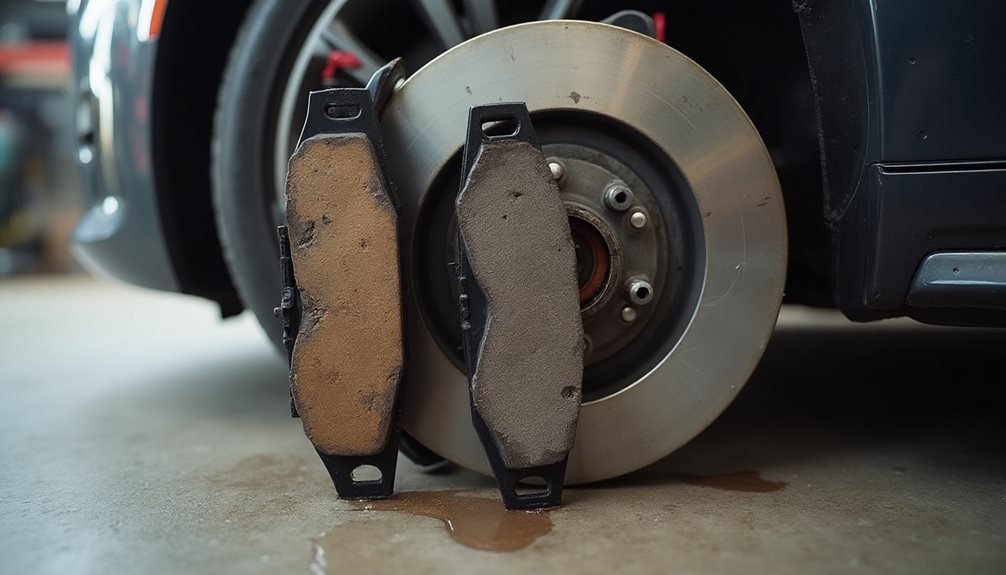
When does a Tesla’s whisper-quiet ride turn into a concerto of scrapes and squeals? Usually when those brake pads decide they’ve had enough.
Tesla owners often forget their cars even have traditional brakes. Thanks to regenerative braking, those pads can last 70,000 to 100,000+ miles. That’s double what conventional cars manage. But here’s the catch—when they finally wear out, drivers often miss the warning signs. This can lead to unexpected surprises and potential safety issues if not addressed promptly. In such cases, it’s crucial for owners to be aware of the available support options, including Tesla roadside assistance pricing details, which can help them navigate any issues that arise. Regularly monitoring brake performance and scheduling maintenance can prevent these inconveniences and ensure a smoother driving experience. Additionally, Tesla owners should also be informed about the impact of their credit score on financing options for any potential maintenance or upgrades. Understanding the tesla financing credit score criteria can help them secure better terms and make informed decisions. Keeping track of financial readiness can complement overall vehicle maintenance, ensuring that owners are fully prepared for any necessary repairs or replacements.
Tesla’s regenerative braking creates a false sense of security—those traditional brake pads are still there, silently wearing down.
High-pitched squealing during braking means metal is grinding against rotor. Not pleasant. Metallic scraping sounds even worse—that’s the pad backing plates having a heated conversation with the rotors. Clicks and clunks suggest loose components are throwing their own little tantrum.
The brake pedal tells its own story. Spongy feel? That’s contaminated brake fluid talking. Longer stopping distances and delayed response mean the system is losing its bite. Mushy pedal feel is common after relying heavily on regenerative braking. The friction brakes get lazy from lack of use. Tesla’s dual braking system ensures smooth transitions between regenerative and mechanical braking for optimal safety.
Dashboard brake lights don’t lie. Neither do vibrations during braking—worn rotors cause that unsettling pulsation. Fluid leaks under the car or burning smells during braking demand immediate attention. Visual wear indicators are metal tabs that stick out when pads get thin. Hard to miss if you’re looking. When brake pad thickness drops below 3mm, it’s time for replacement.
Brake fluid should be clear, not dark and murky. Burnt odors suggest overheated fluid. Moisture content above 3% accelerates degradation. Low fluid levels indicate leaks or excessive wear somewhere in the system. Moisture in brake fluid lowers the boiling point, weakening the hydraulic pressure needed for effective stopping.
Driving patterns matter too. Frequent emergency braking after relying on regeneration can catch drivers off-guard with reduced stopping power. Towing heavy loads strains the system beyond normal limits. Winter roads with salt require annual caliper cleaning to prevent corrosion.
Tesla recommends visual inspections every 12,500 to 20,000 miles or whenever tires come off. Third-party pad options exist for Model 3 and Y owners looking for alternatives. The key is catching problems early—before that whisper-quiet ride becomes an opus of grinding metal and regret. Regular maintenance beats expensive repairs every time.
Frequently Asked Questions
How Much Do Tesla Brake Replacements Typically Cost?
Tesla brake replacements aren’t exactly cheap. Standard models like the Model 3 or Y run £300-£450 for front pads alone.
Performance models? That jumps to £550.
Need new discs too? Tack on another £250-£300.
Total damage can hit £600-£900 for the full job.
Performance variants cost about 60% more than single-motor versions.
Location matters—urban shops charge more than rural ones.
Can I Replace Tesla Brakes Myself or Do I Need a Certified Technician?
Tesla brake replacement is technically possible for DIY mechanics, but it’s complicated. You’ll need specialized tools like impact guns, Torx E18 sockets, and caliper spreaders.
The real kicker? Some claim only certified techs can access Tesla’s systems for proper burnishing codes and diagnostics. While this restriction is debated, certified technicians get official tools and warranty compliance.
Screw up the piston compression or ABS sensors, and you’re facing serious safety risks.
How Long Do Tesla Brakes Usually Last Compared to Traditional Car Brakes?
Tesla brake pads typically last 70,000-100,000 miles, sometimes exceeding that range. Traditional car brakes? They’re done around 30,000-50,000 miles.
The difference is regenerative braking – Tesla recovers energy instead of just grinding metal against metal like old-school cars.
Tesla owners report going over 100,000 miles without replacements. Some even hit 10+ years without changes. That’s roughly double the lifespan of conventional brakes.
Does Regenerative Braking Affect When I Need to Replace My Tesla Brakes?
Regenerative braking considerably extends Tesla brake life by handling 70-80% of deceleration. Basically, friction brakes get a vacation most of the time.
However, cold batteries reduce regen effectiveness, forcing more traditional brake use.
Low-speed parking lot crawls bypass regen entirely.
Emergency stops? Regen steps aside for immediate friction braking.
Are Tesla Brake Parts Covered Under Warranty?
Tesla brake parts get limited warranty coverage, but don’t get excited. Manufacturing defects are covered, but normal wear isn’t. Brake pads, rotors, and fluid are explicitly excluded as wear items.
Tesla-branded parts installed by authorized centers get 12 months/12,500 miles coverage for defects only. Basically, if it breaks from poor manufacturing, they’ll fix it. If it wears out from actual use, that’s on the owner. Additionally, it’s important to keep in mind that regular maintenance can prolong the lifespan of these parts, even if they’re not covered under warranty. For those looking to maximize their investment, seeking out buying a Tesla tips and insights can provide valuable guidance on caring for your vehicle and understanding warranty limitations. Ensuring proper care and staying informed can lead to a more satisfying ownership experience.