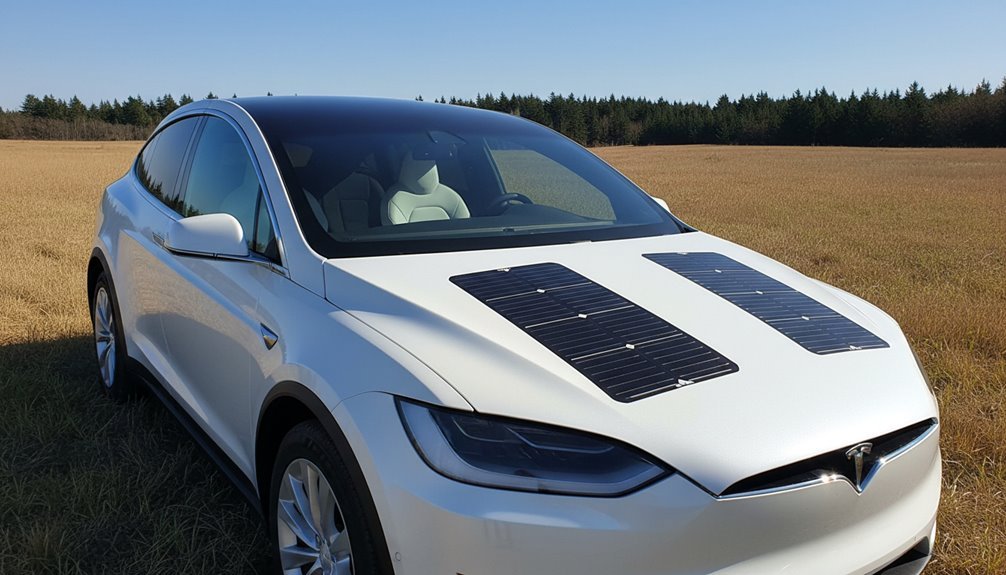

Imagine charging your electric car with energy straight from the sun. An Oregon man did exactly that by installing custom solar panels on his Tesla Model X. He created a DIY system that adds extra miles to his vehicle’s range without needing a charging station.
The project used two flexible solar panels, each rated at about 150 watts. He mounted them directly on his vehicle’s hood using industrial-grade 3M adhesive. This permanent installation required careful positioning since the bonding couldn’t be undone. The panels came from MitoSolar, a company that specifically engineered them for vehicle integration.
The electrical system works by sending power to an EcoFlow power station inside the vehicle rather than the main battery. Wiring was routed through the frunk and firewall with junction boxes installed under the hood. Protection tubing was added to prevent damage. The whole process required soldering connections during installation.
Real-world testing showed impressive results. The panels consistently produced between 110 and 135 watts in ideal sunlight. That’s slightly more power than the vehicle’s 12V DC outlet provides while driving. The system generated approximately six miles of additional range through solar supplementation. Fully charging the EcoFlow power station takes about ten hours, providing enough power for camping accessories like an induction cooktop.
The installation didn’t come without challenges. The vehicle’s falcon wing doors complicated panel placement options on the roof. Wiring required careful planning to maintain the vehicle’s appearance and functionality. The project involved permanent modifications, including drilling holes into the vehicle’s body. This expedition-ready expedition demonstrates how solar technology transforms vehicles for extended off-grid travel. Professional installation and proper engineering design are essential for ensuring the safety and longevity of solar EV charging systems.
Heat exposure also presents a significant challenge for long-term panel durability.
The entire DIY project cost around $3,000 to $4,000. This represents substantial savings compared to commercial integrated solar solutions. However, this system doesn’t provide unlimited range. Instead, it reduces reliance on external charging stations.
The Oregon man’s project shows that creative thinking and hands-on work can extend electric vehicle capabilities in practical ways.