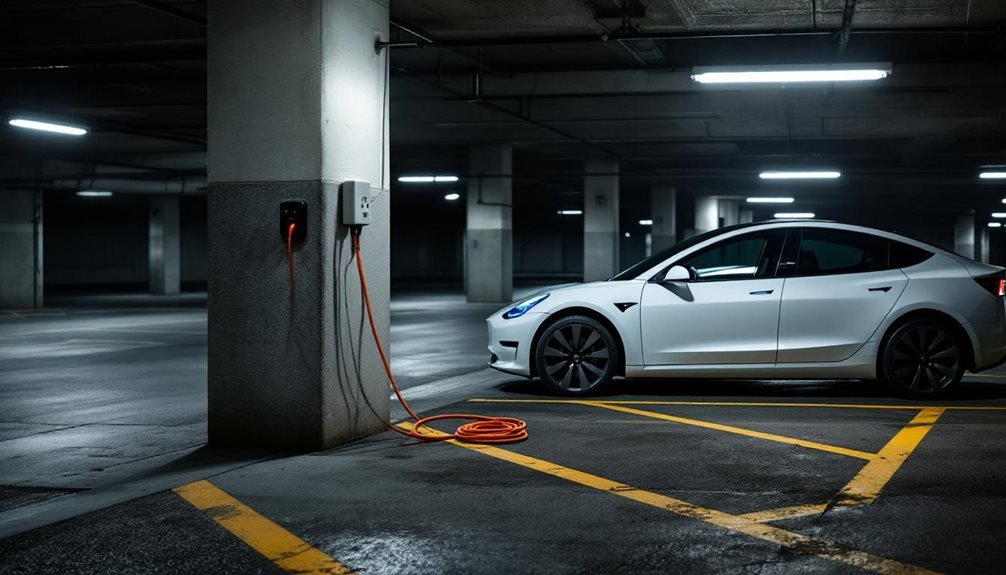

Owning a Tesla in an apartment means maneuvering a maze of outdated electrical systems, paranoid property managers, and bureaucratic red tape. Most older complexes lack charging infrastructure, while safety concerns and liability fears drive arbitrary charging bans. Some buildings show Tesla favoritism, others ban everything outright. Tenants resort to renting garages, using public stations, or sneaking extension cords—risking insurance voiding. Installation requires permits, approvals, and electrical upgrades that discourage everyone involved, though creative solutions exist.
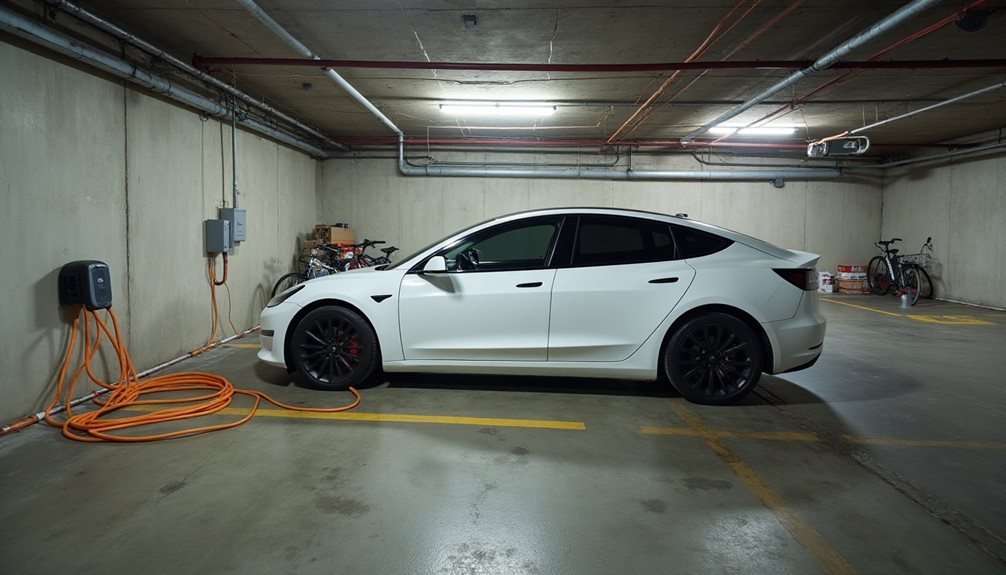
Why does owning a Tesla suddenly feel like steering through a bureaucratic nightmare when you live in an apartment? The dream of electric vehicle ownership crashes into reality when Tesla owners face inconsistent enforcement, unfair treatment, and outright charging bans in their buildings.
Older apartment complexes weren’t designed for the EV revolution. They lack dedicated charging stations and sufficient electrical capacity for multiple vehicles charging simultaneously. Safety concerns about electrical overload and fire hazards lead many property managers to simply ban charging altogether. Can’t blame them, really. Liability fears trump tenant convenience every time.
Liability fears trump tenant convenience every time when apartment managers face EV charging infrastructure challenges.
The enforcement situation gets messy fast. Some buildings show preferential treatment for Tesla owners while others operate arbitrary permission systems without official processes. Tenants sneak charging through public outlets without approval, creating conflicts between individual needs and building policies. Power struggles emerge when non-Tesla EVs attempt to charge, revealing the inconsistent nature of many apartment policies. Unauthorized charging may void insurance coverage, creating additional liability concerns for property management.
Administrative red tape makes installing proper chargers feel impossible. Compliance with local electrical codes, upgrading circuit capacity, and navigating approval processes create barriers that discourage both tenants and landlords. Most local jurisdictions require an electrical permit for new EV charging circuits to ensure safety and code compliance. The bureaucracy is real.
Smart Tesla owners work with property management instead of against them. Formal requests using Tesla-provided template letters help. Building business cases for installations, gaining tenant consensus, and proposing shared charging arrangements can strengthen proposals. Some tenants even offer to offset installation costs for landlords.
Alternative arrangements keep EVs charged while infrastructure catches up. Renting private garages with Level 2 outlets works for some. Mobile charging equipment, scheduled public station usage, and regular Supercharger trips become part of the routine. Temporary charging solutions in assigned parking spots offer stopgap measures. Workplace charging provides a reliable solution for many Tesla owners when apartment buildings restrict home installation options.
Community building accelerates change. Tenant associations share charging tips, EV owner groups push for infrastructure improvements, and petitions demonstrate consumer demand. Educating landlords about EV benefits and safety helps overcome resistance. Partnering with Tesla for installations creates win-win situations.
Future-proofing requires systematic changes. Retrofitting buildings with Level 2 charger networks, installing load-balancing systems, and upgrading electrical capacity addresses infrastructure needs. Designated EV parking spots and fair access policies create structure.
The apartment EV revolution is coming, whether buildings are ready or not.
Frequently Asked Questions
Can I Charge My Tesla Using a Standard Household Outlet?
Tesla owners can absolutely charge using a standard 120V household outlet. The Mobile Connector plugs right into any regular wall socket with a NEMA 5-15 adapter.
Here’s the catch: it’s painfully slow. We’re talking 2-3 miles of range per hour. That 333-mile battery? Yeah, it’ll take over four days to fully charge.
Fine for emergencies, terrible for daily use.
How Much Does It Cost to Install a Home Charging Station?
Home charging station installation costs range from $1,000 to $4,500 total. The charger itself runs $500-$2,000, while installation adds another $500-$2,500. Basic 240V outlet installation costs $750-$1,500.
Distance from the electrical panel matters. Long wire runs, panel upgrades, or trenching can significantly increase costs.
All-in-one solutions start around $1,345. Federal and state incentives can slash costs substantially.
What Happens if My Apartment Building Doesn’t Allow Charging Stations?
When apartment buildings refuse charging stations, residents face several options.
State laws like the EV Charging Stations Rights Act often require buildings to allow properly installed chargers. Tenants can negotiate for dedicated units, organize petitions with other residents, or pursue legal challenges if buildings violate accessibility standards.
Alternative solutions include using existing 110V outlets for slow charging or relying on public charging networks instead.
Are There Enough Public Charging Stations Near Apartment Complexes?
Public charging stations near apartments? That’s hit or miss. About 200,000 ports exist nationally, but they’re scattered compared to gas stations. Shopping centers and workplaces have them, though rural areas get the short end.
Apps like PlugShare help locate stations, but availability varies wildly by region. Space constraints limit how many Level 2 chargers complexes can install without eating up parking spots.
Can I Use Extension Cords to Charge My Tesla From Upstairs?
Tesla owners technically can run extension cords from upstairs apartments, but it’s basically playing with fire.
Tesla strongly discourages this setup due to overheating risks and warranty violations.
The cords need minimum 12AWG wiring to handle the 12-16 amp draw, and even then, it’s sketchy.
Most apartment dwellers use this as a desperate last resort, not a daily solution.