

Storing a Tesla long-term requires charging the battery to 50-60% before parking it. Full charges above 90% stress the battery chemistry. Keep the vehicle plugged in for automatic temperature regulation and disable Sentry Mode to preserve the 12V battery. Store indoors when possible to protect paint from UV damage. Maintain proper tire inflation and use jack stands to prevent flat-spotting. Turn off third-party apps and dashcams that drain power unnecessarily. These steps prevent costly repairs and battery degradation that plague unprepared owners.
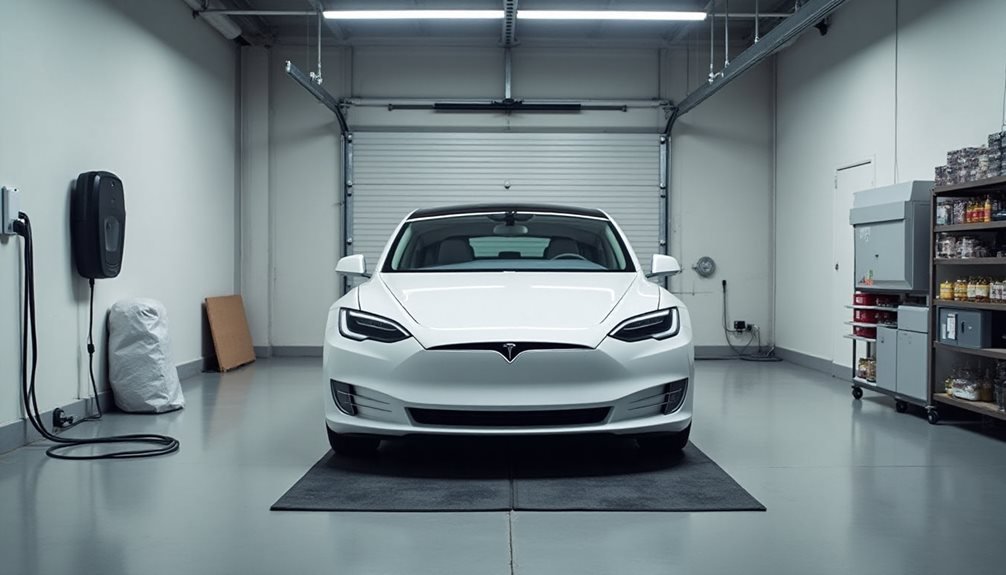
Why do Tesla owners treat their cars like exotic pets regarding storage? Because these electric marvels require specific care that traditional car storage wisdom doesn’t cover. Forget everything about winterizing a gas engine. Tesla storage is entirely different.
Battery management sits at the heart of proper Tesla storage. Owners should charge their vehicles to 50-60% state of charge before parking them long-term. This sweet spot prevents the battery degradation that happens at extreme charge levels. Full charges above 90% create unnecessary chemical stress during storage. Deep discharge is equally damaging.
The 50-60% charge sweet spot prevents battery degradation from extreme levels during long-term Tesla storage.
Tesla’s Battery Management System handles temperature regulation and voltage balancing automatically, but it needs power to function. Keeping the vehicle plugged in, even with a basic 120V outlet, maintains this critical system. Level 1 charging provides cost-effective maintenance without the stress of rapid charging sessions.
The 12V battery often gets overlooked. It powers essential systems even when the main battery sleeps. Disabling Sentry Mode conserves this smaller battery’s performance. Third-party apps and dashcams should be deactivated too. They drain power unnecessarily.
Environmental factors matter considerably. Stable temperatures prevent battery stress. Garages or climate-controlled facilities beat outdoor storage every time. UV exposure damages paint and interiors, so applying wax and using sunshades protects the investment. Proper battery preconditioning before removing the vehicle from storage ensures optimal performance when returning to regular use.
Concrete parking can affect tires over extended periods due to moisture absorption. Tesla’s proprietary systems create unique storage considerations that differentiate it from other electric vehicle manufacturers.
Tire care requires attention during long storage. Inflate to manufacturer specifications to prevent flat-spotting. Jack stands or tire cradles redistribute weight and reduce suspension strain. Periodic tire rotation ensures even wear patterns.
Software considerations include limiting app interactions since frequent remote checks drain the battery. Background systems like navigation and climate control should be disabled to preserve the 12V system. Software updates should be current before storage to maintain Battery Management System protocols.
Physical security replaces electronic monitoring during storage. Car covers, locked facilities, and traditional alarms work better than power-hungry Sentry Mode. Clean surfaces before storage and apply protective treatments to rubber components. Owners should also check critical fluids like coolant and brake fluid before extended storage periods.
Calculating vampire drain impact helps determine the initial charge level based on storage duration. Documentation of storage conditions provides valuable reference information for future storage needs.
Frequently Asked Questions
What Should I Do if My Tesla Won’t Start After Long-Term Storage?
The owner should first check the 12V battery, which probably died during storage. Jump-starting it might solve everything.
If that fails, they’ll need to trickle-charge the main battery using an 8-amp charger. The car might be in protective shutdown mode from deep discharge.
Sometimes a forced system restart works.
Worst case? Call Tesla Service. They have special equipment for seriously drained batteries that regular owners can’t fix.
How Often Should I Check on My Stored Tesla?
Tesla owners should perform bi-weekly visual inspections during long-term storage. These checks focus on fluid leaks, wildlife intrusion, structural damage, and debris accumulation.
Monthly tire pressure monitoring prevents flat spots. Monthly corrosion inspections of battery terminals, brakes, and suspension components catch rust early.
However, limiting app checks to every few days prevents unnecessary battery drain. Basically, physical visits every two weeks, digital monitoring sparingly.
Can Extreme Temperatures Damage My Tesla During Storage?
Yes, extreme temperatures absolutely wreck Teslas during storage. Heat forces cooling systems to work overtime, draining the battery while accelerating permanent degradation. Cold weather slows charging efficiency and can damage cells if the battery drops too low.
Both extremes stress components that weren’t designed for prolonged abuse. Tesla owners basically need climate-controlled storage or they’re gambling with expensive repairs.
Should I Disconnect the 12V Battery Before Storing My Tesla?
Most Tesla owners shouldn’t disconnect the 12V battery before storage. Tesla’s onboard systems handle this automatically when the car stays plugged in. The DC-DC converter keeps everything charged without drama.
Only disconnect if someone’s truly going off-grid with zero charging access for weeks. Otherwise, it’s unnecessary work.
Modern Teslas use lithium 12V batteries that last longer anyway. Trust the engineering.
What Insurance Considerations Apply When Storing My Tesla Long-Term?
Most drivers can suspend liability and collision coverage during long-term storage, slashing monthly premiums.
All-encompassing coverage stays put—theft and fire don’t care if the car’s parked.
Financed Teslas face a cruel reality: lenders demand full coverage regardless.
Smart owners notify insurers in writing about storage dates.
Tesla Insurance allows deductible tweaks for storage risks.
Before hitting the road again, reactivate everything or face legal nightmares.