
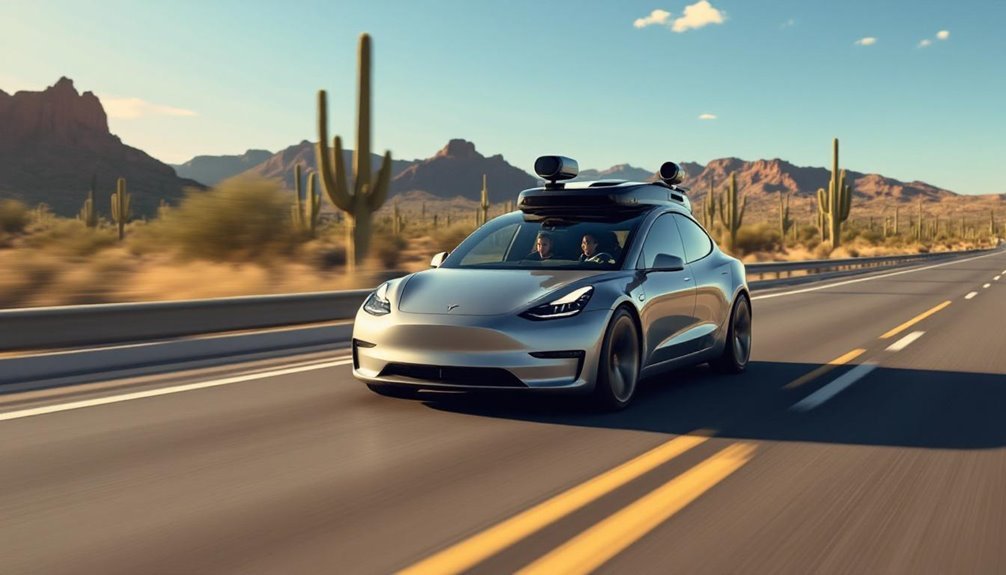
Tesla has secured regulatory approval to operate its Robotaxi service across Arizona, marking a major expansion of the company’s autonomous vehicle ambitions. The approval came quickly after Tesla filed its Transportation Network Company permit application with the Arizona Department of Transportation on November 13, 2025. Just four days later, on November 17, Arizona DOT granted permission for autonomous operations, demonstrating strong state support for the project.
Tesla secured Arizona regulatory approval for Robotaxi operations just four days after filing its permit application, demonstrating strong state support for autonomous vehicle expansion.
The timeline leading to approval began in June 2025 when Tesla made initial contact with Arizona’s Motor Vehicle Division to start the certification process. By September, the company received regulatory approval for semi-autonomous tests with safety drivers in the Phoenix metro area. Casey Blaine, Tesla’s senior regulatory counsel, led all communications with Arizona transportation officials.
Tesla’s initial launch will focus on the Phoenix metropolitan area as an invited-only service, similar to how the company rolled out its robotaxi in South Austin. The company plans to gradually expand operations throughout Arizona’s other metropolitan regions. Multiple Robotaxi units are currently validating routes and systems across testing areas including Gilbert, Scottsdale, and other Maricopa County cities. Unlike California’s regulatory framework, Arizona’s self-certification process does not by itself authorize Tesla to charge for rides without obtaining a separate Transportation Network Company permit. Waymo already operates a driverless robotaxi service covering about 315 square miles of the Metro Phoenix area.
There’s a pivotal catch, though: Tesla still needs human safety drivers in its vehicles during the initial rollout phase. The company plans to remove this requirement before year-end, potentially following the Texas operational model where safety monitors aren’t needed for non-freeway routes. This differs from California’s approach, which requires safety monitors to remain in the driver’s seat at all times. Customers experiencing any technical issues with their Robotaxi vehicles can request assistance through the Tesla app to determine if mobile service or a service center visit is required.
The Arizona approval has already sparked market enthusiasm. Morgan Stanley estimates that Tesla’s Robotaxi service could contribute $50 billion in annual revenue within five years. The company projects operational costs could decrease by up to 60 percent compared to traditional ride-hailing services like Uber and Lyft.
This move gives Tesla a competitive advantage over other autonomous vehicle companies including Waymo, Zoox, and Aurora. Arizona’s statewide approval without city-specific restrictions gives Tesla significant flexibility for expansion. The company’s formal regulatory coordination with Maricopa County government and law enforcement has established a solid foundation for the service launch.