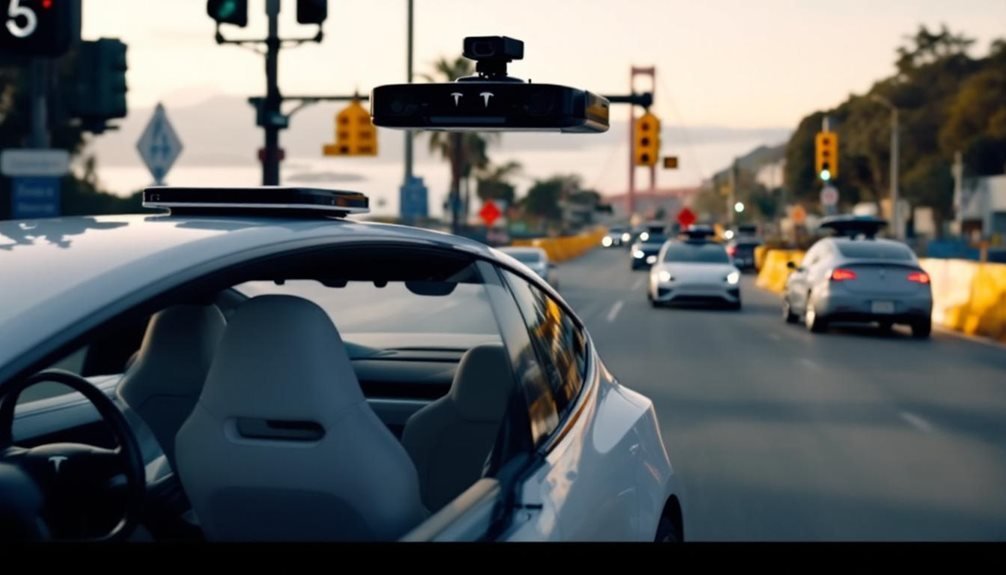
Tesla’s expanding its Bay Area transport service as early as July 25, but the company’s “robotaxi” program still requires human safety monitors in every vehicle. The California Public Utilities Commission only approved Tesla to transport employees, not the general public, under its current permits.
Tesla’s Bay Area robotaxi service still needs human safety monitors despite expansion plans.
Tesla told California regulators it wants to broaden operations under a TCP permit to include friends, family, and select public members. However, the company hasn’t applied for driverless implementation permits with the DMV. The CPUC only allows human-driven vehicles under Tesla’s current authorizations.
The service will cover areas from Sausalito to San Jose, including San Francisco, Marin, and the East Bay. But there’s a major catch – all vehicles must have human operators in the driver’s seat with full control over braking and steering. These safety monitors sit in the passenger seat and can override the car’s autonomous functions anytime.
Tesla’s targeting existing vehicle owners first through invitations. Users must pay for rides even though the service is still in testing phases. The company claims its updated Full Self-Driving software can process ten times more environmental data for routing.
This Bay Area launch mirrors Tesla’s Austin program, where safety monitors handle complex scenarios and interventions. Reports from the Texas pilot show drivers needed to intervene dozens of times per 7,000 miles. Tesla’s Austin service launched last month with over 10 vehicles featuring modified Model Ys equipped with additional camera equipment.
Critics like Streets For All argue Tesla’s “robotaxi” branding misleads consumers since the vehicles aren’t truly autonomous. Tesla admits its AI isn’t ready for Level 4 autonomy – meaning cars can’t operate without human oversight in complex environments. Streets Forward executives warn the service could create phantom braking incidents and dangerous drop-off situations without proper autonomous capabilities.
The service focuses on predefined routes rather than on-demand rides anywhere. It’s limited to pre-mapped areas with fewer obstacles. Tesla can’t offer rides to the general public until receiving additional permits from the DMV and CPUC.
Elon Musk claims the expanded service will beat competitors like Waymo. But without true autonomous capabilities or proper permits for public operations, Tesla’s transport expansion faces significant regulatory and technical obstacles before becoming a real robotaxi service.