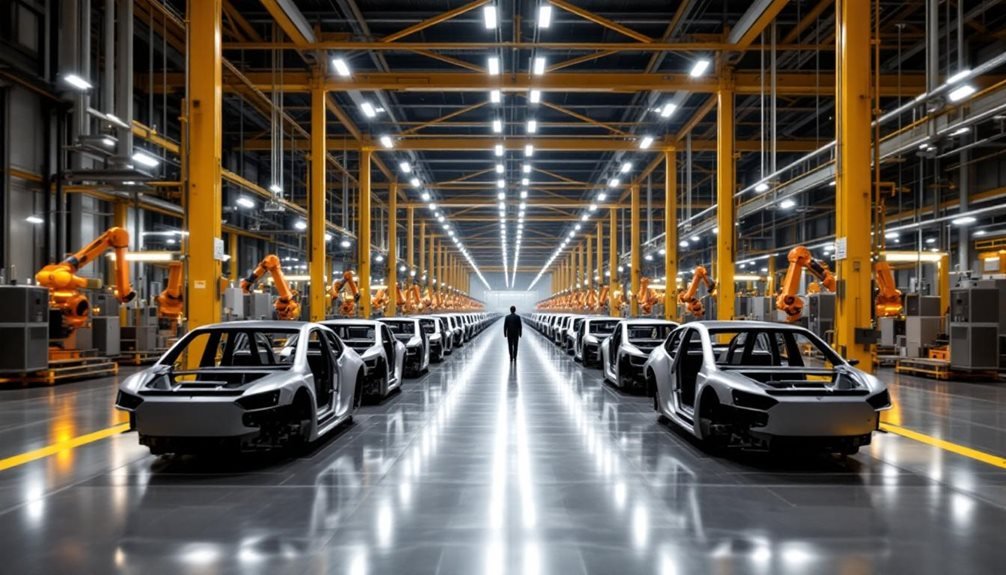
Reality has hit Tesla’s Cybertruck hard. The electric truck maker’s most hyped vehicle is struggling with production cuts, falling sales, and mounting inventory problems. Tesla’s Texas factory now runs at less than 10% of its planned capacity, far below the 250,000 trucks per year that CEO Elon Musk promised.
The numbers tell a harsh story. Tesla sold just 6,406 Cybertrucks in the first quarter of 2025, half of what it sold in the previous quarter. Second quarter deliveries dropped even further to about 5,000 units. The company has delivered fewer than 50,000 trucks total, despite having over one million reservations when the vehicle was first announced. In contrast, Tesla delivered 12,881 units of other models in Q1 2025 alone, highlighting the Cybertruck’s underperformance.
Tesla delivered under 50,000 Cybertrucks despite one million reservations, with quarterly sales plummeting from 12,000 to just 5,000 units.
Production problems forced Tesla to make tough choices. The company moved workers from Cybertruck assembly lines to build Model Y SUVs instead. Some areas saw their Cybertruck teams cut by more than half. Multiple production lines that were built to make thousands of trucks now sit mostly idle. In December, Tesla formally communicated these production schedule changes to workers, signaling a major shift in manufacturing priorities.
Tesla’s inventory crisis keeps growing. The company has over $200 million worth of unsold Cybertrucks sitting in lots. About 3,000 trucks remain in US inventory, including older models from 2023 and 2024 that don’t qualify for tax credits. Tesla stopped making its pricey Foundation Series trucks in October 2024, but many still haven’t sold.
Quality problems plague the trucks that do reach customers. Buyers report broken self-driving features and steering systems that don’t work properly. Tesla’s limited pre-delivery inspections mean many problems aren’t caught until after purchase. Owners then face long waits for repairs as service centers struggle with remote diagnostic backlogs.
These troubles affect Tesla’s bottom line and investor confidence. The underused factory represents billions in wasted investment. Wall Street watches nervously as inventory piles up and sales fall short of targets. The Cybertruck’s current sales rate sits at just one-tenth of what Musk predicted. Amidst these challenges, the company’s ambitious plans for the Tesla electric car expansion in China could offer a glimmer of hope. However, potential delays and regulatory hurdles could exacerbate the situation if not addressed promptly. Investors are keenly aware that successful execution in this key market is crucial for revitalizing growth and restoring confidence.
Tesla’s shift away from the Cybertruck shows in everyday operations. Parking lots at the Texas factory look emptier as workers get reassigned or let go. The company’s focus has clearly moved back to its bread-and-butter Model Y, leaving the futuristic truck’s promise unfulfilled.