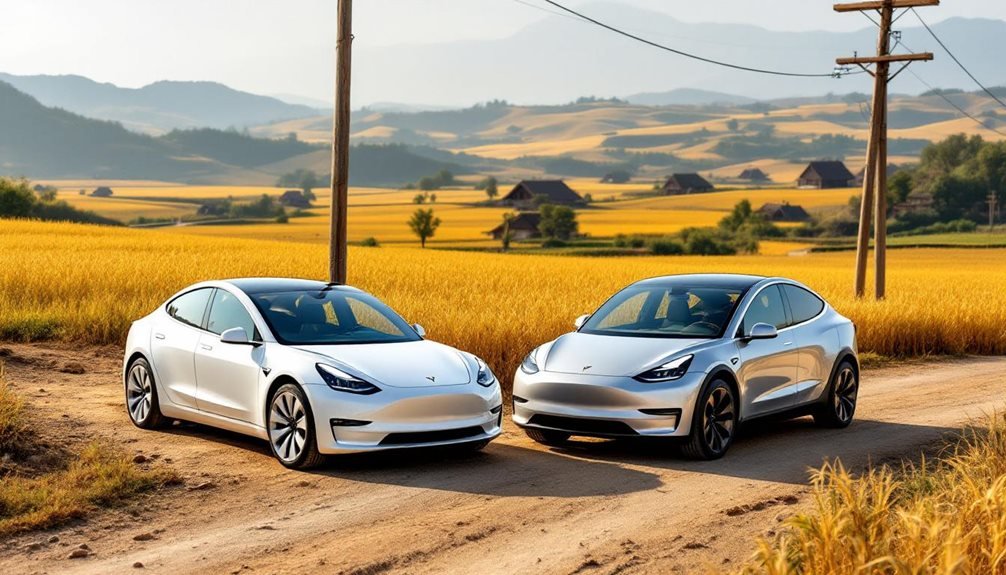
Two of Tesla’s most popular electric vehicles have just earned a place on China’s prestigious rural promotion list for the first time. The Model 3 and Y join 124 vehicles in the 2025 campaign, up from 99 models last year.
Tesla’s Model 3 and Y make historic debut on China’s rural promotion list
China’s Ministry of Industry and Information Technology runs this program with five other government departments. They’ve sold nearly 1.5 million electric cars through the initiative since it started in 2020.
The campaign focuses on bringing “green, low-carbon, intelligent, and safe” transportation to rural areas.
Tesla’s *inclusion* opens doors to China’s vast countryside market. Rural buyers may get subsidies and tax breaks, though specific amounts weren’t disclosed. These benefits could make Tesla’s cars more affordable for price-sensitive customers in less developed regions. This marks the first participation of Tesla in China’s rural NEV campaign, signaling a new phase in the company’s China strategy.
The timing is *crucial* for Tesla. The company’s China-made car sales dropped 6% compared to last year’s April numbers. Their market share in China’s electric vehicle sector has slipped to 6.1%. Tesla’s brand value has faced challenges globally, creating pressure for the company to find new markets and opportunities.
Competition is fierce. BYD dominates with 32% of the market and multiple models on the promotion list. Local brands like NIO, Li Auto, and XPeng also target rural areas with affordable electric cars. Each major Chinese manufacturer has more than 10 models included in the campaign.
China’s electric vehicle industry is booming despite Tesla’s challenges. From January to April 2025, manufacturers produced 4.429 million electric vehicles, a 48.3% jump from last year.
Sales reached 4.3 million units, up 46.2%, accounting for 42.7% of all car sales in China.
Rural areas present unique challenges. Infrastructure for charging stations isn’t as developed as in cities. The government has run this annual campaign since at least 2020 to address these disparities and boost rural EV adoption.
That’s where government support becomes *critical*. The campaign aligns with China’s carbon reduction goals and plans to expand electric vehicle adoption beyond urban centers.
Tesla’s rural push represents a strategic shift to compete in China’s rapidly *evolving* market. With government backing and potential incentives, the Model 3 and Y could find new customers in places where electric vehicles haven’t traditionally been popular. This initiative not only broadens Tesla’s consumer base but also helps establish the brand as a leader in sustainable transportation across diverse regions. As the company invests in infrastructure and education about electric vehicles, the Tesla Model 3 and Y improvements will likely resonate with more rural buyers seeking affordability and efficiency. Additionally, enhanced local service centers may alleviate concerns regarding maintenance and support, further solidifying Tesla’s presence in these emerging markets.
Whether this move will reverse Tesla’s declining sales remains to be seen.