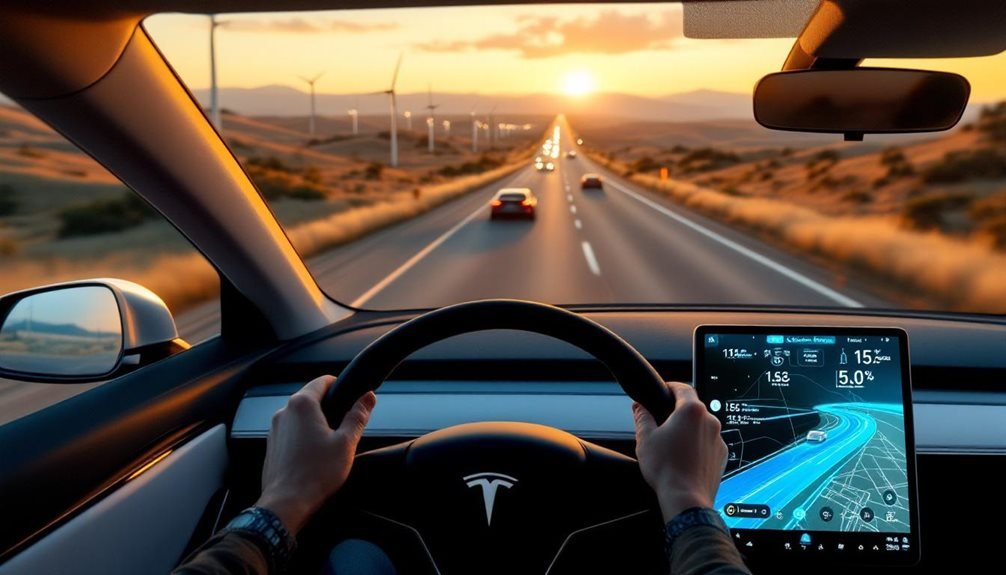
A Tesla vehicle completed a 360-mile drive from the San Francisco Bay Area to Los Angeles without the driver touching the steering wheel once. The August 2025 demonstration took about six and a half hours, including a mandatory Supercharging stop roughly two-thirds through the trip. The car’s Full Self-Driving system handled the entire journey without needing any help from the person behind the wheel.
This marks Tesla’s longest FSD demonstration to date. The technology uses version 12.5, which tracks where drivers are looking instead of requiring hands on the wheel. A camera inside the car watches the driver’s eyes to make sure they’re paying attention and ready to take over if needed. While drivers don’t need to touch the steering wheel or pedals, they must stay alert and prepared to control the car at any moment.
The system combines city and highway driving into one unified program. It’s gotten better at spotting pedestrians, bicycles, and construction cones. Tesla has also reduced phantom braking, where cars suddenly slow down for no apparent reason. These improvements come from better neural networks that help the car understand and store information more effectively.
Tesla’s latest hardware, called HW4, provides enhanced capabilities compared to older systems. The cabin camera enables real-time monitoring of driver attention, while advanced processing supports improved decision-making. These hardware upgrades have contributed to significant performance improvements over the past year. However, drivers on longer trips report that FSD can issue frequent warnings to maintain attention even when they’re actively watching the road, creating frustration during extended use.
Despite these advances, the technology isn’t fully autonomous. Tesla launched robotaxi service in Austin, Texas in late June 2025, where vehicles operate without anyone in the driver’s seat. However, these robotaxis have experienced some problems. They’ve stopped nearly a full block away from pickup spots and sometimes dropped passengers off in the middle of intersections. Tesla vehicles achieve the lowest injury probability in standardized crash tests, demonstrating the company’s focus on safety across all its autonomous features.
The Austin robotaxis use an FSD version that’s not available to the public yet. Tesla chose Austin partly because it has fewer regulations than California. San Francisco remains the center of autonomous car development, but it’s more tightly regulated. Industry experts disagree about whether Tesla needs to succeed in California’s market to prove its technology works.