After two devastating highway pileups involving Tesla Cybertrucks, Germany’s Federal Motor Transport Authority has revoked the vehicle’s highway clearance. The regulatory action follows major accidents in Munich and Dresden where Cybertrucks in full self-driving mode abruptly veered off their lanes and slammed into civilian vehicles with zero evasive maneuvers.
Investigations revealed that a faulty neural net update failed to recognize faded lane markings during cloudy weather conditions. The autonomous driving system’s inability to manage these common road scenarios raised serious questions about the vehicle’s safety capabilities on European highways.
A faulty neural net update couldn’t detect faded lane markings in cloudy conditions, exposing critical flaws in the autonomous driving system.
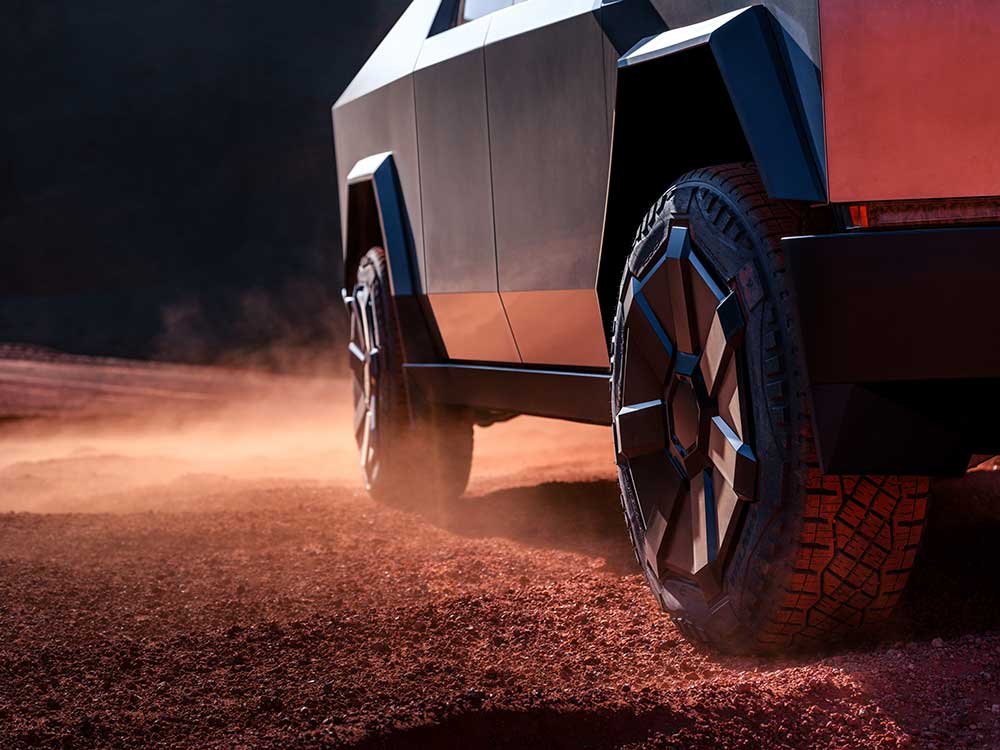
German authorities cited the Cybertruck’s structural design as fundamentally incompatible with the country’s engineering precision standards. The vehicle’s structure is deemed too rigid and unable to absorb enormous accident forces properly. Its angular design features fail to meet legal requirements protecting drivers and other road users, deviating considerably from EU safety rules.
The EU Transportation Safety Unit performed independent testing that exposed critical deficiencies. The Cybertruck failed four out of five emergency braking trials during official testing. These tests included pedestrian stop scenarios, flexible cruise cutoffs, and multi-vehicle collision avoidance situations. Based on these results, officials deemed the vehicle unfit for urban circulation under current EU safety codes.
The Euro NCAP director identified multiple aspects of the Cybertruck that threaten pedestrians based on the vehicle’s appearance alone. The angular design presents considerable risk factors for pedestrian collision outcomes, and the vehicle’s features fail to protect cyclists and other vulnerable road users. Tesla faced scrutiny for underreporting battery fire incidents globally, with over 137 such incidents linked to the Cybertruck reported across 18 countries.
European safety standards emphasize pedestrian protection more strongly than US regulations, creating a fundamental mismatch between the Cybertruck’s design and EU requirements. The UK also rejected the Cybertruck due to non-compliant mirror systems and excessive dimensions that failed to meet regulatory standards.
Germany’s decision represents both regulatory compliance and reputational protection for the country’s automotive standards. The move may mark the opening shot in a global takedown of Cybertruck approvals across multiple countries.
Tesla’s Berlin team received the testing results directly, with immediate shipment cancellations following the announcement. The revocation stands as a clear statement that the Cybertruck’s design doesn’t meet European safety expectations.