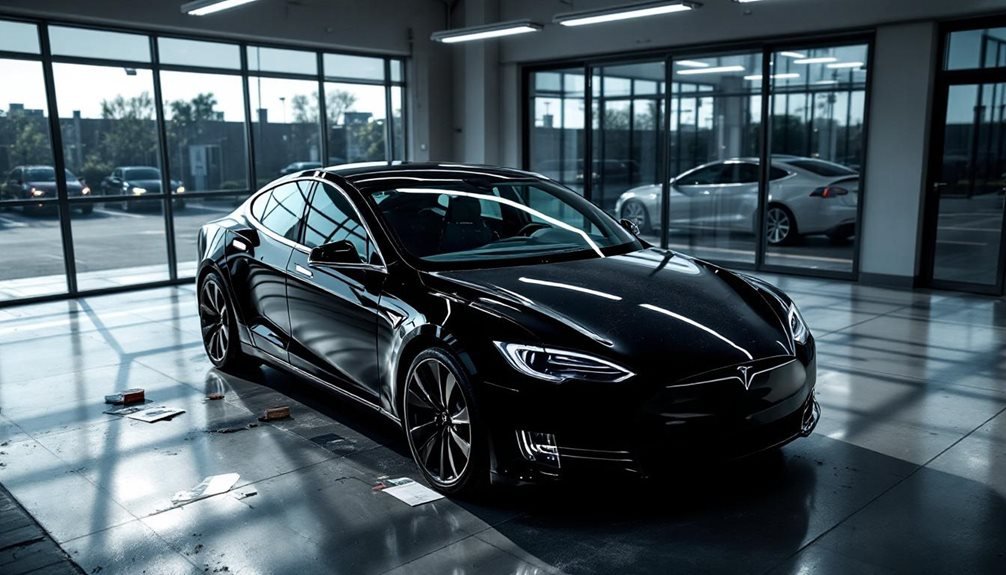

Tesla depreciation hits differently than traditional luxury cars, and not in a good way. A $87,000 Model S plummets to $26,000 in just five years—that’s a brutal 71% value loss compared to the typical 50% for luxury vehicles. Rapid tech updates make older Teslas feel ancient fast. Battery replacement fears, aggressive new car pricing, and constant software upgrades create a perfect storm of depreciation. The numbers tell a sobering story about electric luxury ownership costs.
Tesla Depreciation
How quickly can $87,000 turn into $26,000? Ask any Tesla Model S owner who bought five years ago. Their luxury electric sedan now retains just 36.7% of its original value. That’s a brutal 71% loss that makes traditional car depreciation look gentle.
Tesla Model S owners watched $61,000 vanish in five years—a devastating 71% value massacre that redefines automotive depreciation.
Tesla’s depreciation hits differently than regular cars. While gas-powered luxury vehicles typically lose around 50% of their value over five years, the Model S hemorrhages 63.3% in the same period. This significant depreciation can be attributed to various factors, including the rapid advancement in electric vehicle technology and consumer perceptions of Tesla’s brand strength. Additionally, tesla tire wear factors play a crucial role in overall ownership costs, as owners must account for potentially higher maintenance expenses over time compared to traditional vehicles. As more competitors enter the electric vehicle market, this depreciation trend could become even more pronounced.
The bleeding starts early too. First-year owners watch their shiny new Tesla drop 29.23% in value before they’ve even figured out all the autopilot features.
The culprit? Tesla’s own success works against resale values. Every software update makes older models feel ancient. New battery technology renders previous generations obsolete faster than last season’s iPhone.
When newer Teslas get 400+ mile range, suddenly that 2019 model’s capabilities look quaint.
Tesla’s pricing strategy doesn’t help existing owners either. Frequent price cuts and aggressive incentives for new buyers essentially kneecap the used market.
Why buy a three-year-old Model S when Tesla just slashed prices on new ones? It’s like watching your investment evaporate in real time.
Battery anxiety haunts the used Tesla market. Potential buyers fear replacement costs ranging from $5,000 to $15,000.
Without standardized battery health tests or unequivocal certified pre-owned programs, buying used feels like gambling. Will the battery last another five years or fail next month? Despite Tesla’s battery longevity showing only about 5% capacity loss over five years, buyer uncertainty persists. Nobody knows for sure.
The luxury EV segment suffers worse depreciation than mass-market electric cars. Model S and X owners face steeper losses than Model 3 and Y drivers.
The Model X faces particularly harsh depreciation, losing 35-50% of its value in just 2-3 years. Apparently, paying more upfront guarantees losing more later. The early adopter tax hits hardest at the premium end.
Tesla’s rapid technological advancement creates a cruel irony. The company’s innovation makes their older products obsolete faster than competitors who barely innovate at all.
Tesla owners get the latest features through updates, but they also get constant reminders that their car isn’t the newest, shiniest version anymore. Progress hurts when it’s your wallet taking the hit. Smart buyers can save about $34,121 by purchasing a 2-year-old used Model S instead of buying new. Additionally, prospective buyers should weigh their options carefully and explore all available alternatives before making a purchase. For those looking to maximize value, it’s essential to consider important tesla buying tips and considerations, such as warranty coverage and the benefits of certified pre-owned models. By doing so, they can make an informed decision that balances features, price, and long-term satisfaction.
Frequently Asked Questions
How Does Tesla Depreciation Compare to Other Luxury Electric Vehicles?
Tesla’s depreciation crushes most luxury EVs, but the gap is narrowing fast. While Model S tanks 65% over five years, newer luxury electric competitors hold value better thanks to slower tech cycles and premium brand positioning. As the electric vehicle market evolves, Tesla’s innovative offerings are also expanding beyond just cars, with advancements like the Tesla solar roof efficiency 2025 promising to enhance overall brand value. This diversification may help stabilize the residual values of Tesla’s lineup, allowing it to compete more effectively with luxury brands. As consumers increasingly prioritize sustainability, the added benefits of Tesla’s energy solutions could further shift the market dynamics in its favor.
Tesla’s aggressive pricing wars don’t help either. The luxury EV space is getting crowded, and Tesla’s first-mover advantage is fading. Other brands simply aren’t cannibalizing their own resale values.
Does Tesla’s Over-The-Air Software Updates Affect Resale Value Positively or Negatively?
Tesla’s OTA updates create a weird paradox. Sure, they can enhance resale value by 15% through new features and security patches. Tesla vehicles retain 90% of their value after three years partly because of these updates.
But here’s the kicker – rapid tech advances make older models feel ancient fast. Tesla depreciates 70x faster than Chevrolet. Updates help, but hardware limitations still bite hard.
Which Tesla Model Holds Its Value Best Over Time?
The Model Y surprisingly holds its value best, retaining 58.5% after three years. Not bad for a mass-produced SUV.
The Model 3 comes second, losing 39.1% over three years.
Meanwhile, the fancy Model S and X? They’re depreciation disasters, dropping over 60% in five years.
The Cybertruck’s already down 35% since release.
Turns out Tesla’s “affordable” models actually beat their luxury siblings at keeping value.
Do Tesla Warranty Transfers Impact Depreciation Rates for Used Buyers?
Tesla warranty transfers definitely help slow depreciation for used buyers. Vehicles with remaining factory coverage command higher prices than unprotected ones.
The 4-year/50k-mile powertrain protection reduces financial risk from costly battery repairs. However, strict 30-day transfer windows and paperwork requirements can kill deals fast.
Third-party dealers can’t handle ESA transfers, limiting options. Still, warranty-backed Teslas hold value better than naked ones.
Can Purchasing Extended Warranties Reduce Tesla’s Rapid Depreciation?
Extended warranties offer limited help against Tesla’s depreciation plunge. The ESA costs $1,800 for Model 3/Y, potentially increasing buyer confidence and making listings stand out. Sure, it signals reduced repair risks.
But here’s the kicker – it only lasts two years and doesn’t cover hardware obsolescence or battery degradation. When Teslas depreciate 70x faster than other cars, that $1,800 feels like a bandaid on a broken dam. As owners face the reality of rapid depreciation, many are left wondering how to maintain the value of their investment. A thorough understanding of the tesla wrap cost breakdown 2025 may provide a glimpse into long-term preservation strategies. However, without robust coverage against mechanical failures or the eventual wear of components, even the most diligent preparations may feel inadequate. Moreover, many owners are left grappling with the reality that the Tesla battery lifespan details reveal a significant decrease in performance over time. As the years pass, potential repair and replacement costs can quickly outweigh the initial savings, leaving drivers disillusioned. Without comprehensive coverage, the fleeting warranty becomes a mere illusion of security in the long run.