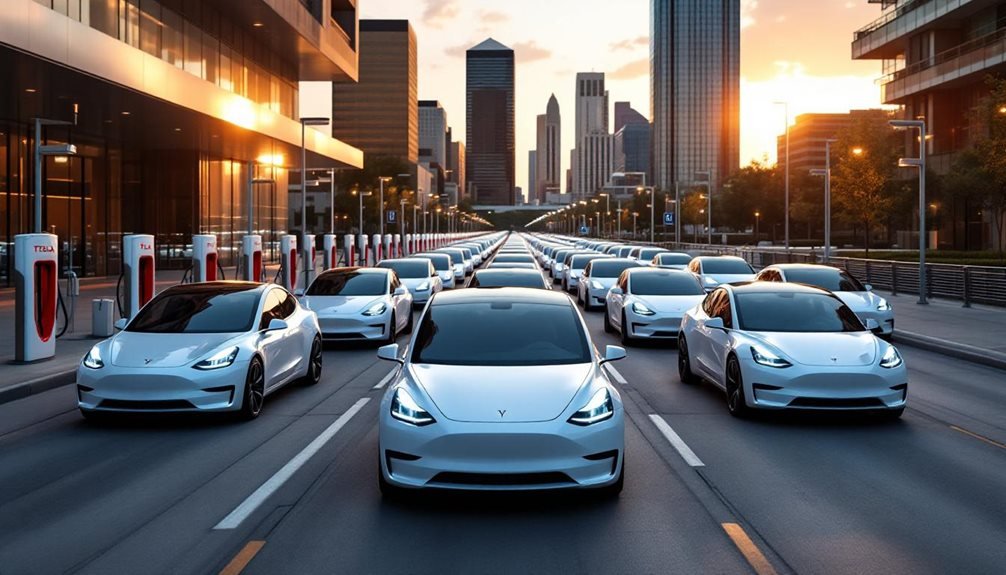
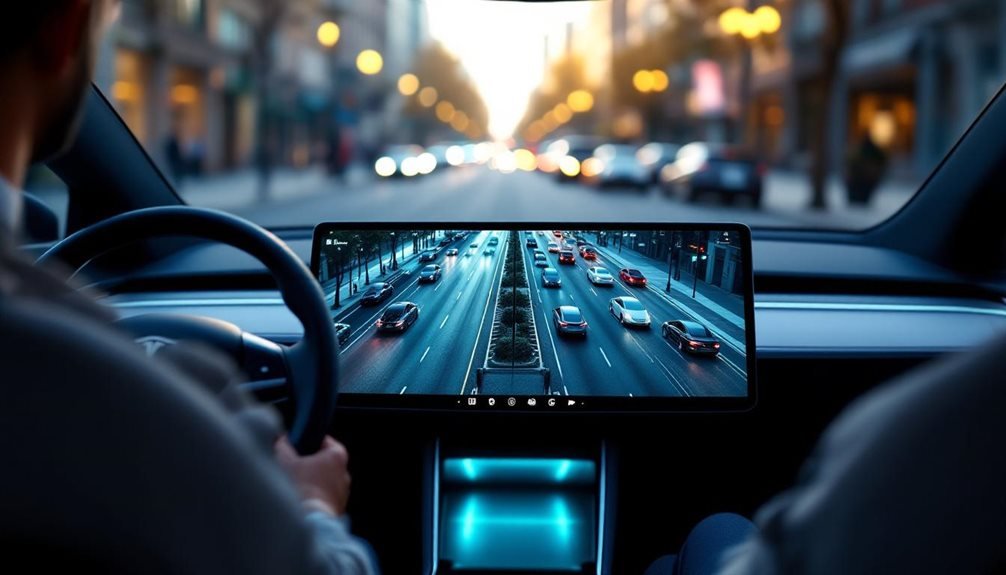
Tesla has doubled its robotaxi fleet size for the second time this month, expanding from 20 to 40 autonomous vehicles in Austin, Texas. The company’s rapid scaling follows its initial deployment of just 10 to 20 Model Y vehicles when the service launched on June 22, 2025.
Elon Musk previously outlined this aggressive expansion strategy, starting with 10 vehicles in the first week before steadily increasing the fleet size. The plan calls for reaching 1,000 vehicles within months if operations run smoothly. Tesla’s current trajectory shows increases from 10 to 20, then 30, and now 40 vehicles, matching the CEO’s promised scaling pattern.
The Austin service remains limited to select influencers rather than the general public. All vehicles operate within a geofenced area as a standard safety measure. Human safety monitors sit in the front passenger seat during this initial phase, though test vehicles running 24/7 in Austin have reported minimal driver interventions.
Tesla’s expansion extends beyond Austin. The company plans to launch in Los Angeles and San Francisco later in 2025, with a target of reaching a dozen U.S. cities by year’s end. The Bay Area will see its own pilot program with over 100 vehicles by September 2025, though local regulations there require safety monitors in the driver’s seat rather than the passenger seat.
The fleet runs on Tesla’s Full Self-Driving software platform. The company currently uses Model Y vehicles but plans to introduce purpose-built Cybercabs and Robovans later. Tesla’s existing Supercharger network supports fleet operations and maintenance needs.
This rapid scaling leverages Tesla’s established manufacturing infrastructure. The company can quickly produce vehicles using its existing Model Y production lines and supply chains. This gives Tesla a significant advantage over competitors who must build both vehicles and infrastructure from scratch.
The aggressive expansion puts pressure on rivals like Waymo, who face challenges matching Tesla’s manufacturing capabilities and integrated approach. Tesla’s strategy connects vehicle production, software development, and service deployment into one unified system. Future plans may even allow existing Tesla owners to add their vehicles to the robotaxi network after proper validation.
The robotaxi service benefits from Tesla’s proven Autopilot safety performance, which demonstrates crashes occurring every 7.44 million miles compared to human drivers who crash approximately every 702,000 miles.