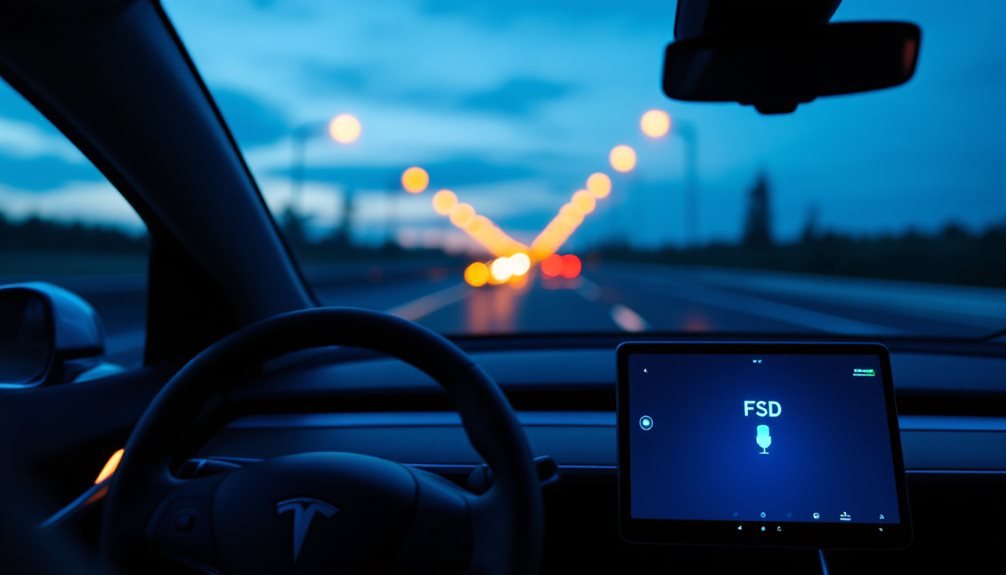

Tesla’s latest software update tells drowsy drivers to turn on Full Self-Driving mode instead of pulling over. The feature appeared in software version 2025.32.3, uncovered by Tesla hacker Green through decompiled code. When the car’s system detects a drowsy driver, it displays pop-up alerts suggesting they activate FSD to stay safe.
The detection system uses Tesla’s forward-facing cabin camera to monitor driver behavior. It tracks eye movements, head position, and whether drivers are looking at their phones. The camera can tell if someone’s eyes are closed or if they’re looking up, down, left, or right. When the system notices multiple lane departure warnings or signs of drowsiness, it triggers the FSD recommendation prompts.
Tesla’s alerts include messages like “Lane drift detected. Let FSD assist so you can stay focused” and “Drowsiness detected. Stay focused with FSD.” These pop-ups use the same design as previous FSD activation notifications. The shift represents a change from passive warnings to actively suggesting drivers engage the self-driving system. This approach comes as studies show fatigued motorists are 8 times more likely to have an accident compared to rested motorists.
The company’s driver monitoring features include strict attention requirements. FSD beta testers report a 1:7 rule where warnings appear if drivers look away for more than seven seconds. Tesla uses a strike system that prevents inattentive drivers from using FSD features. The system penalizes users for phone use to encourage them to watch the road. Tesla’s Autopilot addresses human mistakes through active steering, sensors, and alerts, as 90% of crashes involve human error such as distraction or poor lane discipline.
Safety experts worry about this approach. They’re concerned that relying on FSD could make drivers too comfortable with self-driving technology. Critics point out that Tesla’s FSD depends entirely on visual cameras without backup systems when cameras get blocked. Some question whether it’s safer to have a drowsy driver supervising an automated system than having them drive manually. Research shows humans often perform poorly as supervisors of automated systems, raising additional concerns about driver effectiveness.
Tesla states in its manual that cabin camera data isn’t linked to vehicle identification. The company designed the technology to detect both drowsiness and medical conditions, expecting detection accuracy to improve over time.
However, debates continue about FSD’s effectiveness compared to impaired driving, with critics noting Tesla hasn’t shared automated crash data publicly.