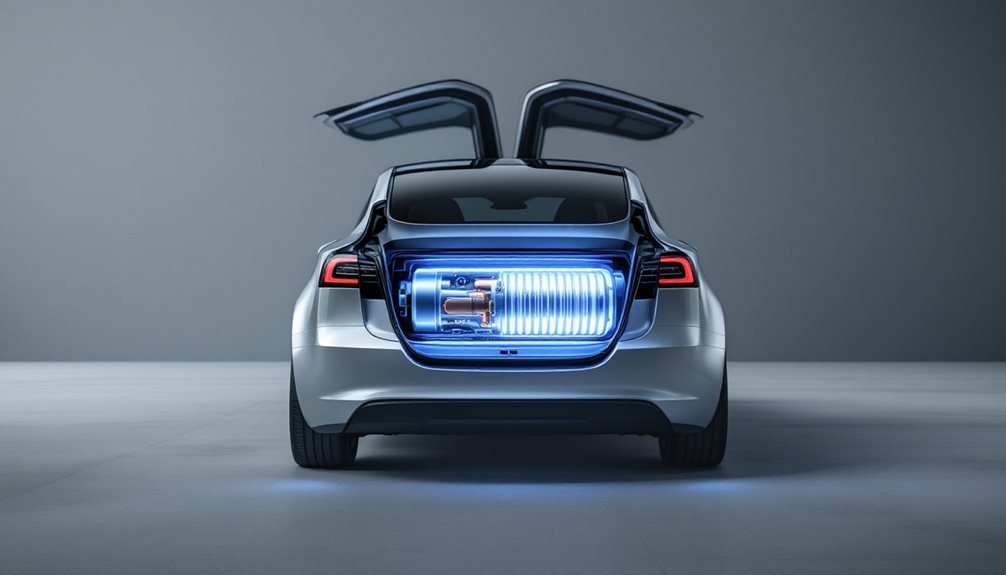

A breakthrough in battery technology could give Tesla vehicles much longer driving ranges by 2027. Panasonic, Tesla’s oldest battery partner, has developed a new anode-free battery that could add about 90 miles of range to vehicles like the Model Y.
The Japanese company’s new design removes the anode during manufacturing. Instead, a lithium metal anode forms naturally inside the cell after the first charge. This change frees up space for more active cathode materials like nickel, cobalt, and aluminum. The result is 25% more battery capacity without making the battery bigger. This approach achieves what Panasonic calls world-leading energy capacity, positioning the company at the forefront of battery innovation.
Tesla’s Model Y could see its range jump to over 450 miles, up from around 360 miles today. That’s an extra 145 kilometers drivers could travel before needing to charge. Car makers could also use this technology differently. They might keep the same range but use fewer batteries, making vehicles lighter and potentially cheaper.
Tesla’s Model Y could gain 90 miles of range, reaching 450 miles total with Panasonic’s breakthrough battery technology.
Panasonic says the new batteries won’t arrive until late 2027. Building a battery gigafactory takes about two years. Installing and setting up the equipment takes another year. Then manufacturers need one more year to produce test batteries and get approval from car companies like Tesla.
The timing matters for Panasonic’s business. Korean and Chinese battery makers have passed Panasonic in market share over recent years. The company helped start the electric vehicle revolution when it was the only manufacturer willing to join Tesla’s early lithium-ion battery efforts. That partnership helped Panasonic grow its battery business considerably.
Competition in the battery industry remains fierce. Chinese automaker Changan is developing solid-state batteries that could give cars 932 miles of range. These advances show how battery makers are racing to create better technology as more people buy electric vehicles.
Tesla has added other battery suppliers over the years but still works with Panasonic. The new anode-free technology could strengthen their partnership past 2027. If successful, the batteries would give Tesla vehicles some of the longest ranges available, helping the company compete as more automakers enter the electric vehicle market. Current Tesla batteries are designed to last 300,000 to 500,000 miles, ensuring these improved batteries would serve drivers for decades.