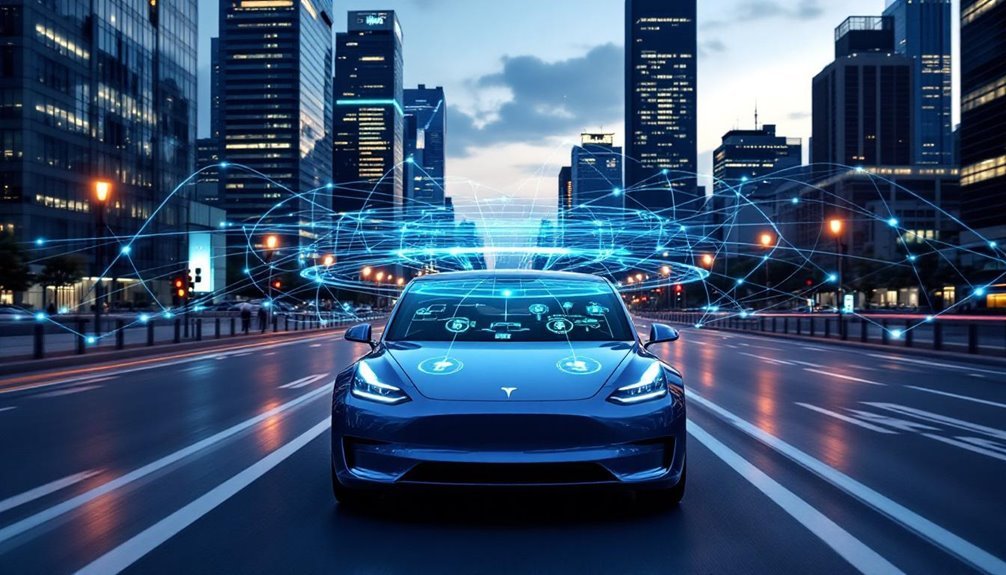

In a notable expansion of its autonomous driving technology, Tesla’s Full Self-Driving (Supervised) system officially launched in South Korea in November 2025, marking the country as the seventh global market to receive the advanced driver-assistance feature. The initial rollout began with software update 2025.32.8.20, which was pushed to select vehicles equipped with Hardware 4 computing systems. Tesla Korea confirmed the launch through an official social media post featuring demonstration videos of the system piloting Seoul’s roads.
Tesla launches Full Self-Driving (Supervised) in South Korea, its seventh global market, via software update 2025.32.8.20 for Hardware 4 vehicles.
The South Korean market represents a particularly strategic entry point for Tesla’s global autonomous driving expansion. Unlike the previous six markets that received FSD, South Korea’s launch comes after Tesla already established strong market momentum. The new Model Y, which launched in April 2025, contributed to a 92.8% year-over-year sales growth in the country. This timing gives FSD a markedly larger customer base compared to earlier rollouts, potentially accelerating adoption rates and creating more real-world testing data for the system. South Korea’s approval is poised to set regulatory precedent that influences autonomous vehicle frameworks across neighboring nations. The sequential rollout strategy demonstrates steady, deliberate momentum in bringing the system to international markets. The system’s reliance on eight cameras and radar sensors enables robust perception capabilities across South Korea’s diverse driving conditions.
Video demonstrations showed the system executing hands-off driving capabilities, including automated lane changes, intersection route-finding, and parking on Seoul’s streets. However, the Supervised version still requires continuous driver attention, meaning users can’t completely disengage from the driving task. The technology challenged local automakers and forced regulatory bodies to examine their autonomous vehicle legislation. Tesla also plans to expand the unsupervised FSD variant through its Tesla Robotaxi service, which allows complete vehicle autonomy without driver intervention. Tesla owners can purchase FSD through a monthly subscription option rather than the full upfront cost.
South Korea’s regulatory environment also differs from previous FSD markets. Over 80% of Teslas sold in South Korea are manufactured in China, which faces separate compliance requirements under domestic safety standards. The Korea-U.S. Free Trade Agreement potentially eases approval for American-made vehicles, creating a complex regulatory pathway that sets this launch apart from earlier expansions.
Tesla’s strategic focus on South Korea signals bigger plans ahead. The company’s scheduled FSD expansion into European and Chinese markets for 2026, with Japan identified as a potential future target. Success in South Korea could accelerate approval processes in neighboring Asian markets, making this launch a pivotal test case for Tesla’s broader Asian autonomous driving strategy rather than just another market entry.