
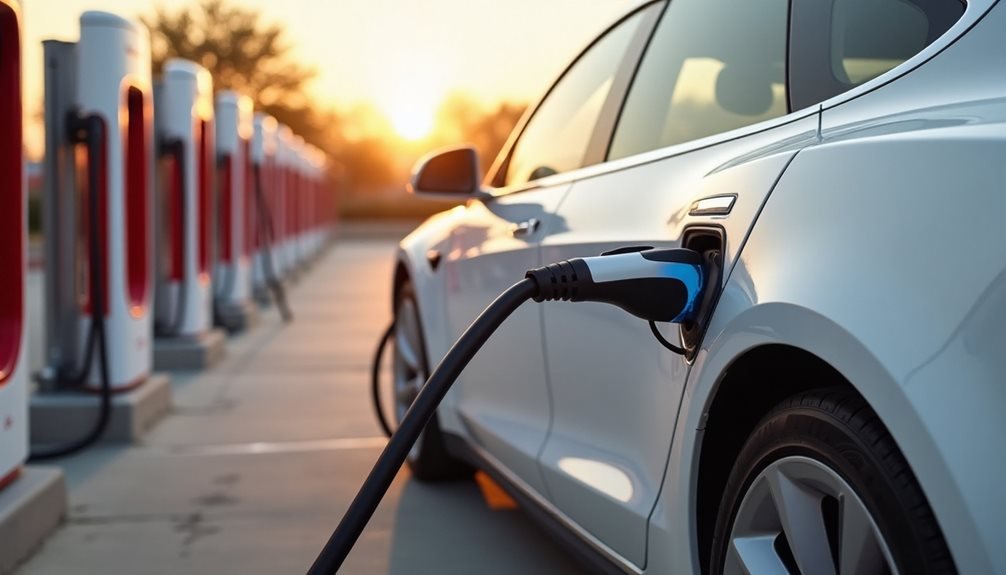
Tesla’s free Supercharging started in 2012 as a marketing ploy to get people into electric cars. Early Model S and X owners got unlimited charging for life. Tesla killed the program in 2017 because too many people were clogging up the network. Now it’s back for select buyers, but with more conditions than a rental agreement. The perk usually dies when you sell the car. Even “free” charging isn’t totally free—idle fees still apply during busy times, because Tesla doesn’t want their stations turning into expensive parking lots. The company now uses free Supercharging as a quarterly sales enhancer, dangling it like a carrot when they need to hit delivery targets.
Why does Tesla keep playing games with free Supercharging? The answer lies in Elon Musk’s ever-shifting business strategies and the company’s unyielding pursuit of quarterly sales targets.
Tesla introduced unlimited free Supercharging back in 2012 with the Model S. The idea was simple: remove range anxiety and get people excited about long-distance EV travel. Model X owners got the same deal when that premium SUV launched. It worked brilliantly as a marketing tool.
Tesla’s early free Supercharging strategy was genius marketing—eliminate range anxiety and spark excitement about long-distance EV adventures.
Then reality hit. By 2017, Tesla pulled the plug on free Supercharging for new vehicles. Too many cars, not enough chargers. The network was getting hammered, and Tesla needed people to start paying their fair share. Makes sense from a business perspective, even if early adopters felt betrayed.
Fast forward to late 2024, and Tesla pulls another surprise move. Free Supercharging is back for Model S buyers. But there’s a catch—it only applies to original buyers, and you had to purchase before the promotional deadline. Classic Tesla marketing pressure tactics.
Here’s where it gets messy. Not all free Supercharging deals are created equal. Some people got unlimited lifetime access, others received time-bound offers lasting six to twelve months. Model 3 and Model Y buyers? Forget about it. You’re stuck with pay-per-use pricing.
The transferability rules are particularly frustrating. Buy a used Tesla with free Supercharging? Don’t assume you’re getting that perk. Most unlimited offers stay with the original owner. You’ll need to verify eligibility through Tesla’s app, your purchase agreement, or by contacting support directly.
Even if you score free Supercharging, it’s not entirely free. Tesla still charges idle fees and congestion fees at busy stations. They want you moving, not camping at chargers during peak hours.
Tesla’s approach reflects broader shifts in their business model. Early vehicles needed aggressive incentives to build market share. Now that EVs are mainstream, Tesla can afford to be more selective about when and how they implement free Supercharging. It’s become a strategic weapon for increasing end-of-quarter deliveries rather than a standard perk. Unlike their high-voltage traction battery, Tesla owners should note that only their 12-volt battery can be jump-started in emergency situations.
In 2025, Tesla offered another exclusive promotion by providing lifetime free supercharging for Cybertruck Foundation Series buyers, though this benefit remains non-transferable like other recent offers. Many owners maximize their benefits by charging during off-peak times to avoid congestion and reduce wait times at busy stations.
Frequently Asked Questions
Can I Transfer Free Supercharging to a New Tesla if I Sell My Current One?
No, you can’t just transfer free Supercharging whenever you want. The benefit stays with the original vehicle, not the owner.
However, Tesla occasionally runs promotional periods where transfers are possible – but only when buying a new Tesla during specific windows.
Most transferable Supercharging is on 2012-2017 Model S vehicles.
Private sales work better than dealer sales for maintaining eligibility.
Does Free Supercharging Work at All Supercharger Locations Worldwide?
Free Supercharging doesn’t work everywhere globally. It’s limited to Tesla-owned stations in select countries like the U.S., Mexico, and parts of Europe. Remote locations without Tesla Superchargers? Out of luck.
Third-party networks and partner stations don’t count either. Even Tesla’s own destination chargers are excluded. So yeah, “free worldwide charging” is more marketing spin than reality.
Geography matters, and Tesla’s network has gaps.
What Happens to Free Supercharging if My Tesla Needs Battery Replacement?
Tesla battery replacements can kill free supercharging benefits, depending on who does the work. Tesla-performed swaps typically preserve lifetime charging rights since benefits tie to the vehicle’s VIN registration.
Third-party replacements? That’s risky territory. Tesla doesn’t guarantee benefit retention for unauthorized modifications.
Pre-2017 Model S/X vehicles have transferable rights, but post-2017 benefits usually stick with the original owner.
Documentation matters.
Are There Daily or Monthly Limits on Free Supercharging Usage?
No explicit daily or monthly caps exist for lifetime free Supercharging. Tesla’s documented policy allows unlimited usage. However, the company monitors “outlier” charging patterns behind the scenes.
Drivers with extreme mileage report no issues—some rack up 250,000 miles without problems. Heavy reliance on Supercharging might trigger policy reviews, but Tesla hasn’t imposed hard limits.
Unpaid idle fees could still cause trouble though.
Can I Share My Free Supercharging With Family Members Using My Tesla?
No, family members can’t share Free Supercharging benefits. The perk stays tied to the original vehicle and account owner, period.
Even if relatives drive the Tesla, charging logs still go to the owner’s account.
Shared accounts or co-ownership don’t change anything—Tesla designed it this way intentionally.
The car gets free juice, not the driver.
Family sharing? Forget it.