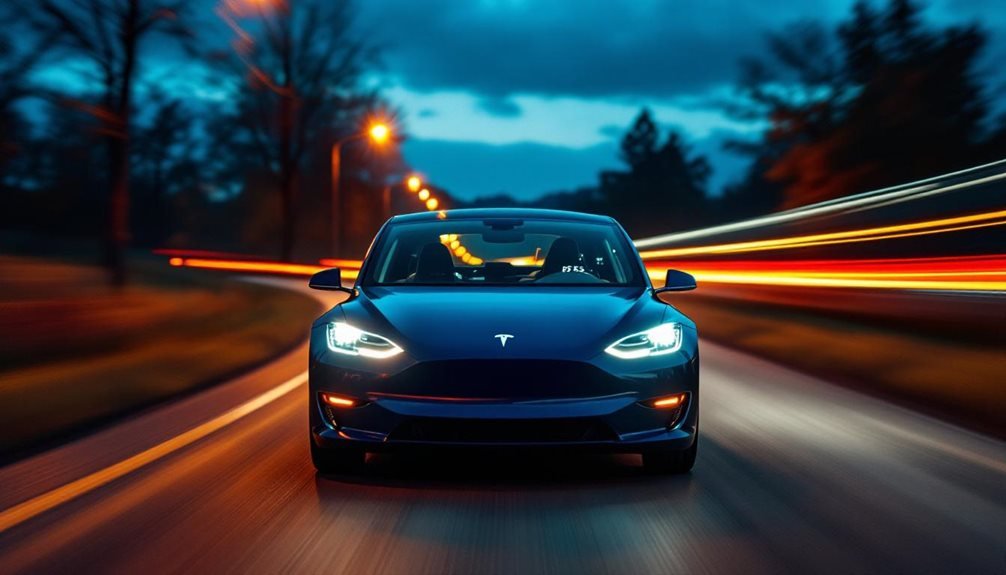
While drivers still need to keep their hands on the wheel, Tesla’s latest Full Self-Driving update brings major improvements to how its vehicles steer through roads. The company released FSD v14.1 on October 7, 2025, packed with features that make the driving experience more customized and safer.
One standout addition is the new speed profile system that lets drivers tailor how their Tesla behaves on the road. The update introduces a “Sloth” mode that drives more conservatively with lower speeds and careful lane selection. Drivers who prefer faster, more assertive driving can select different profiles that allow higher maximum speeds. The system now responds more strongly to driver preferences, creating a more customized experience.
Tesla’s new speed profiles range from conservative Sloth mode to assertive driving settings, letting drivers customize their vehicle’s road behavior.
Parking just got easier too. Tesla added Arrival Options that let drivers pick exactly where they want to park—whether that’s in parking lots, garages, driveways, on streets, or at curbside spots. The car can steer through tight spaces and parking lots using the Tesla app, making those tricky parking situations less stressful. The system remembers parking preferences for each destination, so drivers don’t have to reset their choices on repeat visits.
Safety improvements include a new emergency vehicle response system. The car can now recognize police cars, fire trucks, and ambulances, then pull over or yield appropriately. This addresses real-world scenarios where drivers need to respond quickly to emergency situations.
The neural network got smarter by adding routing and wayfinding directly into its vision-based system. This means the car handles blocked roads, detours, unprotected turns, and lane changes better than before. It’s also improved at avoiding road debris like tires, tree branches, and boxes.
Camera maintenance received attention as well. The update includes automatic narrow field washing for quick front camera cleaning, especially at higher speeds. The system alerts drivers when residue builds up on the interior windshield and recommends service visits when camera visibility gets compromised.
Tesla’s FSD technology uses billions of miles of real-world driving data for training. It’s currently available in the U.S., Canada, China, Mexico, Puerto Rico, Australia, and New Zealand. The update also includes important security fixes that address vulnerabilities and strengthen the vehicle’s protection systems. Despite these advances, the system still requires active driver supervision and doesn’t make vehicles autonomous.