
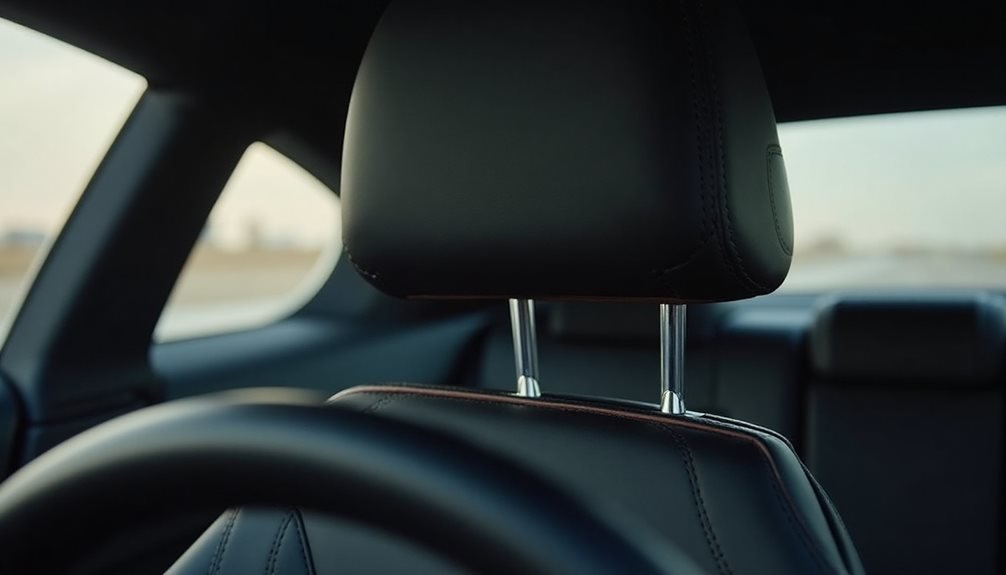
Tesla headrest adjustment involves locating height levers at the headrest base and pulling or pushing until resistance is met. Model S front seats have fixed headrests that can’t be adjusted—tough luck there. Other Tesla models offer both height and tilt adjustments for proper neck alignment. The goal is positioning the headrest to support the occipital bone while ensuring seatbelts sit mid-neck to shoulder. Small incremental changes work best, and there are specific techniques for ideal comfort positioning.
While most car adjustments seem straightforward, Tesla headrests can throw drivers for a loop. These aren’t your grandmother’s Buick headrests. Tesla decided to mix things up with their approach to head support, and frankly, it shows.
Safety comes first, obviously. Park the vehicle and kill the engine before attempting any adjustments. Keep at least 10 inches between yourself and that airbag cover – it’s not a suggestion. Never fidget with headrests while driving. That’s just asking for trouble. The shoulder belt should sit midway between neck and shoulder, not sliding around like it owns the place.
Safety isn’t optional – park first, keep distance from airbags, and never adjust headrests while driving.
Finding the adjustment mechanisms requires some detective work. Height adjustment levers typically lurk at the headrest base. Model S owners got the short end of the stick – their front seats have non-adjustable integrated head supports. Thanks for nothing, Tesla. Rear-row headrests might need some digging through seat panels to access adjustment guides.
Start with the seat upright because tilted adjustments make everything unnecessarily complicated. Use plastic trim tools for prying operations to prevent scratching or damaging sensitive interior surfaces.
The height adjustment process sounds simple enough. Pull or push that lever until the headrest moves up or down. Stop when you hit full resistance – that’s maximum height, not an invitation to force it further. The goal is aligning the headrest to cradle the occipital bone. Test everything while seated with hands at 10 and 2 o’clock on the steering yoke. Fine-tune in small increments. Rome wasn’t built in a day.
Some models offer tilt adjustments to angle the headrest. Adjust while seated for ergonomic neck alignment. Combine tilt with height adjustments for that tailored touch. Make sure the tilt locks firmly – nobody wants a wobbly headrest situation.
Model-specific variations add another layer of fun. Model S front headrests remain stubbornly non-adjustable. Model 3 and Model Y front seats allow height adjustments via levers. Rear-row adjustments might require viewing removal guides or custom technician tools. Tesla has been expanding urban charging networks to better accommodate owners who face infrastructure limitations in apartment or condo settings.
After adjustments, verify no airbag obstructions exist. Confirm the headrest doesn’t extend beyond the driver’s head like some bizarre crown. Recheck seatbelt placement and record preferred settings. For rear outboard seats, remove headrests by lifting the support, pressing the button at the base, inserting a flat tool into the opposite post, and pulling upward. Future you will appreciate the documentation.
Frequently Asked Questions
Can I Completely Remove the Headrest From My Tesla Seat?
Tesla owners can remove headrests, but it’s complicated. Front headrests aren’t meant to come out—they need tools, tape, and simultaneous clip releases. Additionally, many Tesla owners find themselves in need of other maintenance tips, such as the tesla wiper blade replacement tips that can help ensure optimal visibility during inclement weather. Properly replacing wiper blades is essential for maintaining the vehicle’s performance and safety. It’s helpful to consult the owner’s manual for guidance on the correct procedure and the right parts to use.
Rear outboard headrests? Those pop out easier with a button press.
Tesla warns against removal though. Safety gets compromised without head restraints. Warranty might get voided too. In addition to these concerns, it’s important to ensure that all safety features remain intact for optimal vehicle performance. Furthermore, drivers should be cautious while replacing tesla key fob battery, as improper handling could lead to additional complications or failures in key functionality. Keeping all components in good condition is crucial for both safety and reliability on the road.
The process risks damaging seats if done wrong.
Are Tesla Headrest Adjustments Saved to Driver Profiles Automatically?
No, Tesla headrest adjustments aren’t saved to driver profiles automatically. Pretty annoying, actually.
The car remembers seat position, steering wheel tilt, and mirror angles when switching between phone keys, but headrests get completely ignored.
Each driver has to manually readjust the headrest height and tilt every single time they get in.
Tesla’s Easy Entry feature also skips headrests entirely.
Manual reconfiguring required, period.
What Should I Do if My Headrest Adjustment Mechanism Is Stuck?
When Tesla headrest mechanisms stick, drivers should first check for debris around pivot points and test movement gently. Clean the area with compressed air, then inspect for physical obstructions.
If it’s power-assisted, verify electrical connections.
Lubricate pivot points with silicone spray, avoiding electrical contacts.
Don’t force it—that’ll just break something expensive.
Check alignment tabs for damage and use proper trim tools if needed.
Are Aftermarket Headrest Covers Compatible With Tesla’s Adjustment Features?
Aftermarket headrest covers and Tesla’s adjustment features don’t always play nice together. The covers can block access to adjustment levers, add bulk that throws off positioning, or interfere with height mechanisms.
Tesla doesn’t officially certify third-party covers either. Most are designed for generic cars, not Tesla’s specific hardware.
Users often end up in trial-and-error hell, testing multiple covers to find one that actually works.
Does Headrest Position Affect Tesla’s Occupancy Sensors or Safety Systems?
Headrest position doesn’t mess with Tesla’s occupancy sensors at all. The sensors sit in the seat cushion foam, nowhere near headrest mechanisms. They’re completely separate systems.
Headrests adjust up and down while sensors detect pressure changes below. Tesla engineered them independently for good reason. Adjusting headrests won’t trigger airbag warnings or safety alerts.
The OCS keeps doing its thing regardless of where someone positions their headrest.