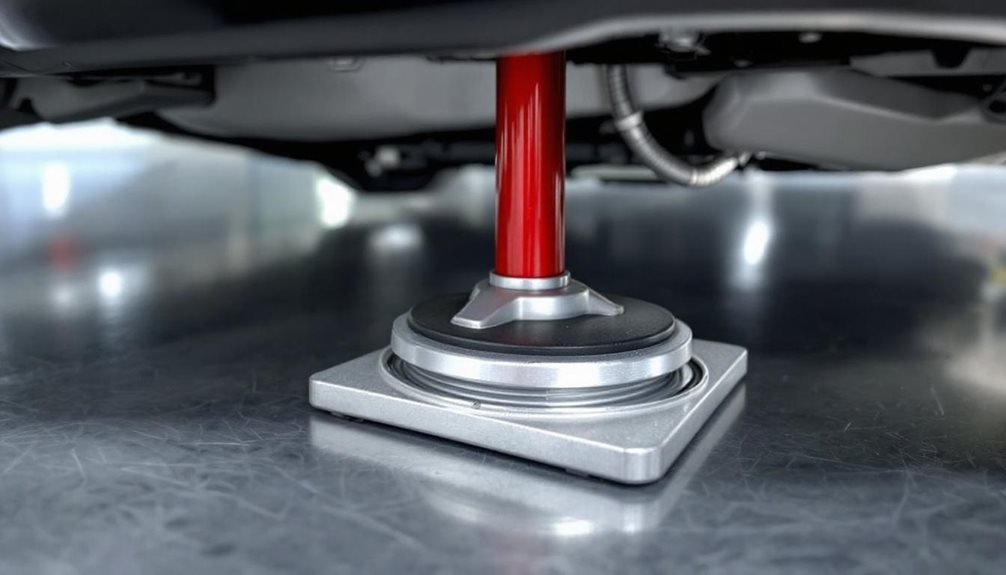

Tesla owners better know their jack points unless they enjoy expensive repair bills. Model S and X have three holes per lift point—only the middle one works. Model 3 and Y demand precise alignment with single holes. Cybertruck owners get it easy with green markers showing safe zones and red marks screaming “don’t touch.” Always disconnect charging cables, enable Jack Mode, and use proper jack pads. One wrong move damages batteries or structural components. Expert these basics to prevent costly mistakes.
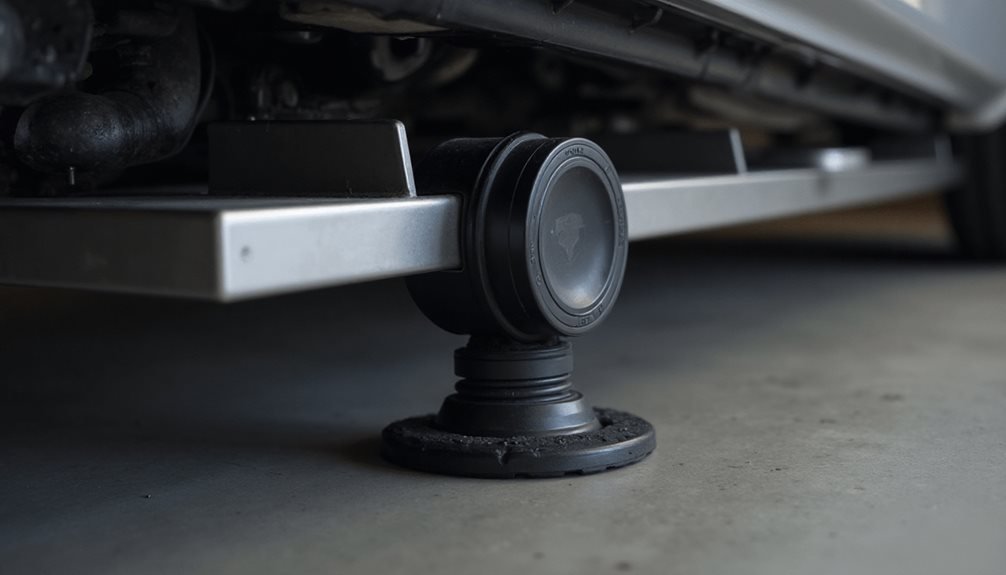
Tesla owners who attempt to jack up their vehicles without proper knowledge often *reveal* an expensive mistake the hard way. The difference between a successful lift and a catastrophic failure often comes down to finding the right spots—and Tesla doesn’t make it particularly intuitive. Without understanding the proper lifting points, owners may damage sensitive components or create safety hazards. For those unsure or untrained, contacting Tesla Roadside Assistance is a wise choice, though it’s important to review the tesla roadside assistance pricing details before relying on this service. Taking precautions can save both time and money in the long run.
Model S and X vehicles feature three holes per lift point, but here’s the catch: only the middle hole matters. Jack pad alignment must be precise, or the owner risks slippage that could damage the vehicle’s undercarriage.
Only the middle hole matters on Model S and X lift points—get it wrong and risk costly undercarriage damage.
Model 3 and Y owners get a single hole per lift point, which sounds simpler but actually demands even more precision. One misaligned pad, and things go sideways fast.
Cybertruck owners have it relatively easy with designated green-colored lift points. Tesla even marked the danger zones red—specifically the battery and side rails. Ignore those red marks at your own peril.
Smart Air Suspension vehicles require preparation that many owners skip entirely. The suspension must be set to “Very High” through the touchscreen before lifting begins. Jack Mode, found under Controls > Service, disables the self-leveling feature. Without this step, the suspension could adjust itself mid-lift, creating an unstable situation that nobody wants to experience.
Equipment quality separates the professionals from the weekend warriors. Jack pads are mandatory, with dimensions varying between models. Post-2023 updates changed specifications from 20mm to 25mm in some cases. Metal-reinforced inserts in S and X lift points demand *sturdy* pads that can handle the stress. Cheap equipment fails when it matters most. The limited lift points create significant challenges for mechanics performing detailed suspension work or maintenance tasks. When working with non-Tesla facilities, owners must verify that technicians understand these specific lift requirements.
The lifting procedure itself starts with disconnecting the charge cable—electrical issues during mechanical work create unnecessary complications. Just as proper battery management proves crucial during long-term storage, maintaining electrical safety during lifting prevents unnecessary complications.
Jack pads must center perfectly in designated holes, and raising should happen incrementally. Jack stands rated for over 3,000 pounds provide the necessary safety margin, but they must align with approved lift points only.
Post-lifting protocol involves gradual lowering while monitoring alignment. Jack Mode disables automatically when driving exceeds 4 mph, but manual deactivation through the touchscreen provides more control.
The entire process demands attention to detail that some owners underestimate until something goes wrong.
Frequently Asked Questions
Can I Use Aftermarket Jack Stands With My Tesla Instead of the Tesla Service Jack?
Tesla owners can absolutely use aftermarket jack stands instead of the service jack.
The catch? They need Tesla-specific pads or grommets that actually fit the narrow lift points. Generic stands will damage the aluminum chassis – an expensive lesson learned the hard way by many.
Brands like Schwaben, Jackpoint, and Rennjack work well.
Even Tesla Rangers use aftermarket stands.
Just guarantee 1.5-ton capacity minimum and proper alignment features.
How Often Should I Inspect My Tesla’s Jack Points for Damage or Wear?
Tesla owners should inspect jack points after every lift, obviously. Annual checks work for regular drivers, but bump it to every six months in salt-heavy regions.
Post-repair inspections are vital since many shops mess this up.
High-intensity driving, towing, or mountain descents warrant additional looks.
Visual checks during car washes catch early damage.
Document with photos initially, then compare later for peace of mind.
What’s the Maximum Weight Capacity for Tesla’s Factory Jack Points?
Tesla’s factory jack points max out at 7,000 pounds total when using all four designated lift points.
Each individual jack puck handles 1,750 pounds. Pretty straightforward math there.
The company engineered these limits based on weight distribution across reinforced points.
Exceed those numbers? Risk damaging components or creating dangerous instability.
Third-party equipment with higher ratings doesn’t magically increase Tesla’s factory limits.
Are Tesla Jack Points the Same Across All Model Years and Variants?
Tesla jack points aren’t universal across models or years. Models S/X use three holes per jack point, while 3/Y stick with single holes.
Things got messier in 2023 when Tesla shrunk hole diameters from 25mm to 20mm on some vehicles. The pads aren’t interchangeable between model lines either.
Owners need to measure their specific car’s holes before buying jack pads.
Can Cold Weather Affect the Structural Integrity of Tesla Jack Points?
Cold weather absolutely hammers Tesla jack points. The metal becomes more brittle below freezing, especially around -40°F. Sure, the actual jack points are sturdy steel, but thermal contraction creates stress fractures over time.
Winter also makes the protective coatings crack and chip off. Most owners don’t realize repeated freeze-thaw cycles gradually weaken these mounting points until something goes wrong.