Tesla pulled the plug on its ambitious Dojo supercomputer project on August 8, 2025, according to a Bloomberg report. CEO Elon Musk reportedly ordered the shutdown, though Tesla hasn’t officially confirmed the decision. The move marks the end of Tesla’s bold attempt to build its own custom chips for training artificial intelligence systems.
Tesla abandons custom AI chip dreams, shutting down ambitious Dojo supercomputer project after years of development
The Dojo project aimed to process massive amounts of video data to improve Tesla’s Full Self-Driving software and train its Optimus robots. The company wanted to reduce its dependence on expensive Nvidia chips. But developing custom chips proved harder than expected. The proprietary components created production challenges that hindered the project’s progress. Project leader Peter Bannon left after the shutdown, and about 20 team members jumped ship to join DensityAI, a new AI hardware startup founded by former Tesla executives.
Just months earlier, Musk had called Dojo “really spectacular” during Tesla’s second-quarter earnings call. But behind the scenes, the project struggled. Musk later explained on X that running two chip designs at once wasn’t efficient. He said Tesla’s AI5 and AI6 chips were “excellent for inference and pretty good for training,” suggesting they could handle both tasks.
The remaining Dojo staff didn’t lose their jobs. Tesla moved them to data center teams or other computing projects. Meanwhile, the departed employees joined DensityAI’s founders Ganesh Venkataramanan, Bill Chang, and Ben Floering to work on AI data center hardware and robotics applications.
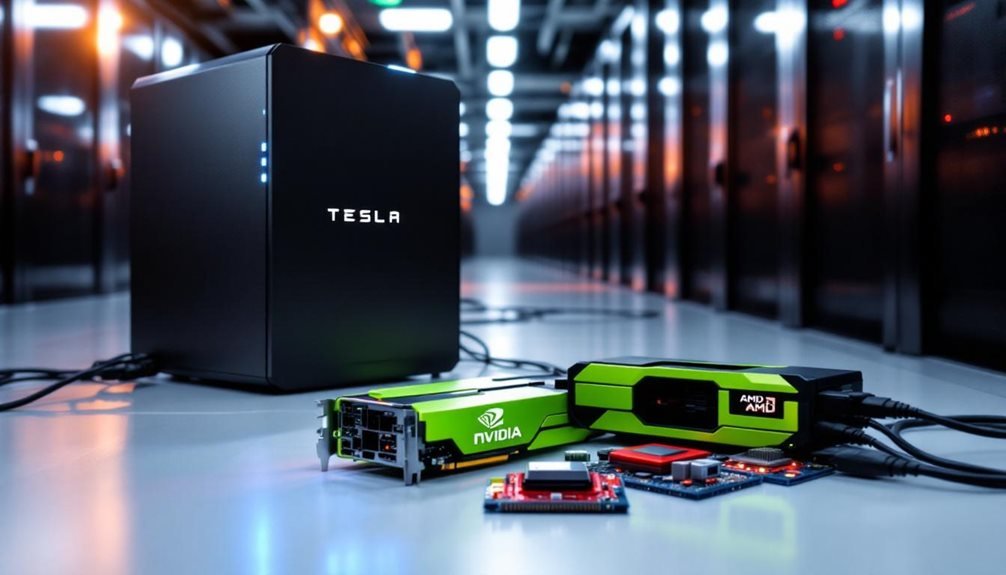
Tesla’s now betting on partnerships instead of going it alone. The company will rely more heavily on Nvidia GPUs and AMD processors for AI training. Its AI5 chip, made by TSMC, should start production in 2026 for new vehicles. Samsung will manufacture the AI6 chip for later use.
The Dojo shutdown shows how tough it is to compete with established chip makers. Tesla’s wafer-level processor design was unique but ultimately too ambitious. The decision comes amid Tesla’s broader company-wide restructuring that has seen key executives leave various departments including robotics and battery development. Now the company’s joining other automakers in using standard AI infrastructure rather than building everything from scratch.
The move might disappoint some Tesla fans, but it could save money and speed up development of self-driving cars and robots.