Tesla batteries pack serious longevity, lasting 300,000 to 500,000 miles before replacement becomes necessary. That translates to roughly 22-37 years for typical drivers. Model 3 and Y retain about 85% capacity after 200,000 miles, while Model S and X perform even better at 88%. Around 68% of Teslas maintain over 80% battery capacity at the 200,000-mile mark. These electric powerhouses outlast most people’s car ownership periods, though the full story reveals important subtleties.
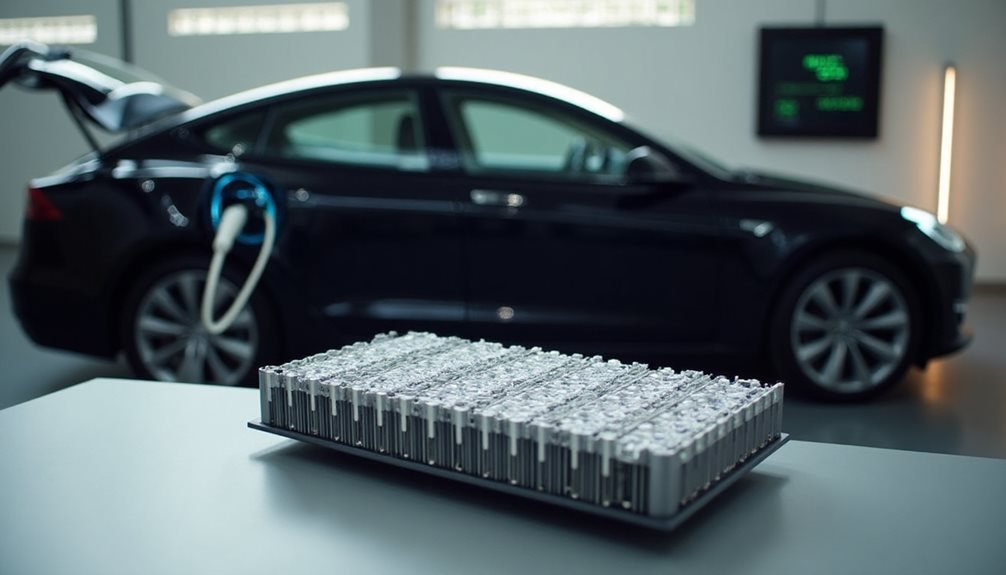
How long does a Tesla battery actually last? According to Tesla’s own claims, somewhere between 300,000 and 500,000 miles. That’s roughly 1,500 charge cycles if you’re counting. For the average driver, this translates to 22-37 years of ownership.
Tesla boldly declares in their 2023 Impact Report that no future battery replacement will be needed. Bold claim.
Tesla’s 2023 Impact Report makes a striking promise: battery replacements will become obsolete. Time will tell if reality matches the rhetoric.
The reality is more subtle. Model 3 and Model Y vehicles retain about 85% of their capacity after 200,000 miles, which means a 15% degradation rate. That’s not terrible, but it’s not perfect either.
Flagship models like the Model S and X perform better, maintaining 88% capacity at the same mileage. About 68% of Tesla EVs keep more than 80% capacity after hitting 200,000 miles.
Time versus mileage tells an interesting story. A typical Tesla maintains 93% capacity at seven years, dropping to 82.5% at ten years. But here’s the kicker: mileage matters more than age. Drive more, degrade faster. It’s that simple.
Real-world data backs this up. NimbleFins found that 8-year-old Teslas averaging 176,000 miles show higher degradation rates. The math checks out. Higher-mileage vehicles wear down batteries quicker than garage queens.
How you drive matters too. Aggressive acceleration, speeding, and frequent fast charging all take their toll. Extreme temperatures don’t help either, though Tesla’s thermal management system does its best to compensate. Environmental conditions like extreme heat or cold significantly affect degradation rates across different geographic regions.
Calm driving maximizes efficiency. Revolutionary idea, right?
The Model 3 offers 267 miles of range with its 300,000-500,000 mile lifespan projection. The Model S boasts 405 miles of range and superior capacity retention. Model Y performance mirrors the Model 3. Tesla’s range varies significantly due to differences in battery size, with the Model S featuring larger capacity compared to other models in the lineup.
For potential buyers, especially in the used market, this data provides reassurance. Most Teslas retain 80-90% capacity at 200,000 miles, making them viable long-term investments. Beyond longevity, Tesla continues advancing safety features in both Model Y and Model 3 vehicles through innovations like strategically positioned airbag systems and intelligent sensor integration. Additionally, potential buyers can take comfort in the robust tesla warranty coverage details that accompany each vehicle, ensuring peace of mind against unexpected repairs. This warranty is designed to protect key components and provide additional value in the resale market. With such extensive support and solid performance data, investing in a pre-owned Tesla becomes an increasingly attractive option for many consumers.
Tesla’s decade-plus of EV manufacturing experience informs these longevity claims, and future battery technology could extend lifespans even further.
The bottom line? Tesla batteries last longer than most people will own their cars. That’s probably good enough. In addition to battery longevity, potential buyers should also evaluate factors such as charging infrastructure and maintenance costs. It’s essential to understand what to consider when buying a Tesla to ensure it meets your lifestyle and needs. With the right information, owning a Tesla can be a rewarding experience for years to come. Additionally, Tesla’s advancements in battery technology ensure that range anxiety is becoming a thing of the past. However, it’s always wise for owners to be prepared for any situation, including knowing what to do if Tesla battery dies. Regular maintenance and software updates can further enhance battery longevity and performance, ensuring a smoother driving experience for years to come.
Frequently Asked Questions
Can Tesla Batteries Be Replaced or Upgraded After Warranty Expires?
Tesla batteries can absolutely be replaced after warranty expires, but owners better have deep pockets.
Dealership replacements run $15,000-$20,000 including labor.
Remanufactured options offer some relief at $9,000-$14,000.
Labor alone costs $500-$2,600 because high-voltage systems require specialized handling.
The work takes 3-13 hours depending on the model.
No battery swap infrastructure exists, so replacement is the only option.
How Does Cold Weather Affect Tesla Battery Degradation and Lifespan?
Cold weather actually helps Tesla batteries last longer, which seems backwards but makes sense. Sure, range drops temporarily when it’s freezing – nobody’s arguing that.
But long-term degradation slows down markedly. Cold climates show average range scores of 95% versus 92% in hot areas.
Chemical breakdown processes crawl at lower temperatures. Tesla’s thermal management works overtime, but cold naturally preserves battery health over years.
What Happens to Old Tesla Batteries When They’re No Longer Usable?
When Tesla batteries reach the end of their life, they don’t just end up in the landfill. Tesla mandates a pre-recycling assessment first—maybe there’s still some life left in the old thing. This assessment helps determine if the batteries can be repurposed for secondary applications, such as energy storage for homes or businesses. However, some Tesla owners have reported concerns about tesla parking battery drain issues, which could affect the longevity of their batteries. By closely monitoring usage and maintenance, Tesla aims to address these concerns while promoting a more sustainable lifecycle for their products.
The cells get crushed into “black mass” powder containing lithium, cobalt, and nickel. Tesla absorbs all recycling costs, paying around $4.50 per pound. This process allows Tesla to reclaim valuable materials while promoting sustainability in their production cycle. As they look ahead, the company has outlined its plans for future recycling efficiency in their financial projections, including a detailed tesla wrap cost breakdown 2025. By optimizing these costs, Tesla aims to enhance their overall profitability and reduce environmental impact.
The goal? Closed-loop recycling to rebuild new batteries from the old stuff.
Do Tesla Software Updates Impact Battery Life and Vehicle Longevity?
Tesla’s software updates generally help battery life through improved energy management and refined charging algorithms. The updates fix bugs that cause unnecessary drain and introduce features like automatic range mode.
Sure, there’s always risk of post-update glitches causing temporary battery issues, but these are rare. Updates consume minimal power themselves and won’t install if battery levels are dangerously low.
How Much Does It Cost to Replace a Tesla Battery?
Tesla battery replacements cost between $15,000-$22,000 for out-of-warranty jobs.
The 8-year/150,000-mile warranty covers manufacturing defects, but premature degradation? Good luck with that claim.
Parts run about $139 per kWh, labor adds another $2,000-$3,000.
Model S and X owners pay more than Model 3/Y folks.
Third-party shops cost less than Tesla Service Centers, naturally.