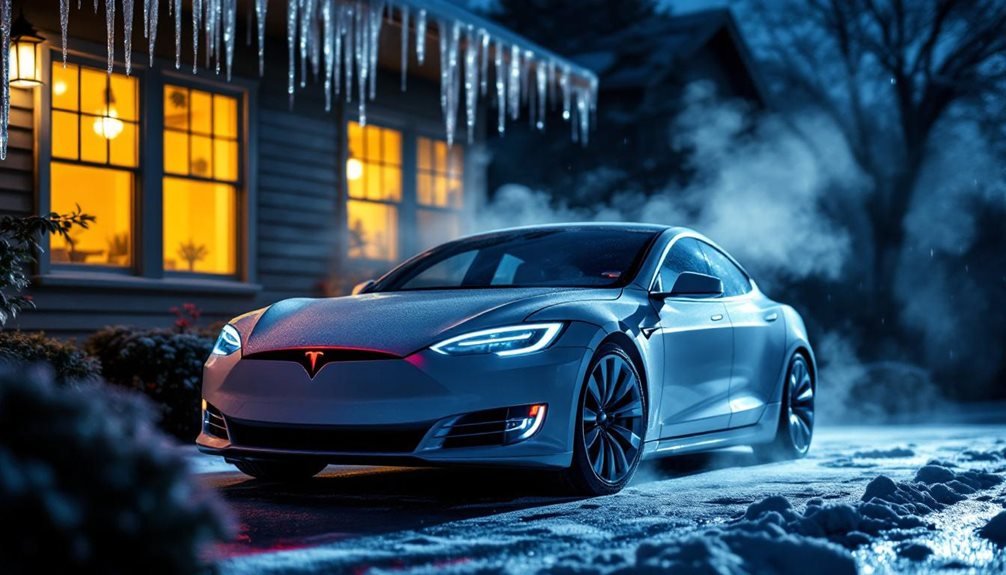
Tesla batteries drain when parked outside because these cars never actually sleep. The vehicle runs background software updates, maintains internet connectivity, and operates security systems around the clock. Weather makes it worse—cold nights can zap 10% of battery charge, while hot days trigger cooling systems. Sentry mode cameras, keyless entry, and phantom climate control settings all suck power continuously. Older batteries drain faster, and extended parking amplifies the bleeding effect substantially. Additionally, these factors contribute to a noticeable decline in tesla battery performance in winter, as the vehicle’s energy demands increase under colder conditions. Owners often find that prolonged exposure to low temperatures exacerbates battery drain and can reduce overall range. To mitigate these issues, it’s advisable for Tesla owners to consider using home charging solutions or to minimize the time spent parked in extreme weather.
Why does a Tesla sitting motionless in a driveway hemorrhage battery power like a smartphone with a dozen apps running in the background? The answer isn’t simple, and it’s not always pretty. One contributing factor is the car’s sophisticated electronics, which continually draw power for features such as security systems and software updates. Additionally, factors like cabin temperature control and battery management can further drain the battery. For those curious about the phenomenon, a comprehensive “tesla noise when parked explanation” reveals how the vehicle’s systems remain active even when idle, leading to unexpected power loss. Several factors contribute to this phenomenon, including the constant communication between the car’s systems and the software updates that occur even when the vehicle is parked. Additionally, environmental factors such as temperature can affect battery discharge rates. For those concerned about maintenance, it’s also worth noting that tesla tire wear issues explained can further complicate the overall performance and efficiency of the vehicle.
Temperature extremes turn these electric vehicles into energy vampires. Cold weather forces the heating systems to kick in, draining precious juice to keep lithium-ion batteries functioning. Hot days aren’t much better. The cooling systems fire up to prevent overheating, and cabin overheat protection can run for up to 12 hours straight. One freezing night can reportedly drain 10% of the battery. Ten percent. Just sitting there.
One freezing night can reportedly drain 10% of the battery. Ten percent. Just sitting there.
But weather is only part of the story. These cars are essentially computers on wheels, and computers never truly sleep. Periodic software updates happen whether the owner knows it or not. Background connectivity keeps the vehicle online for remote monitoring. Phantom drain occurs from climate control settings that refuse to shut down completely. The car maintains network connections, runs diagnostics, and cycles through maintenance routines that selectively heat or cool battery packs.
Features designed for convenience become power-hungry monsters when parked outside. Sentry mode provides continuous security monitoring but demands continuous power. This intelligent security system utilizes the vehicle’s cameras and sensors to monitor surroundings even while stationary, adding to the overall power consumption. Keyless entry systems stay alert. Infotainment systems consume energy even in sleep mode. Pre-conditioning settings remain engaged, waiting for the next trip command. Parking in direct sunlight accelerates battery drain due to cooling efforts. Scheduled Departure can minimize unnecessary climate system operation by optimizing timing.
Extended parking amplifies every problem. Airport parking for ten days at 80% charge can lead to significant depletion. No regular charging means the battery slowly bleeds out while temperature fluctuations stress the system further. Static battery systems don’t operate efficiently.
Age makes everything worse. Battery degradation increases over time, affecting charge retention. Older battery packs show faster capacity loss when idle. Manufacturer updates occasionally strain systems temporarily, and calibration issues create mysterious power glitches.
User settings can either help or hurt. Disabling Energy Saving Mode allows continuous functionality at the cost of power. Keeping connectivity features always active increases drain. Cabin overheat protection enabled during extreme heat becomes a necessary evil that devours battery life while preventing potential damage to internal components.
Frequently Asked Questions
How Much Battery Drain Is Considered Normal for a Parked Tesla?
Normal Tesla battery drain sits between 1-2% daily when parked. That’s just how these tech-heavy vehicles roll. Anything beyond 3-4% daily? Now there’s a problem worth investigating. In these cases, it’s essential to identify the factors contributing to excessive battery loss, as it could indicate underlying issues such as software bugs or hardware malfunctions. For those looking to understand this phenomenon better, ‘tesla phantom drain explained‘ can shed light on how background processes and connected features may impact battery performance. Addressing these concerns early can help maintain optimal efficiency and prevent more significant problems down the line.
The car’s constantly running background processes, maintaining connectivity, and keeping systems ready. It’s not sleeping like older cars—it’s more like dozing with one eye open.
Temperature extremes will push those numbers higher, unfortunately.
Does Using Third-Party Charging Accessories Affect Tesla Battery Drain Rates?
Third-party charging accessories can definitely mess with Tesla’s battery drain rates. Cheap cables introduce electrical resistance, forcing the car to work harder.
Non-certified adapters might trigger protective monitoring systems that keep draining power.
Some accessories maintain standby connections or conflicting firmware that prevents deep sleep mode.
Poor build quality creates inconsistent charging cycles, keeping battery management systems active longer than necessary.
Can Tesla Battery Drain Be Reduced by Adjusting Mobile App Settings?
Tesla owners can definitely reduce battery drain through mobile app adjustments. Disabling automatic software updates during parking prevents power-intensive reboots. Adjusting notification preferences cuts down on app polling for status updates. Using proximity and Bluetooth features sparingly helps since GPS connectivity wakes the system.
Removing unnecessary app integrations stops random battery drains. Simple tweaks, real results.
Does Tesla’s Warranty Cover Excessive Battery Drain Issues When Parked?
Tesla’s warranty doesn’t cover excessive battery drain when parked. Pretty disappointing, right?
The battery warranty only kicks in if capacity drops below 70% of original within eight years or specific mileage limits. That’s permanent degradation, not parking drain issues.
Software glitches, climate control running wild, or sentry mode sucking power? You’re on your own.
The warranty covers actual battery failure, not operational quirks.
How Long Can a Tesla Sit Unused Before the Battery Dies?
A Tesla can sit unused for about 4-6 months before the battery completely dies, assuming ideal conditions and that 1-2% daily drain rate.
Reality? Most owners shouldn’t push past 2-4 weeks without charging. Cold weather, Sentry Mode, and other features slash that timeline dramatically.
Tesla’s battery management system kicks in around 10% to prevent total death, but why risk it?