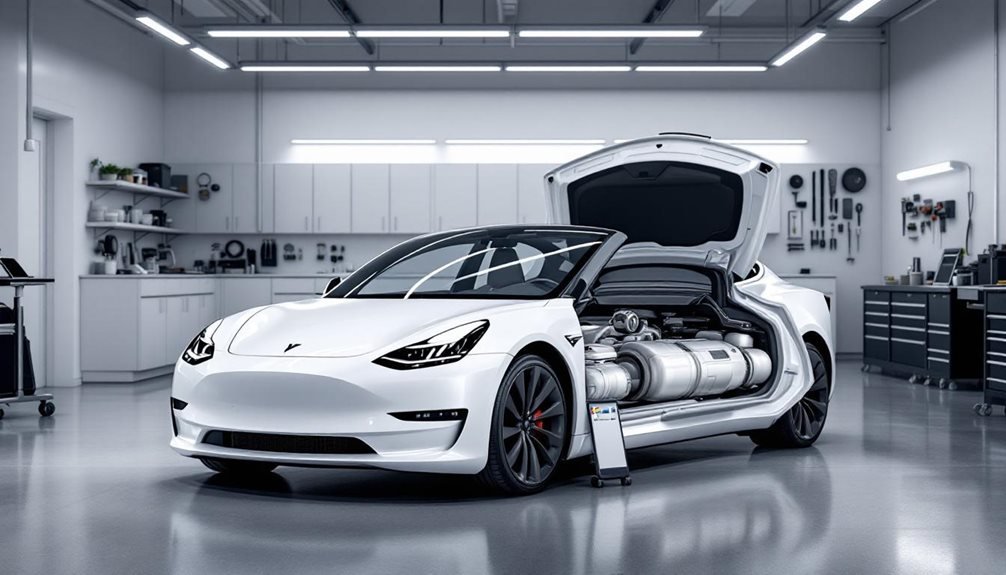
Tesla owners spend roughly $4,287 on maintenance and repairs over ten years—beating traditional luxury cars by nearly $7,700. That’s real money saved. Only 17% face repairs exceeding $500 in a decade, which honestly beats most gas guzzlers. No oil changes, fewer moving parts, longer-lasting brakes thanks to regenerative systems. Model 3 stays cheapest while Model X burns through the most cash annually. Cold weather and aggressive driving bump up costs, because physics doesn’t care about your wallet—there’s more beneath these numbers.
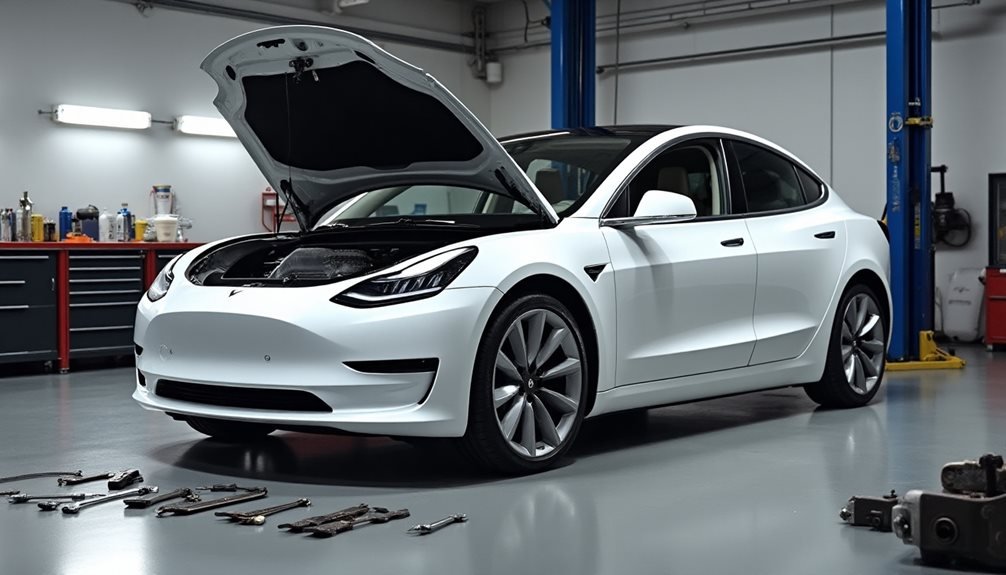
Tesla owners love bragging about skipping oil changes, but the real question is whether their wallets stay fat over the long haul. The numbers tell a pretty sweet story. These electric beauties average just $4,287 in maintenance and repair costs over 10 years. That beats the industry average by nearly $7,700. Not bad for a car that supposedly costs a fortune to fix.
Tesla’s $4,287 ten-year maintenance costs crush industry averages by nearly $7,700, proving electric doesn’t mean expensive upkeep.
The odds look decent too. Only 17.40% of Tesla owners face major repairs exceeding $500 within 10 years. That’s 18.68% better than competitors. Of course, costs creep up as the car ages, starting at $251 in year one and climbing to $653 by year twelve. Physics still applies, even to Elon’s creations.
Different models carry different price tags. The Model 3 stays relatively cheap at $257 to $499 annually. Model Y owners shell out $316 to $643 per year. Model S hits $338 to $580, while the Model X predictably costs the most at $421 to $748 annually. Bigger car, bigger bills.
Tesla’s secret weapon? Fewer moving parts mean fewer things break. No oil changes, obviously. Regenerative braking saves brake pads from constant abuse. But it’s not all sunshine and savings. Those fancy replacement parts cost serious money when inverters or sensors decide to quit. Battery longevity helps keep replacement costs down, though tire wear from regenerative braking demands attention.
Real-world factors mess with these numbers. Drive like a maniac? Components suffer. Live somewhere freezing? Battery and drivetrain take a beating. Need service in the middle of nowhere? Travel costs pile up fast. Tesla offers mobile service options for routine maintenance at the owner’s location, which helps reduce some of these accessibility challenges. The overall 10-year average sits at $6,641 in maintenance, which still undercuts luxury brand competitors significantly. The Tesla app provides Charge Stats to help users track their charging costs and savings compared to gasoline vehicles, adding transparency to overall ownership expenses.
Post-warranty reality hits different. Repair charges vary wildly, and transparency gaps leave owners guessing about costs. A Model 3 example shows $2,085 in maintenance over five years, peaking at $1,484 in year four. Repairs add another $1,892, with year five hitting $1,145. The silver lining? Fuel savings of $2,466 over five years compared to gas vehicles.
Tesla maintenance costs less than expected, but expensive parts and limited service networks keep things interesting. Skip the oil changes, but keep some cash handy.
Frequently Asked Questions
Do Tesla Batteries Need Replacement and How Much Does It Cost?
Tesla batteries do fail, with a 7.4% failure rate among owners surveyed. Most failures happen before 100,000 miles, often between 50,000-100,000 miles.
Replacement costs hit $12,000-$15,000 for new packs, plus labor. Tesla’s warranty covers 8-12 years, which helps newer owners.
Refurbished options exist around $8,000. Batteries degrade about 1% annually, retaining 93% capacity after seven years.
Are Tesla Repairs More Expensive Than Traditional Car Repairs?
Tesla repairs cost considerably more than traditional cars. The average Tesla repair hits $5,552, compared to $4,205 for gas vehicles – that’s $1,347 extra.
Battery placement under the floor makes collision damage worse. Parts are proprietary and expensive. Repair shops need specialized tools and training.
Minor accidents often mean replace, not repair. Sure, routine maintenance costs less, but when something breaks? Ouch.
Can Independent Mechanics Service Tesla Vehicles or Only Tesla Service Centers?
Independent mechanics can handle basic Tesla services like brake pads, wheel alignments, and tire rotations.
But here’s the catch – Tesla’s warranty requirements basically force owners to use approved facilities for most repairs.
Sure, some GM dealerships joined the party in 2021, but small shops get locked out by expensive certification costs and limited access to Tesla’s proprietary diagnostic tools.
It’s frustrating.
How Often Should Tesla Tires Be Rotated and Replaced?
Tesla recommends tire rotation every 6,000-7,500 miles for Model Y and 6,250 miles for Model 3. Older guidelines suggested 10,000-12,000 miles, but that’s probably pushing it.
High-performance driving? Consider 5,000-mile intervals.
Replace tires when tread hits 1/16th inch or shows irregular wear patterns.
EV torque accelerates tire degradation faster than gas cars.
Annual tire costs average around $613 for Model Y owners.
What Warranty Coverage Does Tesla Provide for Maintenance and Repairs?
Tesla offers a basic 4-year/50,000-mile warranty covering defects, plus an 8-year battery warranty with mileage limits varying by model.
Model S/X get unlimited miles, while Model 3/Y cap at 120,000-150,000 miles depending on trim.
Body rust gets 12 years unlimited.
But here’s the catch—normal wear, accidents, aftermarket mods, and skipped maintenance void coverage.
Extended plans are available for extra cash.