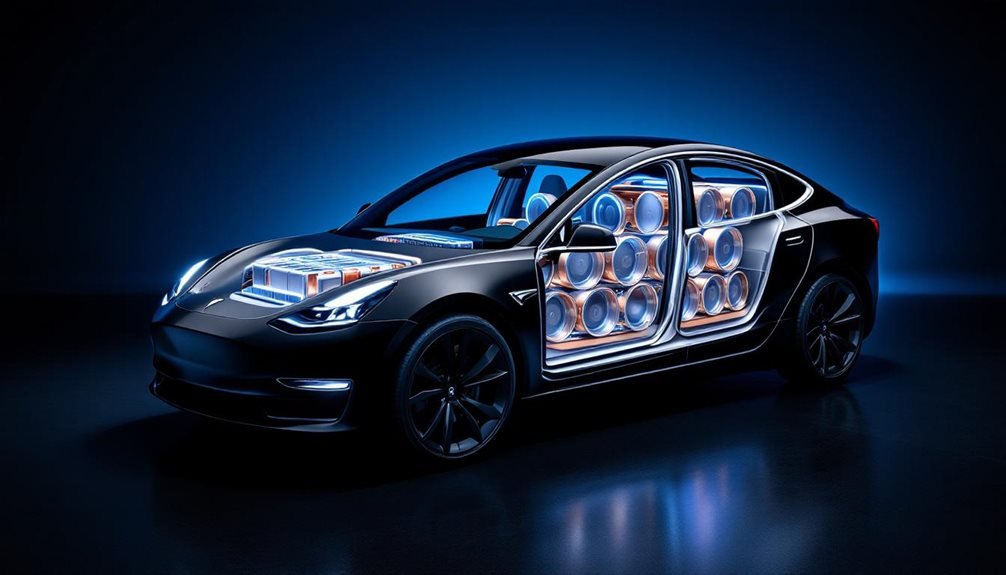

Tesla’s latest Model 3 features significant battery improvements that improve range and performance. The company has upgraded its entry-level models with new lithium iron phosphate (LFP) batteries that increase capacity to 62.5 kWh from the previous 60 kWh. This change enhances the vehicle’s range to 520 kilometers under WLTP testing, up from 513 kilometers.
Tesla’s entry-level Model 3 now delivers 520km range with upgraded 62.5 kWh LFP batteries.
The change to LFP technology started in 2021 when Tesla moved away from nickel-cobalt-aluminum batteries for its standard-range models. LFP batteries don’t use cobalt, making them more sustainable and less expensive. While they store less energy per pound than traditional lithium-ion batteries, they’re safer and last longer. Tesla’s partnership with Chinese battery maker CATL has been essential for this shift.
Chinese-made Model 3s show some differences from American versions. Shanghai-produced Long Range models come with 79 kWh battery packs, while Fremont-built cars get 82 kWh packs. Despite these variations, both versions deliver strong performance. The Long Range model can travel up to 346 miles on a single charge according to EPA estimates.
Manufacturing improvements have made the new batteries lighter too. The upgraded LFP packs weigh one kilogram less than older versions, even with more capacity. Tesla uses modular designs with thousands of individual cells. Standard-range models contain 2,976 cells, while Long Range versions pack 4,416 cells into their batteries.
Charging speeds remain impressive across the lineup. Long Range models can add about 185 miles of range in just 15 minutes at Tesla’s Superchargers, which support up to 250 kW of power. Home charging varies by region, with European models supporting 11 kW speeds on three-phase power systems. Additionally, Tesla continues to enhance the charging experience with its tesla supercharger uptime achievement, ensuring that stations are consistently available for users. This commitment to reliability allows drivers to plan their trips with confidence, knowing they will have access to rapid charging options. Moreover, the expansion of the Supercharger network means more locations for convenient and efficient charging across various regions.
The battery upgrades reflect Tesla’s broader strategy of making electric vehicles more affordable and practical. By using LFP chemistry in entry models and reserving higher-energy batteries for premium versions, Tesla can offer different price points while maintaining quality. The Model 3 achieved a milestone as the first electric car to surpass 1 million units in global sales by June 2021, demonstrating strong market demand for Tesla’s battery technology innovations. These improvements build on the Model 3’s strong reputation for driver satisfaction, with 93% of owners saying they would buy another Tesla according to recent surveys. Tesla’s batteries are designed with exceptional durability, with typical lifespans ranging from 150,000 to 250,000 miles with proper care. Additionally, as Tesla continues to optimize its production processes, it aims to enhance the affordability of its flagship models as well, creating a more competitive landscape in the luxury electric vehicle market. This strategy is particularly evident in the recent adjustments to Tesla Model S and X pricing, which are designed to attract a broader customer base while preserving the brand’s premium image. By balancing cost and performance, Tesla remains committed to expanding its electric vehicle offerings and solidifying its position as a leader in the industry. Furthermore, recent developments in Tesla insurance limit changes are expected to provide additional financial incentives for potential buyers, making ownership even more appealing. As the company continues to innovate and enhance its offerings, it aims to attract a diverse range of customers who value both performance and affordability. Ultimately, these strategic adjustments are poised to solidify Tesla’s position as a leader in the electric vehicle market. In addition to battery innovations, Tesla continues to enhance the driving experience through advancements in its tesla full selfdriving technology. This technology not only aims to improve safety by reducing human error but also promises to transform the way people interact with their vehicles. As Tesla expands its autonomous features, it further solidifies its leadership in the electric vehicle market, attracting more tech-savvy consumers. Furthermore, Tesla continues to enhance the driving experience with ongoing Tesla Model 3 performance upgrades, which include improved acceleration and handling capabilities. These enhancements not only appeal to performance enthusiasts but also reinforce Tesla’s commitment to innovation in the electric vehicle space. As the company pushes forward, consumers can expect even more advancements that boost both performance and affordability, ensuring Tesla remains at the forefront of the electric vehicle market.
The company’s investment in battery technology continues to push the limits of what’s possible in electric vehicle range and efficiency.