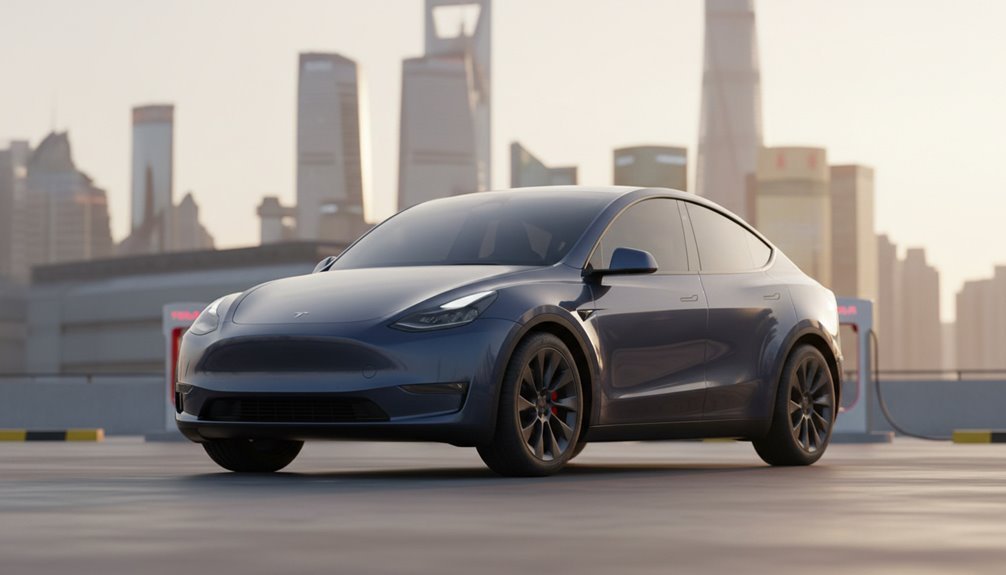

Tesla’s Model Y surged in November 2025, with Chinese buyers purchasing 47,132 units despite a challenging year for the company. The sales figure marked a 5.73% increase compared to November 2024’s 44,576 units. More impressively, November’s retail sales jumped 141.85% from October’s 19,488 units, making it the strongest month since March 2025.
The Model Y’s November performance accounted for 64.44% of Tesla’s total Chinese retail sales of 73,145 units. This dominance highlights how essential the Model Y remains to Tesla’s China strategy. The surge came largely from the introduction of a new five-seat Model Y variant on November 8, featuring an 821-kilometer CLTC range—the longest available in the Model Y lineup. Tesla held a 5.54% market share of China’s NEV market in November, maintaining its competitive position amid intense rivalry. The extensive Supercharger network provides Tesla with a critical infrastructure advantage that supports continued consumer confidence in the brand.
Model Y dominates Tesla’s China strategy, accounting for 64.44% of November retail sales following the launch of its new five-seat variant.
Year-to-date sales tell a different story, however. Through November 2025, Model Y retail sales in China totaled 359,463 units, representing a 14.09% decline from the same period in 2024. This drop reflects intensifying competition from new Chinese electric vehicle makers entering the premium segment. Tesla’s Shanghai facility reached 4 million cars produced in China, underscoring the scale of its manufacturing operations despite market headwinds. The facility accomplished this milestone in 14 months following production of the 3 millionth vehicle. Many Tesla owners are also investing in comprehensive home energy solutions to maximize their electric vehicle experience and reduce dependence on grid power.
Despite the yearly decline, the Model Y maintained its position as China’s best-selling premium electric vehicle in the 200,000-300,000 RMB price range through October. It outpaced competitors like the Xiaomi SU7, which sold 234,521 units, and Tesla’s own Model 3, which reached 146,379 units. However, the Xiaomi YU7 surpassed Model Y in wholesale volume during October with 33,662 units compared to 19,488 units.
Wholesale numbers showed slightly better momentum. November wholesale sales reached 55,576 units, up 19.27% year-over-year, while year-to-date wholesale totaled 472,805 units down 4.43% from 2024.
Export sales presented a mixed scenario. November exports reached 8,444 units, representing a 318.23% year-over-year increase but a 55.73% monthly decline from October. Year-to-date exports totaled 113,342 units, up 48.59% compared to 2024.
The November surge was also reinforced by year-end inventory clearing efforts and tax incentives encouraging pre-year-end purchases. These factors helped overcome what would’ve otherwise been the fifth consecutive month of year-over-year retail sales declines.