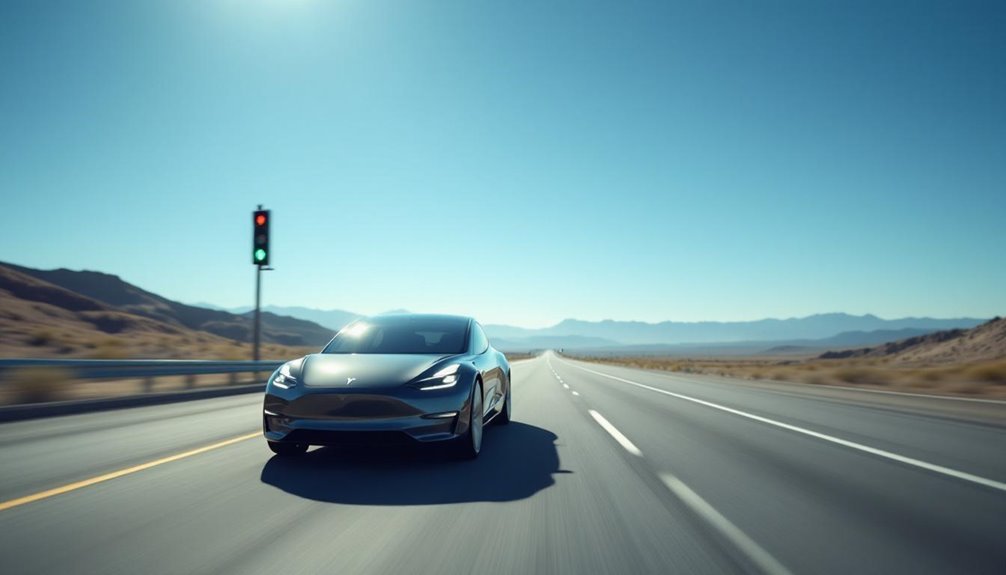

In a move that contrasts sharply with California’s complex approval process, Nevada has granted Tesla permission to test robotaxis on public roads. The Nevada Department of Motor Vehicles approved Tesla’s testing application and issued autonomous vehicle testing plates to the company. This approval represents a notable milestone for Tesla’s robotaxi development efforts.
Nevada became the fourth U.S. state where Tesla secured robotaxi testing authorization, following Texas, California, and Arizona. The approval came through direct communication between Tesla and Nevada DMV officials, who confirmed the testing registry certification in September 2025. The efficient process showcases Nevada’s reputation as one of the most permissive states for autonomous vehicle testing.
The state established its autonomous vehicle testing structure back in 2012, creating a regulatory environment that welcomes early technology development. This history contrasts with California’s approach, which involves multiple approval layers and city-by-city authorizations. California’s process requires far more rigorous safety demonstrations and stricter oversight than Nevada’s structure. These preliminary talks and strategic initiatives signal broader ambitions to expand beyond pilot programs into commercial operations. Tesla is simultaneously pursuing deployment in multiple metropolitan areas, with plans to operate in Nevada, Florida, and Arizona by the end of 2025.
However, approval for testing doesn’t automatically mean Tesla can start commercial operations. Nevada requires companies to complete a Self-Certification for Operations process before fielding robotaxis commercially. Tesla must also secure approval from the Nevada Transportation Authority to operate as an autonomous vehicle network company. Moreover, Nevada Revised Statutes Chapter 482A mandates $5 million in insurance coverage for autonomous vehicle operations.
Nevada’s regulatory structure allows potential highway operations without safety drivers under certain conditions, providing more flexibility than California’s initial testing requirements. California mandates that safety drivers remain present during early testing phases with stricter monitoring throughout the process. When Tesla eventually transitions these vehicles to new owners, the company’s streamlined digital transfer process will handle ownership changes through the Tesla app while traditional DMV paperwork remains necessary for legal title transfers.
Despite the testing approval, reports indicate that Tesla hasn’t yet completed all necessary paperwork for full commercial robotaxi operations in Nevada. The testing authorization represents a critical first regulatory milestone but isn’t the final step toward commercial roll-out.
Nevada’s approval provides Tesla with an extra validation environment for its robotaxi technology. The diverse geographic testing locations help gather data from different road conditions and traffic patterns. This strategic expansion strengthens Tesla’s pathway toward broader autonomous vehicle adoption across multiple states.