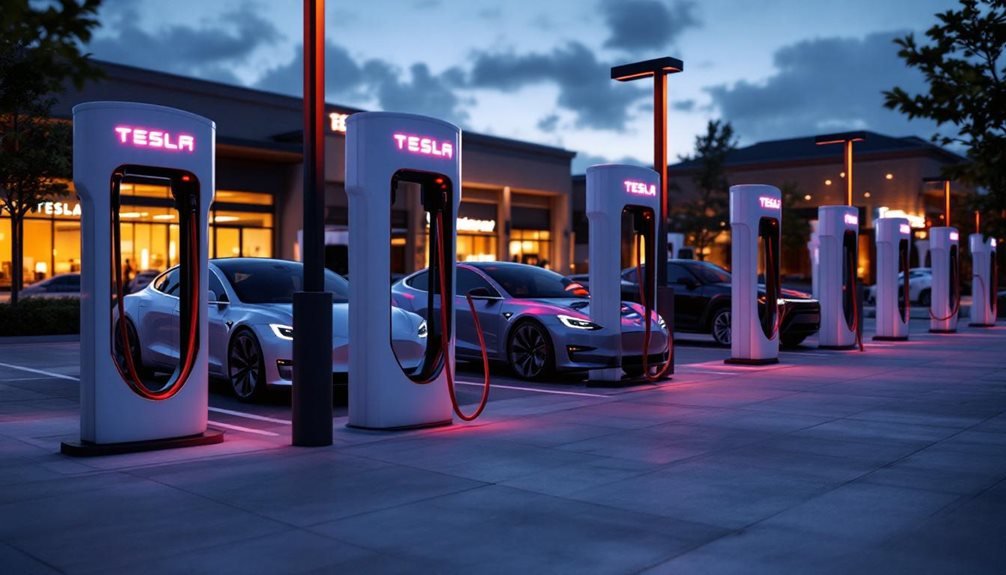

Tesla’s opened its third Supercharger station in Langley, bringing 16 new charging stalls to the Riocan Langley Centre at 20090 Langley Bypass. The station launched in July 2025, expanding the city’s electric vehicle charging capacity north of Highway 1. This new installation is part of Tesla’s aggressive efforts to enhance its infrastructure in key markets, especially as Tesla’s sales surge in China continues to drive demand for electric vehicles. Local residents and businesses are optimistic about the increased convenience for EV owners, which could significantly boost electric vehicle adoption in the region. Additionally, the expansion underscores Tesla’s commitment to sustainability and reducing carbon emissions across communities.
The new location stands out with its advanced V4/V3.5 infrastructure. Select stalls can deliver up to 325kW of power to compatible EVs like the Cybertruck. That’s faster than most charging stations in Canada. Non-Tesla electric vehicles can also use the station but will receive up to 250kW through NACS converters.
Tesla’s made the station accessible to other EV brands for the first time at a Canadian Supercharger. Non-Tesla drivers need a NACS-to-CCS adapter to connect. Honda and Acura owners can buy these adapters for $225. The station includes credit card readers and digital displays, making it easy for anyone to charge their vehicle. Additionally, Tesla’s move aligns with the growing trend of universal connectivity among electric vehicle charging stations, encouraging broader adoption of EVs across various manufacturers. As the automotive industry evolves, automakers like Volkswagen are also exploring innovative approaches, with insights on “volkswagen’s robotaxi strategy explained” highlighting their vision for future mobility. This collaborative environment could potentially lead to more efficient charging infrastructure and improved convenience for all drivers.
The charging cables are longer than older Superchargers, giving drivers more flexibility when parking. Tesla’s also using segmented charging speeds. This means the system modifies power delivery to enhance efficiency for each vehicle. The design supports higher-voltage battery systems over 500 volts, preparing for next-generation EVs. The liquid-cooled cables prevent overheating during high-power charging sessions and maintain performance in extreme weather conditions.
Pricing remains competitive. Tesla owners pay $0.19 per kWh, one of the lowest Supercharger rates in Canada. Non-Tesla EV drivers pay $0.25 per kWh. The mechanized billing system handles all payments through Tesla’s network. These rates enable fraction of gasoline costs compared to traditional fuel prices. Despite these competitive pricing structures, Tesla faces ongoing challenges with U.S. sales, especially as competitors ramp up their electric vehicle offerings. The company must navigate these tesla u.s. sales challenges while continuing to enhance its charging infrastructure and maintain affordability for current and prospective customers. Ultimately, success in this market will hinge on how effectively Tesla can adjust its strategies in response to the evolving landscape of electric vehicles. Additionally, as the demand for electric vehicles continues to rise, many potential buyers are monitoring the tesla model y price trends to make informed purchasing decisions. The growing availability of charging infrastructure and competitive pricing further incentivizes consumers to transition from gasoline vehicles to electric ones. This shift not only supports environmental sustainability but also fosters a more robust EV market in Canada.
The location offers convenient amenities. Drivers can grab a meal at Milestones or Olive Garden while charging. Major retailers like Indigo and PetSmart sit nearby, letting people run errands during charging sessions.
This Supercharger represents Tesla’s broader strategy in Canada. The company’s expanding its network while preparing for wider NACS adoption. The station maintains backward compatibility with older Tesla vehicles using V3 charging profiles.
The Langley Bypass location serves both local drivers and long-distance travelers. Its position near major highways makes it a strategic stop for through-traffic. As EV adoption grows in the region, this third Langley Supercharger helps meet increasing demand for fast, reliable charging infrastructure.